Manufacturer's Specifications:
Power Output: 100 watts per channel, continuous, 8 ohms (175 watts, 4 ohms), 20 Hz to 20 kHz.
Rated THD: Less than 0.2%, d.c. to 40 kHz.
IMD: 0.05%, at 10 watts, 8-ohm load.
Difference Frequency Distortion: 0.05%, 10 watts, 8 ohms.
Damping Factor: 60.
Open Loop Bandwidth: 230 kHz.
Closed Loop Bandwidth: 1.15 MHz.
Slew Rate: 150 volts/microsecond.
Rise Time: 0.32 microsecond.
Negative Feedback: 14 dB.
Current Delivery: 10 amps continuous, 40 amps p-p, instantaneous.
S/N: Greater than 100 dB. Input Sensitivity: 0.775 volt for 100 watts output, 8 ohms.
Dimensions: 17 1/2 in. (44.45 cm) W x 4 1/4 in. (10.79 cm) H x 12 3/4 in. (32.39 cm) D.
Weight: 35 lbs. (15.75 kg). Price: $1,200.00. Company Address: 310 Carlingview Dr., Rexdale, Ont., Canada M9W 5G1.
----
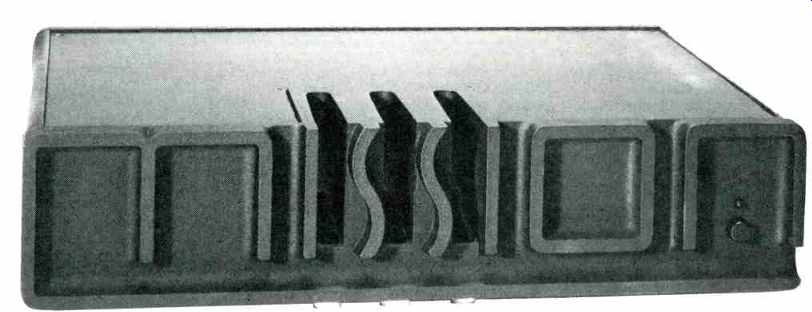
Some months ago when I tested a Mission Electronics 776 preamplifier, I expressed some regret at not having been able to check out their matching amplifier, Model 777, at the same time. Now that situation has been rectified, and because the people at Mission feel, as I do, that these two products really belong together, they were nice enough to lend me a 776 preamp again so that I might drive the 777 amplifier from that very excellent matching component. You may recall that the heavy cast-aluminum front panel and case of the 776 preamp was fashioned so that the front panel bears the company's logo. The same novel design has been used on the 777 amplifier, but this time it serves a practical purpose, with the entire casting acting as a giant heat sink.
The 777 is totally modular in construction, but the number of connectors has been minimized for ease of servicing and for wiring reliability. Two identical mono amplifiers are used, each of which is powered by a separate transformer and power-supply module. All active components used in the 777 are discrete. Small-signal, low-power transistors are low-noise, high-gain and high-bandwidth types. The output devices are high voltage H-FETs, having bandwidths which are greater than those of the driving stages. All resistors used in the amplifier section proper are metal film, 1% tolerance, low-noise types; decoupling capacitors are polyester. Heavy-duty connectors are used to bring d.c. voltages to the amplifier modules, and gold-plated connectors are employed for input signal connections.
Controls and Connections
The front panel of the Mission 777 has no controls other than a small pushbutton on/off switch at the extreme right of the panel, above which is a small green LED serving as a power-on indicator. The detachable line cord at the rear of the unit is arranged such that only when it is removed can the line fuse be replaced. The fuse housing also contains a small, universal "voltage card" which is employed to select the correct voltage for the country in which the amp is to be used. This arrangement, intended largely for safety, is similar to that on some of my better test equipment. Input jacks are located at the center of the rear panel and, flanking them on either side, are five-way heavy-duty binding posts on standard 3/4-inch centers and individual fuse posts containing 3.5-ampere loudspeaker line fuses.
Below the input jacks I found a small switch labeled "Soft Clip." During the tests, I tried in vain to determine just what this switch does but could detect no difference in the clipping action of the amplifier (which was pretty soft to begin with) when this switch was activated. As the old saying goes, "When all else fails, read the instructions!" Sure enough, I learned that Mission had decided to eliminate this feature for, as they put it, "... reports from the field and recommendations made by many reviewers indicate that the soft clip feature incorporated in the amplifier is redundant." Although they have removed the circuit, the disabled switch is still there to fill the mounting holes originally intended for it.
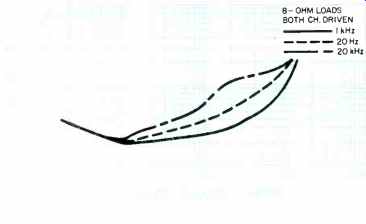
Fig. 1-Power output vs. harmonic distortion.
Circuit Highlights
The 777 amplifier module is a symmetrical Class-A amplifier except for the output devices which operate in Class-AB mode. Symmetry is achieved through cascading stages of the amplifier in alternate PNP/NPN complementary transistors, while drawing symmetrical currents from positive and negative voltage supplies. The amplifier is d.c.-coupled throughout, using the same amount of feedback for both the program signal and d.c. Direct current bias stability is achieved by the application of high local feedback loops.
Basically, two stages of voltage amplification are used, and these are separated by a unity-gain buffer stage.
Overall feedback in the amplifier is only 14 dB, but this is enough to provide THD figures below 0.2% from d.c. to beyond audibility and a closed-loop bandwidth of 1.15 MHz. Protection is provided for both the amplifier itself and connected speakers through an output fuse which is incorporated within the feedback loop to reduce its effects on damping factor, which remains above 60 measured at the output terminals.
Measurements
The 777 was able to deliver 130 watts of continuous power per channel at mid-band frequencies for its rated distortion of 0.2% into 8-ohm resistive loads. With a 4-ohm load, the amplifier delivered around 220 watts per channel at mid-frequencies, decreasing to the rated 175 watts per channel at the 20 Hz and 20 kHz test frequencies. In order to make the measurements under the 4-ohm load conditions, it was necessary to bypass the speaker fuses which would not normally be called upon to deliver such high continuous currents.
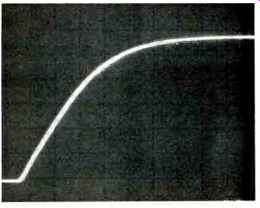
Fig. 2--Large-signal rise time measured 0.6 microsecond.
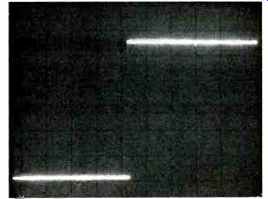
Fig. 3--Square-wave response, 100-Hz input signal.
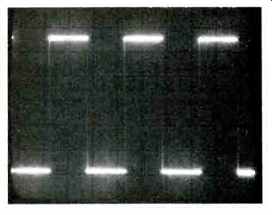
Fig. 4--Square-wave response, 1-kHz input signal.
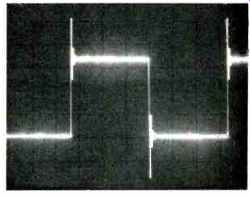
Fig. 5--Square-wave response to a 1-kHz input signal when Mission 777 amp is loaded with 8 ohms in parallel with 2µF reactance.
To check the stability of the amplifier under conditions of unusual loading, I connected a 2-µF capacitor across the 8 ohm load in each channel. Under these difficult conditions, maximum power before visible clipping decreased by approximately 1 dB to 103 watts per channel, still above the manufacturer's rated power for a purely resistive load. Figure 1 shows power output level versus distortion for test frequencies of 1 kHz, 20 Hz and 20 kHz. Considering the low amount of feedback employed in this amplifier circuit, I was surprised and gratified to find that the damping factor was still quite high, 57 measured at a frequency of 50 Hz according to the new Standard. Twin-tone (CCIF) IM measured an almost negligible 0.025%, while IHF-IM twin-tone measurements added up to an equivalent sum figure of 0.2% at rated output of 100 watts per channel into 8 ohms.
Figure 2 shows the large-signal rise-time, which I measured as 0.6 microsecond. IHF slew factor was greater than 5. Figure 3 illustrates square-wave response for a 100-Hz input signal driving the amplifier nearly to full rated output. A 1-kHz square-wave response at the same output level was just about as perfect, as shown in Fig. 4.
Signal-to-noise ratio, referred to 1-watt output, measured 85 dB (A-weighted) which, translated back to a rated output level reference, is 5 dB better than claimed by Mission, or 105 dB. Input sensitivity for 1-watt output was 0.1 volt exactly, which translates to exactly 1.0 volt for rated (100 watts) output. This is slightly higher than specified by the manufacturer but certainly not beyond the output capability of the matching 776 preamplifier or any other high-quality preamp/control unit with which the 777 is likely to be used.
Frequency response extended from essentially d.c. to 80 kHz for a roll-off of 1.0 dB and all the way to 300 kHz for the half-power (-3 dB) cut-off point. Talk about wideband design!
Dynamic headroom, not specified by Mission, measured a reasonably high 1.8 dB, indicating that under conditions of musical programming having short, steep transients, the amplifier could deliver bursts of instantaneous power equaling approximately 150 watts per channel into an 8-ohm load!
When the amplifier was subjected to the highly reactive load mentioned earlier (2 µF across 8 ohms), a 1-kHz square wave (applied to the input so as to produce an output just short of rated level) caused the usual amount of overshoot (see Fig. 5) and a rapidly decaying ringing effect but no trace of overall long-term instability.
Use and Listening Tests
I listened extensively to the Mission 777/776 preamplifier/ amplifier combination using reference speakers of widely differing load characteristics as well as a pair of Stax SR-X electrostatic phones which enabled me to hear "through" to the amplifier itself without being distracted or influenced by room acoustics. My impression is that the 777 is an easy amplifier to listen to. There is no harshness at all, neither in the midrange nor in the extreme treble range, and bass is impressively extended but seems tight and un-muddied at all listening levels with a variety of program material. Here is another amplifier that seems to be able to deliver more than its power ratings would suggest when it is tending to its real business of reproducing music signals rather than test tones. Only the least sensitive (most inefficient) speakers, positioned in larger-than-average, acoustically-damped listening rooms, would cause this amplifier to strain or clip at reasonable listening levels. At that, if you were to drive the amp to occasional clipping, the brittle or "hard" clipping attributed to solid-state amplifiers with high orders of overall feedback would be notably absent with the 777.
I suspect that given a chance, the 777 could easily become one of those amplifiers favored by the dedicated group of audiophiles who seek accuracy in sound regardless of cost. What impresses me, however, is that its cost, relative to that of equally favored high-end amps, is really quite reasonable. To the true music lover, that may not prove to be a disadvantage either, though of course there will always be those who say, "It can't be all that good, it doesn't cost enough!" At the risk of offending the anti punsters, may I conclude by saying " Mission accomplished!"--they really did!
-Leonard Feldman
(Adapted from: Audio magazine; Nov. 1982)
Also see:
Mission 776 Preamp (Jun. 1982)
= = = =