HANDEL WITH CARE
Handel: Roman Vespers. Concerto Soloists Chamber Orchestra of Philadelphia; Philadelphia Singers; Michael Korn. RCA RCD2 7182, two CDs.
How astonishing are the workings of genius, first class! I gulped when I saw this title: In a long life of musical experience with Handel, I had never heard of it. Not surprising. Its first modern .performance, after centuries, was in 1985.
The rather loose cycle of works, set to Catholic Latin texts mostly familiar "Salve Regina" and the like-was composed in Rome by Handel in 1706 at age 22, at the bidding of a brace of affluent and music-loving cardinals of the Church, on whose behalf he had been imported from North Germany.
Twenty-two! A raw youth, perhaps? Instead, we hear a giant and highly polished oratorio, done marvelously in the prevailing "Baroque" style of the Italians but otherwise, as is instantly apparent from the first note, on a par with this composer's greatest works of later years. Like early Bach of this period (they were born in the same year), there are daring, startling experiments here, bold ventures into unheard-of dramatic effects not common either in the Bach or Handel of later years. One such example is the hideously spiteful repetition of a single syllable by the chorus, "Sa, sa, sa, sa, sa," reminding us of Bach's "Crucify, crucify, crucify!" in his "St. John Passion." And yet the overall shaping is concise and incredibly masterful, as well as extremely difficult in the florid vocal and choral parts.
In other words, a work of total maturity and genius-youth or no. You will find it a heady combination of Handel, ever so clearly, and the best of such as Bach and Vivaldi.
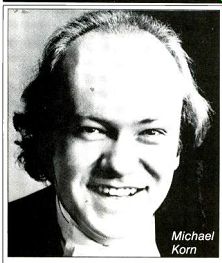
This Philadelphia performance is outstanding in the instrumental part, wonderfully paced and rhythmed by a master of eurythmic subtlety and contrast, Michael Korn. Roman Vespers is enthusiastically rowdy in the choruses but always accurate, if unblended. in the best American, professional choral tradition (a passel of opera singers right out of "Aida"!). And, most important, it is good to excellent in the ever present pair of solo sopranos, of which decidedly the best is Judith Blegen. As Maureen Forrester for the contralto, Maureen Forrester, she is, as always, a profoundly moving and expressive personality, with only a few short but telling moments, some of the finest in this music. Luckily, there is not much for the tenor and bass soloists, except in the ensemble segments.
Jon Garrison and John Cheek are both young in their trade, but Garrison sounds strangled and out of tune and Cheek rumbles his "ha-ha-ha-ha" rap id notes gustily, as they did 50 years ago.
What an enormous improvement is the Compact Disc format for huge works like this one on two CDs. As everyone knows, large music with lots of voices, solo and chorus, leads to distortion all too easily in the loud pas sages and, on LP, a too-frequent compression of the dynamic range in order to keep things under control. I still tend to wince, by sheer habit, when a sudden loud chorus with big orchestra follows a moderate instrumental segment-but the CD can handle it. These moments are loud all right, but the medium itself can take on the complex, high-power signal with no strain. Again and again I am caught in surprise by such passages, after so many years with 78s and LPs.
Even more gratifying is the utterly secure pitch and the genuine silence, as of the performing place itself, with absolutely nothing added. Handel is always a master of the use of sudden pauses for drama, and they abound in this big piece! In each and every one, I heard the technical beauty of Compact Disc recording. If this is the digital sound, I am all for it.
-Edward Tatnall Canby
Vaughan Williams: Symphony No. 2, " London"; The Lark Ascending (Romance for Violin & Orchestra). Royal Philharmonic Orchestra, Andre Previn. Telarc CD-80138, CD.
The music of Ralph Vaughan Williams has had little representation on CD. This is especially true of his symphonies, so this splendid new digital recording of his Symphony No. 2 is particularly welcome.
I have a special affection for this work. A recording of this piece, with Sir Adrian Boult conducting the London Philharmonic, was among the first I Andre Previn evaluated when I began my reviewing activities 35 years ago.
Years ago, Leopold Stokowski told me that he thought Fairfield Hall in Croydon, England, was a great recording venue. Here Telarc engineer Jack Renner has used this hall with striking results. A moderately spacious ambience, along with hall construction and diffusion, gives a lovely, natural perspective with particularly solid bass.
The recording is finely detailed, and dynamic expression is especially vivid and powerful.
Andre Previn has always had an affinity for British music and has furnished compelling readings of Walton and Elgar, as well as Vaughan Williams. His view of the " London" symphony is richly atmospheric, the scherzo properly spirited, the finale immense and sonorous, and the typical Vaughan Williams epilogue quite introspective. A must for devotees of Vaughan Williams. Bert Whyte Thomas Stevens, Trumpet. Crystal Records CD665, CD.
Sound: B-
Performance: A-
Thomas Stevens, principal trumpet of the Los Angeles Philharmonic, has put together a collection of 11 short, 20th-century works, most of which enter the ear rather easily. His own "Tri angles" is recorded with three trumpeters placed in three different triangles (large equilateral, isosceles, small equilateral), one for each movement.
It's an intriguing effect. More than a mere experimental etude, "Triangles" further sustains interest in the dialog among its components, exquisitely played by Thomas and colleagues from the Philharmonic's brass section.
Thornier fare includes Charles Dodge's "Extensions for Trumpet & Tape," and Hans Werner Henze's "Sonatina" for solo trumpet. The former, which sounds like a product of the cerebral '60s but was written in 1973, features long cascades of poorly recorded computer-generated sounds, first in solo and later as a seemingly unrelated backdrop to the more lyrical trumpet part. The Henze work gives Thomas a chance to show his considerable stuff, particularly in the spiky last movement.
Thomas Stevens Lurking somewhere between con temporary serious music and jazz are Jacques Ibert's "Impromptu" and Thomas Stevens' "Variations on Clifford Intervals," derived from the improvisations of the late jazz trumpeter Clifford Brown. Thomas is joined on the latter by bass player Barry Lieberman and vibraphonist Charlie Shoemaker all three are as facile in the jazz idiom as in the contemporary classical.
"Variations" calls for a fair amount of improvising and eventually lands squarely on the arena of straight-ahead, engagingly rhythmic jazz. One complaint: The recording's directionality-vibes left, trumpet center, bass right-is more than a little distracting.
Other compositional highlights include Leonard Bernstein's frolicsome, lopsided "Rondo for Lifey" (named after Judy Holliday's Skye Terrier); Stevens' "A New Carnival of Venice"; Peter Maxwell Davies' early "Sonata," and George Antheil's "Sonata," alternately spunky and lyrical, but always charming.
Thomas clearly is an exemplary player and has chosen his colleagues carefully. There are three participating pianists credited and three trumpeters, but nowhere is it indicated specifically who plays what and where.
For the most part, the trumpet gets plenty of resonant headroom. Piano sound, however, is substandard and single-dimensional. This is a compilation disc, and some of the tracks are remastered from analog sources. Ironically, the piano sounds best on Meyer Kupferman's "Three Ideas," an analog original.
Susan Elliott Berlioz: Symphonie Fantastique. Ljubljana Symphony Orchestra, Anton Nanut. Stradivari SCD 6021, CD.
Schubert: Symphony No. 8, "Unfinished"; Beethoven: Symphony No. 5. Ljubljana Symphony Orchestra, Anton Nanut.
Stradivari SCD 6004, CD. (Available from Special Music Co., 87 Essex St., Hackensack, N.J. 07601.) When the first of this new series slithered in the usual slippery CD fashion onto my work table, I groaned. What, still another try at the same old standard concert pieces, every one re corded a thousand times already? Well, this time there is a difference.
These are all-digital-recorded on a Sony PCM-1600-which slightly narrows the field. (Think about the hundreds of earlier versions of these com positions, going back to 78-rpm albums!) Still ... And at that point I put one into the player.
Astonishing. Here you have what is, to most U.S. citizens, an unheard-of small-town orchestra (un-pronounce able even), a conductor with one of those anonymous names you see on records these days, and the freshest, most convincing, and lively performances I have heard for many long years. Infectious enthusiasm is the old fashioned term. I was bowled over.
No, this is not like the merely enthusiastic (but sometimes inaccurate) recordings from minor-league orchestras in out-of-the-way places. These renditions are beautifully rehearsed and prepared, precisely accurate in every detail, as polished, to my ear, as any thing out of Chicago or L.A. or Berlin.
Moreover, the sound is lovely, ideally balanced, warm and communicative.
What more can I say? The best of everything, out of, er, Ljubljana. You pronounce it.
I merely remind you that in spite of the linguistics, the present territory of Yugoslavia boasts one of the oldest continuous cultures of our Western civilization, going back to the Romans and Greeks and covering everything in between. Should we really be surprised? We are after all-whether Chicago, L.A., or wherever-the brash, unseasoned newcomers to this European art, whereas the Yugoslavs have been within the cultural purview of the Austrian capital these last several hundred years and more. And France lurked close by as recently as both of the Napoleons, between which we find Hector Berlioz in all his glory. History is not bunk. It is with us and alive on CD.
-Edward Tatnall Canby
Welcome Every Guest--Songs from John Blow's Amphion Anglicus: The Consort of Musicke. Nonesuch 71956-1, LP.
John Blow, so clearly English in name, is an early composer who has yet to be "rediscovered," his very large output of music notwithstanding. The reasons are clear. Born in 1649, he lived and worked under a sort of shadow--his great pupil, 10 years his junior, was Henry Purcell. Blow's music comes from a particularly difficult time, in terms of modern performance, when literary and philosophical styles were utterly unlike ours today. His musical technique, too, was stylized into remarkable virtuosity of a sort-notably in the voice-which is still close to impossible for modern soloists and choruses to perform. Not loud, not commanding, but rather of incredible precision, rolling off notes at unbelievable speed like the most rapid of modern instruments.
Yet Dr. Blow (all the big musicians had the title Doctor in those days!) was clearly a jolly soul as well as intense in his expression. According to the liner notes, Blow wrote 110 church anthems, and in 1700 published the collection of songs sampled here. These songs run the gamut of moods and sing of gods and goddesses both Greek and Roman. They are songs that invite the cup, as one of that era might have said. All in all, plenty of interest and variety, if you can adjust to the highly stylized way of singing, not to mention the high-styled texts.
In the manner of the time, these were accompanied merely by a one-line continuo, to be filled out at will at the keyboard. Anthony Rooley, the prime mover here, has "orchestrated" each work with instruments of the day, an entirely proper approach which I believe would not have bothered Dr. Blow in the slightest.

There is one problem: The two solo singers, soprano and bass, are both good musicians but utterly inadequate for this special music. Emma Kirkby lets loose the typical modern blast of sound on every high note-basically a 19th-century technique, standard to day-and David Thomas rumbles and erupts like a genial bull among all these china-like musical designs, smearing together the fast notes as certainly they were not in Blow's time.
Technique aside, both these singers are intelligent and engaging and good in their pitch. The instruments are far truer to the style and come through well. So maybe you will want to make Dr. Blow's acquaintance. Nonesuch is at your service, in all formats.
-Edward Tatnall Canby
Brigitte Fassbaender: Lieder von Gustav Mahler, Alban Berg, and Claus Ogermann. John Wustman, piano. Acanta 43579, CD. (Available from Koch Import Service, 95 Eads St., West Babylon, N.Y. 11704.) If you want to know what the Europe an tradition of solo singing is all about, try this accomplished artist, German trained out of Berlin. What we in America still do not understand is the extraordinary range of vocal effects, some of them almost grotesque, that enable one singer to express such wide human emotions in musical sound. We think of the voice as an instrument. It is much more than that.
In her picture on the cover of the CD, Fassbaender looks young and delicate--yet her voice is not only enormous but even portentous. She can sing tones that are those of a little girl, or bellow in a near-baritone. Many of the sounds might be called ugly-the better for expression. The contrasts are almost startling. The pitch is absorbed often into an enormous vibrato--you must "read" it, so to speak.
And yet pitch is there, out of a superbly musical ear and mind.
In a few words, here is the prize example of the voice most people hate in classical song! But this one conveys music, and profoundly. She is worth studying. And she has an American pianist, John Wustman, who does every justice to the often complex accompaniments written by these three "modern" composers.
The selection is surprising, because the three are so clearly of a same tradition, though Mahler wrote his child like "Des Knaben Wunderhorn" (the songs familiar in his later symphonies) back around 1883, Alban Berg his intensely tragic "Vier Lieder" in 1908 and 1909, and Claus Ogermann his "Tagore-Lieder" surprisingly in 1975. Ogermann's lieder go perfectly with the Berg and Mahler.
Not an easy record, but a powerful recital full of profound musical expression of the sort that grows, and stays with you.
-Edward Tatnall Canby
= = = =
Also see: