By Ralph Hodges
THE PHONOGRAPH: STILL ON TOP
WHAT, exactly, is there about that simple mechanism we call the phonograph that has enabled it to last, up to now, one hundred years with no end in sight? Many reasons come to mind as to why it enjoys the market advantage it does. First of all, a phonograph record is reliable in fidelity (there are those, I know, who would snort in derision at that statement, but on the whole it is true), not very expensive to manufacture, and lends it self well to mass production. In addition, records are reasonably convenient to handle and easy to store in quantity, and there is almost always something at hand to play them on, whether it be the finely engineered equipment that tempts us from the pages of this magazine or a still-functioning windup portable of the kind that used to enliven the nation's beach parties. And finally, there is technological inertia, reflected in the rather considerable fact that most of the extensive disc-making equipment and pressing plants around the world have long since been bought and paid for-never mind that some of them are flirting with obsolescence. Newer recording media even including the now well-established cassette-must tie up investment capital, when it's available at all, for initial construction and tooling-up costs, and many such facilities are therefore still some little distance from turning a profit despite the generally higher prices of their product.
As for the record's less tangible advantages, it depends on whom you ask, and the responses often lean rather heavily on the psychology, the utility, or the aesthetics of the matter. Many like records because they are an open and accessible medium (perhaps too accessible where dirt and scratches are concerned): the program material is right on the surface, physically, visibly, and therefore reassuringly present in physical form, not coiled mysteriously and electromagnetically within a long ribbon of fragile tape that looks the same whether there's a program on it or not. The different musical selections, more over, are visibly identifiable, and there's a well-defined beginning and end. You can, for example, usually estimate the playing time left in a symphonic movement just by looking at the record on the turntable; you can even, with practice, discern whether there's a loud and possibly exciting passage yet to come.
Other people are happy with the disc because an album affords ample room for striking cover art, pertinent photographs, valuable technical information, and even a kind of musicological literature.
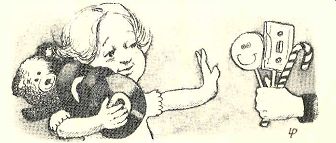
But there is at least one more factor in the phonograph disc's favor. It is difficult to assess, but it is probably more important to its future than all the rest: most of us are weaned on records as our first source of recorded music, and I wouldn't be surprised to see this pattern continue for some time to come. My four-year-old daughter, for instance, who has both, has firmly rejected cassettes in favor of discs with no prompting and for reasons un clear to me (perhaps it's the visual appeal of the record jackets). I would hazard a guess that when she gets a little older it will be the 45-rpm single and not the equivalent (in all but handling efficiency) prerecorded cassette that she turns to, that by the time she reaches financial independence her buying habits will already have been set.
The one thing that might turn our presently disc-oriented youngsters in the direction of other recorded media in the future is a possible further decline in disc quality. Happily, this is beginning to seem unlikely. Within the past year the two U.S. majors, Columbia and RCA, have both announced either total re building of key disc-pressing plants or major renovation of them (see "flirting with obsolescence" above). These efforts are already be ginning to bear fruit, judging by reports from various clients of these giants who have been pleased with the quality of the pressings of their new releases.
Another technical factor in the disc's favor is the impact of the CD-4 four-channel system. In order to make this difficult system work, extensive research and development took place in materials and in virtually every equipment area-disc cutting, processing, and pressing-involved. Some large record companies delayed adopting the latest CD-4 cutting hardware and techniques for a while, but most have acquired them by now. So, even if four-channel disappears tomorrow (very unlikely), we will still be able to hear the benefits of its technology on stereo records we buy next month.
What about after next month? Well, how would you feel about a truly warp-free disc? Of late there have been rumors about at least one pressing process that just might achieve an essentially flat record consistently by greatly reducing the internal stresses of the molded vinyl. Such a process also ought to be effective in controlling the incidence of surface blemishes (ticks and pops) and may be capable of approaching or surpassing (!) the signal-to-noise ratio of the original master acetate.
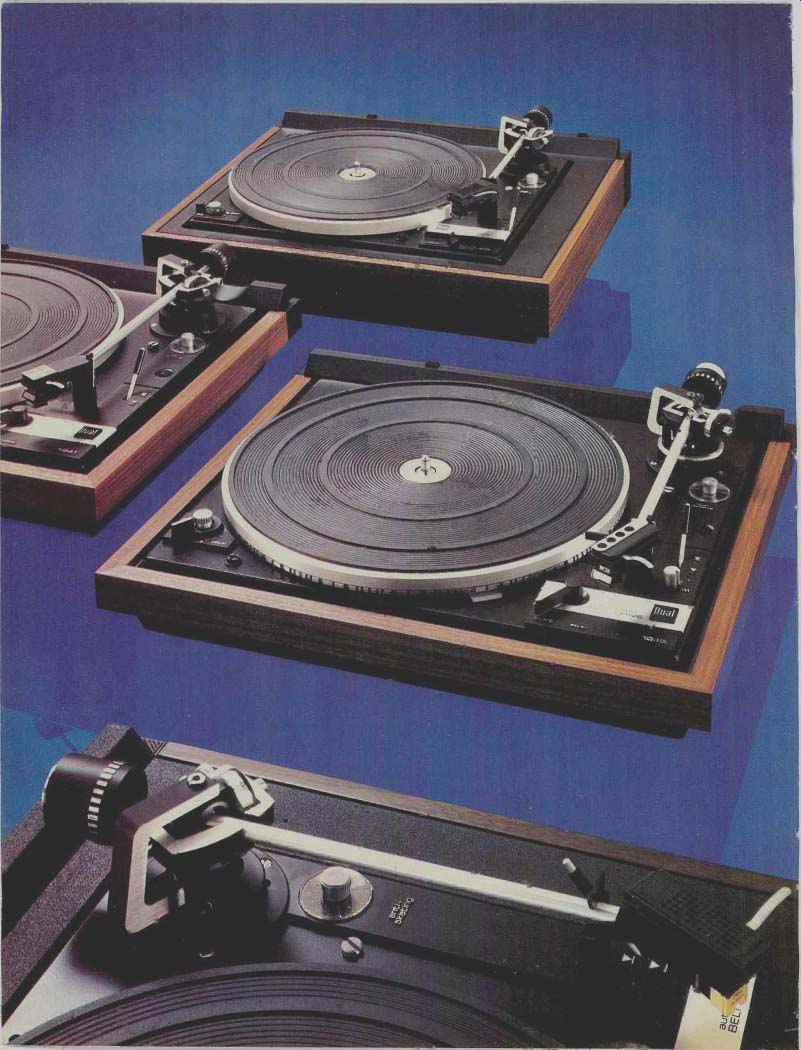
WHAT about record-playing equipment? In recent years, the performance of a quality record-playing system has been conspicuously limited by the quality of the records avail able to play on it. I believe this situation could change almost overnight, and that the superb performance (to say nothing of the great public interest) of many new direct-to-disc recordings points up the great room for growth that still remains in the disc medium. (Al though direct cutting generally does not lend itself to mass production, parts of its technology indicate some directions for experiment.) In anticipation of better things to come from discs, equipment manufacturers are be ginning to pay greater attention to the critical match between phono cartridge, tone arm, and the amplifying circuits that will receive the signal from the cartridge. All these efforts are as welcome as they are necessary if the phonograph medium is to remain technically competitive.
As you will read elsewhere in this issue, it has been one hundred years since Thomas A. Edison shouted that tiresome nursery rhyme into a primitive diaphragm to impress an up and-down squiggle on a sheet of tinfoil with a metal stylus. He was astonished when the diaphragm shouted the same rhyme back at him intelligibly. But I wonder sometimes if he was any more astonished than I am when my modern diaphragms (speaker cones) shout back at me a near-(in)credible facsimile of a large orchestra at work. Is there any limit to the potential of the Edison "talking machine"? Undoubtedly, but it's certain that we haven't come close to reaching it yet.
--------
--------
Also see:
NOISE DILEMMA--Is it possible to have full dynamic range without noise? DANIEL QUEEN