-----
Speaking of music
THE IDEA OF MUSIC
by William Anderson

IF you are going to present a program of unusual music (Bach and Villa-Lobos for an orchestra made up entirely of cellos) in an unusual locale (a private New York club) under unlikely sponsorship (a liquor distiller) for an audience made up (for all you know) of musical innocents, good manners and good sense suggest that a few introductory remarks harmless, soothing remarks-might be in or der. Controversy, however, is not so easily escaped, and I was therefore not too surprised when the guest speaker in this case, a prominent American critic and scholar, re marking on Villa-Lobos' comfortable accommodation of folk sources in his music, ob served parenthetically that "folk music is, of course, art music, sunk down, a couple of hundred years later." Those italics are, of course, mine, and the impulse is to add an exclamation point (!) at the end as well. Just what folk music is, where it comes from, who "composes" it, is still, as far as most of us know, a mystery, and the cocksure finality of that "of course" rang a little bell in my memory. I traced its tinkle back to an essay by Ralph Vaughan Williams in the 1946 edition of the Encyclopedia Brittanica. Vaughan Williams, like Beethoven, Brahms, Dvorak, Schubert, and many another "art" composer before him, also made use of folk music in his compositions, and this is what he has to say about that "of course": " . . . these attempts at musical expression are not, . . as we are sometimes told, de graded reminiscences of 'cultured' music, but are something sui generis." For myself, I tend to agree with Vaughan Williams (there are, after all, nations that ring with folk music but have no art music of their own whatsoever). I go, in fact, even further to hold that, despite its frequent use of folk mu sic as a kind of borrowed ornament, art music too is sui generis. That, however, is not the garden path down which I mean to lead you, but another one altogether-which is, that there is no end to opinions about music, that any one of them can easily be expatiated upon long enough to fill a book.
If you are so inclined, the place to start is Nat Shapiro's An Encyclopedia of Quotations about Music (Doubleday, 1978, $10), the most complete compendium of its kind I have ever run across. In addition to all the famous re marks about music by famous musicians ("What you said hurt me very much. I cried all the way to the bank"-Liberace. "Pay no attention to what the critics say; no statue has ever been put up to a critic"-Sibelius. "Applause is a receipt, not a bill"--Schnabel. "If nobody wants to go to your concert, nothing will stop them"-Isaac Stern), it contains many others that deserve currency ("Music is the only language in which you cannot say a mean or sarcastic thing"-John Erskine) even though they may contradict each other ("Good music penetrates the ear with facility and quits the memory with difficulty"--Beecham. "Extraordinary how potent cheap music is"--Noel Coward).
Shapiro's book is an unmixed delight, and a useful one, because it includes not only an index of names and sources but of key words and phrases as well; it should prove a boon to editorial writers forevermore. And it should also inspire you to put together one of your own just as delightful-these 468 pages merely scratch the surface of the subject. I have accumulated a few entries over the years my self (William Flanagan's characterization of the sound of a harpsichord as "a demented banjo" for me has it all over Beecham's contrived "two skeletons copulating on a galvanized tin roof"), and my favorite is a bit of linguistic lore picked up while doing research on Gilbert & Sullivan's Mikado: in Japanese, the word for music is made up of two ideograms-sound and pleasure; that for noise also contains two-sound and displeasure.
Ah, if only it were all that simple!
+++++++++++++++++++
Stereo Review---Bulletin
Edited by William Livingstone
STEREO TV SOUND is expected to be firmly established in Japan by the beginning of this year. Japanese audio and TV manufacturers have been preparing appropriate models since the early 1970's; these include component-style accessory TV tuners as well as complete color TV receivers. Besides arousing new interest in stereo TV internationally, Japan's move is almost certain to result in the modification of existing video-cassette recorder systems to handle stereo sound--a capability they now lack.
Domestically, AT&T has applied to the Federal Communications Commission for permission to begin offering stereo transmitting and receiving equipment to television stations (last January AT&T introduced a new transmission system expanding the range of television audio from 5,000 Hz to 15,000 Hz, a high-fidelity bandwidth fully as wide as that used in FM broadcasting). Before stereo television sound can become widely accepted, a substantial number of broadcast stations must purchase the new stereo equipment and television manufacturers must begin to offer consumer-model television sets with stereo capabilities.
ADVENT'S LATEST CLASSICAL CASSETTES ARE: Haydn keyboard sonatas (E1068) performed on the fortepiano by Malcolm Bilson; Prokofiev's Sonata No. 1, in F Minor, Op. 80, and Shostakovich's Op. 134 sonata (E1069) played by violinist Emanuel Borok and pianist Tatiana Yampolsky; and Messiah highlights (E1070), which offers 84 minutes of excerpts from Advent's complete Messiah performed by the Handel and Haydn Society directed by Thomas Dunn. Available only on Advent Process CR/70 cassettes, these performances are recorded on chromium-dioxide tape with Dolby. Price: $8.95 each.
PHONO-CARTRIDGE INNOVATIONS have been announced by two Scandinavian manufacturers. S. R. Pramanik, designer with Bang & Olufsen, reports that his company is introducing a moving-iron cartridge with a single-crystal cantilever of solid sapphire.
And Ortofon is coming out with a 1 1/2-gram VMS cartridge designed to achieve an arm-cartridge resonance between 10 and 15 Hz; it will be available incorporated into a headshell with a universal connector or in a standard-mount configuration with 1/2-inch centers.
OLD ROCKERS NEVER DIE: Mitch Ryder, Detroit legend and blue-eyed soul king of the Sixties, is releasing, independently, his first new album in almost eight years. Advance word is that it's vaguely Springsteenesque (Bruce does a Ryder medley in his current act) and quite astonishing. The Detroit Wheels (Ryder's former back-up band, now known as the Rockets) have just signed with Robert Stigwood's RSO Records. Does this mean they will be featured on the soundtrack of Son of Saturday Night Fever?
THEY GET SENT UP THE RIVER: Buddy Miles, early Seventies superstar drummer (with the Electric Flag, Jimi Hendrix, Santana, et al.) was sentenced to two years in prison after pleading no contest to charges of grand theft and grand theft auto. Among other complaints, Miles allegedly filched clothes from Nudie, the famous country-&-western couturier. (What's someone called "Nudie" doing with clothes anyway?)
RCA'S NIPPER COMES HOME: Use of the famous trademark of a dog listening to his master's voice on an old phonograph was all but discontinued by RCA in the late 1960's, but the dog was so loved by the public, who refused to forget him, that the company is now restoring him to his former prominence on RCA products and in advertising. The first new product to carry a revised design of the trademark will be a 13-inch color TV receiver, scheduled to be in stores in March. The original Nipper (1884 1895) was a black and white fox terrier belonging to artist Francis Barraud, who created the painting His Master's Voice and sold it to the Gramophone Company, Ltd., of London.
"FASTER" POWER AMPLIFIERS may result from research at Bell Telephone Laboratories, where scientists have succeeded in doubling the speed at which electrons can move through standard semiconductor materials. When two different semiconductor materials are layered in a single crystal, electrons are provided with alternate, electrically unimpeded pathways which enable them to travel faster. At present, power-amplifier designers must choose between slow, rugged transistors or faster but more fragile devices for their designs.
WARNER COMMUNICATIONS HAS DECIDED TO MANUFACTURE ITS OWN RECORDS AND TAPES and will build various pressing plants across the country. The first, in Scranton, Pennsylvania, is scheduled to be in operation by mid-1980, and the rest should be finished by 1982, when Warner's contract with Capitol Records expires. According to Warner spokesman David H. Horowitz, the new plants will use techniques developed by the company's German branch, such as automated quality control, to assure records and taped "of the highest level of quality attainable." Labels affected: Warner Bros., Elektra, Asylum, Nonesuch, and Atlantic.
A PRICE HIKE FOR SPEAKERS is one surprising result of the civil war in Zaire. The cost of alnico (aluminum-nickel-cobalt compound) magnets used in the manufacture of speaker drivers has jumped threefold in the past year as a result of the flooding of cobalt mines by Katangese rebels. Estimates of the ultimate effect on retail prices of high-fidelity speaker systems are in the range of 2 to 5 percent, though certain speakers utilizing drivers which cannot easily be converted from alnico to more accessible ceramic magnets may suffer increases of up to 20 percent.
COLLECTORS, SAVE YOUR LUNCH MONEY: RCA and Capitol are issuing limited-edition tributes to their all-time sales champs, Elvis and the Beatles. RCA's first-ever commercial picture disc ("Elvis: A Legendary Performer, Vol. III") will feature two different full-color likenesses of the King, two previously unreleased tunes, six alternate versions of material already issued, an interview with Elvis and the Colonel, and a $15.98 price tag. Capitol's "The Beatles Gift Box" is more elaborate: it will contain all twelve Beatles studio albums in exactly the same form as they were originally released in Britain, plus a bonus album of "Beatles Rarities" that includes two songs never released in LP form in this country. Price: a whopping $132.98.
+++++++++++++++
LETTERS TO THE EDITOR
Marriner
I would like to thank Clair W. Van Ausdall for at last giving me a line ["Neville Marriner," November] on how it is that the musicians of the Academy of St. Martin-in-the-
Fields always manage to give the music they play, whatever they play, such a remarkable lightness and lift: they are blest with a conductor who doesn't take himself too seriously. Minnesota Orchestra audiences will have reason to congratulate themselves when Neville Marriner takes over the Minneapolis podium next September; let us hope they can refrain from becoming insufferably smug when he gets the orchestra in shape to do it his way.
Are there any recording commitments involved in Marriner's Minnesota contract?
ERICA NORDSTROM, Milwaukee, Wis.
Marriner already has contractual commitments with Philips and Angel that do not-at the moment-leave room for additional re cording assignments, but the Minnesota forces may dictate a re-examination of the schedule once they have been "marrinated" for a year or two.
Twenty Amplifiers
Julian Hirsch's "Twenty Medium-price Amplifiers" in November was probably a lot of work, but it was worth it for me: I may be wrong, but I think I finally understand amplifiers. What are chances that he'll do turntables, cassette decks, and (especially) low-price speakers the same way?
FRANCIS O'DONNELL, Boston, Mass.
Pretty good.
Nashville
So what else is new? I'm sure Noel Coppage is perfectly right in the November issue about what is happening to country music in Nashville (and everywhere else), but it is really just another case of "they don't write 'em like they used to." There is simply no way older generations are ever going to under stand that, whatever it was, however good it was, it is not coming back, particularly in music.
Russ CONKLIN, Dallas, Tex.
Lena Zavaroni Found!
Paulette Weiss asks, in her wonderful November "Pop Beat" column, about the present-day whereabouts of Lena Zavaroni.
Well, the last I saw her (thank God) was on the tube in 1974, in reruns of Carol Burnett and Friends and some British variety shows on PBS. After burning up the American charts at number 100 for two weeks, Lena and her managers apparently took Peter Reilly's advice (in his review of her LP) to "take the money and steal away into the night."
IRA BEHR Glen Oaks, N.Y.
Lena Zavaroni is very much alive and doing very well in Britain. I have been temporarily stationed in Scotland three times since 1976, and I have seen her on British TV.
I can't recall the name of the show, but she appears all the time as a regular guest star, or at least she did last time I was there. There are even Lena Zavaroni posters (also tapes). I had never heard of her before I went to Scot land, and I must say that she sings beautifully.
JOHN W. PURPER IV, Washington, D.C.
Irene Kral
To learn of Irene Kral's passing from STEREO REVIEW (November) is as good an example as any of what it means to be in prison (for a month here it was a rumor). Peter Reilly's effort on behalf of her music, al though well intended, seems an impropriety.
Owning her albums in these times is a measure of who and what you are. No matter where you live. And a serious lump in the throat and "watery" eyes is a tribute to Ms. Kral and oneself. People should find her somewhere on the road they are traveling or not at all. I did, and it illuminated for me a line from Robert Frost about roads: "I took the one less traveled by, and that has made all the difference."
MIKE WEAVER, #118862 Walla Walla, Wash.
Cassidy Fancier
Peter Reilly is a full-fledged dink!! His article on Shaun Cassidy in the November issue is a bunch of lies. Shaun Cassidy is the best singer in the world and "Under Wraps" was his best album yet. He makes a lot more money than you, boy! He's a lot better looking too. Shaun Cassidy is the greatest. He sings great, writes songs very well, and is not a teenybopper! These are my true feelings, and Peter Reilly, I hate you!!!
ELISSA BOSWORTH, Lenox, Mass.
The Punk Fugs
In considering the roots of New Wave/ Punk rock (as in Steve Simels' October article) why does everyone neglect the Fugs? They were the first New Wave lyricists-back in 1965. A sampling of their song titles might include: I'll Kill Myself over Your Dead Body If You Fuck Somebody Else, Slum Goddess, Homemade Shit, Boobs a Lot. Caca Rocka, New Amphetamine Shriek, Coca-Cola Douche, etc. We're the Fugs is the most moronic song I've ever heard, and they were the first to look and act entirely obscene and outrageous on stage.
The term "punk" was popularized by Sixties, record collectors, and sometime in the early Seventies the out-of-print record dealers started using it as an adjective in their set-sale and auction lists. That way a customer could get an idea of what a particular item offered for sale might sound like. And by the way, 96 Tears [Question Mark and the Mysterians, 1966] has three chords.
JIM FITZGERALD, Lexington Park, Md.
Who's counting? Mezzomaniacs
In his October letter about singers who are neglected by recording companies, Thomas Wilson touched on one of the more frustrating aspects of this neglect: indifference to great mezzos. He names Teresa Berganza, but there are many more great singing actresses now at the peaks of their careers who are virtually ignored by recording companies: Brigitte Fassbaender, Tatiana Troyanos, Josephine Veasey, Patricia Kern, Agnes Baltsa, Maureen Forrester, Anne Howells . . the number is large and embarrassing. With the possible exceptions of Dame Janet Baker, Christa Ludwig, and Marilyn Horne, mezzos are not sought after and promoted with the same enthusiasm as Price, Caballe, Sutherland, Sills, and other sopranos. I do not wish to take anything from these great artists, but they are not the only female vocalists capable of ravishing sound and consummate artistry.
I realize that much of the problem is simply that during the period covered by the bulk of recorded vocal literature (1840-1920) most
composers were more inclined to create Suzukis than Carmens. The answer is not more recordings of the same repertoire, but rather the gradual but inexorable rediscovery of Baroque, Classical, and early Romantic literature for the alto-mezzo voice. While it is true that much of this literature was written for castrati, much also was not, including a fair amount that was originally intended by the composers to be sung by women en travesti.
For many years the prevailing opinions about dramatic credibility prevented the performing or even recording of these roles in their original pitches. However, recent interest in the authentic performance of Baroque music (an especially rich treasure house of alto-mezzo literature) has begun to restore to the mezzo voice its rightful and long-overdue esteem.
We mezzo-maniacs are heartily grateful for this development, but the record companies could be doing so much more to bring us these outstanding artists in their acclaimed interpretations-and make some money in the bar gain. There is a vast repertoire just waiting for the same kind of sympathetic interest that revivified bel canto.
C. DRINKARD, Arlington, Va.
The Editor replies: The name of the game in vocal matters is athletics. In general, audiences react to the high, the loud, and the agile because they are rare. Soprano, tenor, and, yes. castrati voices are simply less common than mezzo and baritone ones and therefore more exciting. Musical styles may change, but our taste for the unusual does not.
Kenny Loggins
I read Noel Coppage's review of Kenny Loggins' "Nightwatch" (October issue) with interest, as it was perhaps a statement on the direction that popular music is taking today.
The best of the Sixties-inspired music is rap idly dying, as witness the demise of the Band, Crosby, Stills, Nash & Young, and Loggins and Messina, to name a few. Survivors from that era are going the "commercial" route the way Loggins has. Little wonder, then, that someone like Jim Messina has chosen not to reappear on the music scene to date. Evidently he is in no hurry to join Loggins on the $1.99 shelf (not while "Full Sail" and "Mother Lode" are selling at $6.96, anyway). Noel's . . . transparent wall between Loggins and the listener" is a wall that time, as much as studio sophistication, has created. For me, neither Kenny Loggins, Linda Ronstadt, Dolly Parton, nor any other of the new survivors will ever be able to duplicate the timeless worth of their earlier works with the disco polish of the Seventies.
BRIAN PEARSON, Ottawa, Ontario
Todd Rundgren
Steve Simels' review in October of the video cassette of Todd Rundgren at the Bottom Line was nothing short of magnificent! It is about time that someone gave Mr. Rundgren the kind of review that he deserves. I have been an avid fan of his for the last six of my nineteen years, and I have tried to attend his concerts whenever tickets were available.
Unfortunately, like Mr. Simels I was unable to attend any of Rundgren's performances last May at the Bottom Line. The video cassette is a fine alternative, and I agree with Mr. Simels when he says that it struck him as . . an exemplary presentation of an artist good enough to deserve no less." On the other hand, Noel Coppage's review of Rundgren's latest album, "Hermit of Mink Hollow," in the August issue was so supercilious that it just about made my blood boil.
This is by far the most easily accessible album Mr. Rundgren has made in years, and I feel that Mr. Coppage's criticisms were completely unfounded.
ADRIENNE NAGY, Elmwood Park, N.J.
Prerecorded Open-reel
I don't know who is to blame, but I think the hi-fi industry has let down, brushed off, and forgotten the open-reel enthusiast. There are millions of us out here, stuck with great open-reel equipment and unable to purchase prerecorded tapes of most of the new sounds we would like to hear. It would be interesting to find out just how many people would buy prerecorded open-reel tapes if they were made available at a reasonable price. It seems to me that the industry has forced the public to turn away from open-reel to the cassette format. (It's also worth noting that most
( Continued on page 16)
apartment dwellers do not have the facilities for a proper FM-antenna setup, and therefore taping off FM, even with a good receiver, is generally a poor source of recorded music.)
WILLIAM J. CARROLL, La Mesa, Calif.
Barclay-Crocker (11 Broadway, New York) are the largest reel-to-reel suppliers we know of. and they will probably he delighted to learn that their potential market is in the millions.
As it is, their mailing list averages 2,400 names (it is "cleaned" of non-buyers every six months) and prices range from $7.95 up. The recording industry has repeatedly most shirts on reel-to-reel, and it is very unlikely to sacrifice another.
Recording of Special Odiousness
A discreet hosanna for Steve Simels' October review of the soundtrack for (it hurts to use the name) Sgt. Pepper's Lonely Hearts Club Band. The record is so bad that STEREO REVIEW should honor its putridity by creating a new category just for it: "Recording of Special Odiousness." However, there is a mistake in the review Before Mr. Simels points his besmirching gun at George Martin, he should be aware that the Beatles fought for years to prevent this waste of celluloid and vinyl from being made. Un fortunately. since Robert Stigwood owns the rights to thirty-two Beatles tunes, the boys lost their court battle. But they did manage to secure two conditions: (1) the lyrics of the songs could not be changed (preventing a re peat of the "artistic liberties" taken in All This and World War II, and (2) George Martin would have to produce the soundtrack.
Martin himself, in an interview in the Los Angeles Herald-Examiner during production of the film, predicted that the soundtrack would be a failure and implied that he was trying to do whatever good he could do and then get out.
ALLEN R. GREENBLATT, Tarzana, Calif.
Empty Hearts
Pops on side two of my copy of Heart's "Dog and Butterfly" on Portrait (CBS) required that I return it for exchange. The sales clerk and I discovered that four of the twelve copies the store had left were empty covers sealed in shrink wrap. Record-company quality control has been getting so bad in past years that it didn't really surprise me.
RICHARD ARNOLD, Augusta, Ga.
Then again, you have to admit that that's one way to get a quiet record.
Et tu, Canada?
I am sure you are sick of this subject, but please bear with me and hear a Canadian's point of view. I am referring to record quality, or rather the disgusting lack of it. Here in Canada we pay from $5 to $7 for an average current popular record and up to $30 for an imported direct-to-disc record. A record has to be manufactured in Canada if it is to avoid the 15 percent import duty, but the only way we can obtain decently recorded and pressed albums is to buy imported records from West Germany or the U.S. However, even that "privilege" is soon to end. The Canadian record manufacturers began to feel the heat, so now they are seeking virtually to monopolize the market by exerting pressure on the government to increase tariffs on imported records. Along with the weak Canadian dollar, this will drive the price of imports through the roof. Whatever happened to pride in workmanship, or has it been overlooked for profits at any cost?
GORDON MACCALLUM, Vancouver, British Columbia
Streisand
Being an ardent Barbra Streisand fan, I have read a good many reviews of her latest album, "Songbird." Peter Reilly's in the September STEREO REVIEW was the first I've found that praised this wonderful lady for her accomplishments. I would have thought that all of those other music publications could surely see that Streisand is going through a definite change. Ever since A Star Is Born she has been slowly shedding her "comic" image and opting for a more mature life, which is reflected in her music. Certainly she deserves better of the critics than she has been getting.
SCOTT COE, Wilkesboro, N.C.
+++++++++++++
Audio Q. and A.
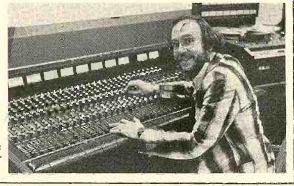
Technical Director Klein tries out one of the larger Teac Tascam mixers.
System Imbalance
Q. After a long struggle to find the reason for my having to operate the balance control on my preamplifier at the 3-o'clock position, I managed to trace the difficulty to the speakers rather than the amplifier or preamp, which I had assumed were at fault. It turned out that a readjustment of the mid-range control on one of my speakers enabled me to operate my preamplifier with its balance control centered. What would account for this?
MARVIN SEEMAN, Flushing, N.Y.
A. The frequencies that contribute to the ear's perception of the "loudness" of a sound are mostly in the mid-range. (You can confirm this for yourself by noting the small effect on the overall loudness of music that occurs when you turn your amplifier's bass or treble controls up or down.) Hence, any control that is designed to establish the relative loudness of the mid-frequencies in a speaker system will also necessarily influence its relative "efficiency."
Tone-burst Tests
Q. In loudspeaker test reports, tone bursts are shown along with some evaluative comments. What should one look for in tone-burst photos?
CHARLES DONAL, Lexington, Va.
A. Abrupt stops and starts-and very little jiggle in between. The idea behind a tone-burst signal is that it tests a speaker system's ability to respond precisely to abrupt changes in level or quick stops and starts in the signal. If a speaker cone is unable to follow the electrical tone-burst audio signal be cause it can't respond instantly to its onset or if it continues to vibrate after it is gone then the speaker probably cannot provide clean, clear reproduction of high- or low-frequency musical transients. Tone-burst photos prove nothing in and of themselves, because with practically any speaker it is possible to find some frequencies at which the bursts look fine and other frequencies (usually at the crossover points) at which they may be quite messy. That is why the test reports state that "overall" or "in general" the tone-burst response is fine, good, or whatever. Incidentally, don't be misled by the small ripples that frequently appear between the bursts. These are usually the result of reflections from the room surfaces picked up by the test micro phone and do not represent the inherent speaker response.
The Best Designs
Q
Can you provide a relative evaluation of LA. the best speaker-system and amplifier designs in respect to their mode of operation? In regard to speakers, I'm referring to acoustic-suspension vs. aperiodic vs. transmission-line, etc. For amplifiers, please evaluate class A versus the other design classes.
HAROLD B. BROWN, Bronx, N.Y.
A. I'm not even going to try to provide the f1. sort of evaluation you ask for, simply because, as far as I'm concerned, there's no point to it. However, I'm sure that the advocates of each of the particular design approaches can supply you with whatever data you desire. Our main concern at STEREO REVIEW is not with how a component works, but rather with how well it works. To put it another way, we are far more concerned with what comes out of the box or chassis than we are about what is going on inside it. Perhaps need less to say, we have tested and heard excel lent components of all types employing a wide variety of design approaches.
It is a mistake to get excessively hung up on some new component's design theory-apart from everything else-as a factor in your buying decision. To some extent, we at the hi-fi magazines are to blame for this, since audiophiles are too often encouraged by advertising claims or editorial coverage to become overly concerned about technical matters that they are really not in a position to evaluate. Readers should know that it is possible for a manufacturer to use the very latest technical approach in his speaker systems or electronic components and still, through bad design, poor quality control, or a tin ear, end up with a product that is not as good as some older unit with "old-fashioned" parts and design.
In short, the best advice I can offer is to com pare the technical comments and reports on performance that you will find in this and other magazines, but don't get carried away by the special design approaches used by one manufacturer or another unless the test re ports seem to validate them-in the specific component under discussion-as being significant.
If the real intent of your question is to determine how close a particular design concept comes to providing some ideal of "absolute fidelity" (cost no obstacle), I really cannot help you, since I know of no way to establish the absolute best among the many high-accuracy components we have tested. In regard to speakers, all that can be said is some thing like: "This ranks with the finest avail able." It may be that among the group of the best we have tested there is one that comes slightly closer to perfection than the others.
But we have no scientific means of making such a fine distinction. And in any practical listening situation, variations in program material, the associated equipment, the acoustic environment, and even placement are likely to introduce more difference in the audible outputs of two excellent speakers than that which results from inherent variations in their performance.
Don't misunderstand this as a dismissal of new technology, however. Many of the "technical advances," "breakthroughs," and innovations announced regularly in our pages are substantial and of real value to the con sumer. But others are merely different ways of achieving the same design goal. Even from my privileged seat, it is often difficult to distinguish the mere advertising claim from the genuine advance. And that is the main reason why we focus on a component's performance rather than on whatever special design feature the manufacturer states he has built into it.
Movie Dolby
Q. Ever since Star Wars came out more than a year ago, I've seen the term "Dolby Stereo" used more and more often in movie and movie-theater advertising. I'm familiar with Dolby noise reduction in tape recording; what does Dolby-and is it the same Dolby have to do with film sound?
MARION MACK, Ithaca, N.Y.
A. Yes, it is the very same Ray Dolby of noise-reduction fame. His company, Dolby Laboratories, has been involved for some time with improving film sound, and the box-office success of Star Wars has focused a great deal of attention on the Dolby film-sound techniques. Dolby noise reduction (the professional type-A system, rather than the simpler type B used in home tape decks and FM receivers) is an essential part of Dolby Stereo film sound, but there's a lot more to the story. Dolby's approach to improving film sound involves the entire process, including the recording and mixing of the sound, the format of the soundtracks on the prints that go to theaters, and even the movie theater's playback equipment. Ray Dolby says that when he first investigated film sound back in the late Sixties he found the process and equipment discouragingly out of date com pared to what was then being used in music-recording studios. So when a Dolby Stereo soundtrack is prepared, every effort is made to encourage the film studio to use modern re cording and mixdown techniques and equipment (including noise reduction, of course, whenever possible).
The most important breakthrough in get ting stereo sound into theaters was the development of a new stereo optical soundtrack format for standard 35-mm release prints. In the early Seventies Kodak and RCA were developing a system for fitting a pair of stereo tracks into the space occupied by the optical mono track on conventional film. Dolby joined forces with them, bringing along the work he had already done to improve the overall fidelity of optical sound. The comparatively rapid adoption of this new optical stereo format occurred mostly because of its practicality. In contrast to the magnetic-oxide-stripe soundtracks originally developed for stereo in the Fifties, the stereo optical for mat is far less expensive to produce for movie-house release prints. It involves only a simple photographic development process of the movie print, soundtrack and all, rather than a multistep process with the addition and then recording of magnetic stripes.
But achieving a stereo high-fidelity movie soundtrack was only half of the battle, considering the severely limited frequency response of theater playback systems. (In general, the response of home hi-fi equipment is far superior to that used in movie houses. The Dolby Labs staff made acoustic measurements of more than 150 theater systems and found the frequency consistently down by at least 20 dB at 9,000 Hz, with some bass rolloff as well.) A generally accepted playback characteristic, the "Academy curve" that became a de facto standard in the Thirties and Forties, was holding back movie sound, and its effects reached all the way to the original soundtrack recording.
Rather than asking theater owners to rip out their old audio equipment, Dolby Labs compensated for its poor playback response with equalization. Dolbyized theaters are equipped with sound-processing units designed to equalize the projector's sound heads for flat response to 12,000 Hz or so. And at the acoustic playback end, three or more twenty seven-band, one-third-octave equalizers are used to smooth out and extend speaker-sys tem response. Dolby-trained installers adjust the new equipment using pink-noise generators, real-time analyzers, calibrated micro phones, and special test films. The Dolby manufactured processing units also contain type-A Dolby noise-reduction circuits for the encoded soundtracks, plus circuits to derive a third, center-speaker channel required for proper dialogue localization in theaters using wide screens. In addition, many of the Dolby Stereo film soundtracks have been encoded with a matrix system for a fourth, surround-sound channel. Decoding this extra channel is optional. Many of the same techniques are also used for the six magnetic tracks on 70-mm release prints.
Twenty-five films have been released so far with Dolby Stereo tracks, twenty more are in preparation, and whereas there were about forty Dolby-equipped theaters when Star Wars was first released, there are now more than 700! Incidentally, it seems safe to assume that basic improvements in cinema sound will have at least some impact on movie-soundtrack recordings.
++++++++++++++
Audio Basics
THE WRONG TAPE FOR YOUR MACHINE
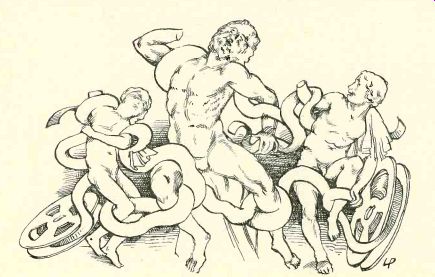
LAST MONTH'S "Bulletin" contained an item about a prominent tape manufacturer's plan to introduce a novel video-cassette sys tem. Since the tape used in the new system is recorded longitudinally, just as in audio re cording, I expect that at least a few readers have been wondering whether they could get improved performance from their audio recorders by using the new video tape. In other words, can the "higher" technology of video recording pay dividends with comparatively "lowly" cassette and open-reel audio recorders as well? Unfortunately, the answer is no. It's true that you can use video tape in an audio recorder-if you can find some way to make it fit the machine (it's not the standard width).
But you can't expect improved performance from it. "Higher" technology notwithstanding, video tape is designed for video applications, and although good video tape is both difficult and expensive to make, that fact does not contribute one whit toward making it a good audio tape.
Let's consider a few points in order. First there's the question of longitudinal recording-that is, laying down tracks that run along the length of the tape parallel to its sides. This is the configuration that audio recorders normally work with. Video machines usually lay down tracks that slant across the tape; in one instance they actually run at right angles to the tape's length. Why so? Well, video applications require a phenomenally high tape speed, but propelling the tape past the heads at such a rate often proves impracticable for a number of reasons. A better idea is to move the tape at a more reasonable speed and to move the tape heads as well. Video heads (there are always at least two, and sometimes four) are installed within a rapidly rotating drum around which the tape passes on its way to the take-up reel. These rotating heads whip out slanting (or perpendicular) tracks across the tape surface, managing in the process to make much more use of the available tape surface (that is, they cover more of it) than audio recorders do.
Now, ordinarily, the needle-shaped oxide particles on a tape are physically oriented so that their direction coincides with the direction of tape-head travel. Therefore, one would expect most video tapes to have their oxide coatings oriented at a slant. But this turns out not to be true. For various good technical reasons most video tapes have the same particle orientation as audio tapes; this may lose them a bit of magnetic efficiency in their video applications, but it works out better in the long run when other matters are taken into account. So the reason video tapes do not usually make good audio tapes is not necessarily because they are designed for some thing other than longitudinal recording. We'll have to look elsewhere for the real answer.
-------------------
Quite predictably, part of that answer has to do 'with the tapes' magnetic properties.
Video applications require the recording of extremely high frequencies, and video tapes are designed specifically to achieve this. Audio tapes deal with what are, in comparison, very low frequencies. It is possible to make a tape that does a fine job at either high (in the megahertz region) or low (audio-range) frequencies, but it is no easy trick to fashion one that is good at both. For example, when the real push started to turn the cassette into a hi-fi medium, chromium dioxide was seized upon as an excellent material for cassette tapes because its high-frequency performance is especially good, and it is at high frequencies that cassettes generally need the most help.
Noting the wonderful job that chrome did for cassettes, many audiophiles looked forward to the availability of 1/4-inch chrome tape for their open-reel machines. But such a tape never really became commercially available, for the simple reason that it was neither necessary nor desirable. Because an open-reel machine is usually operated at least 7 1/2 ips (four times the 1 7/8-ips speed of a cassette tape) in serious recording applications, any frequency it is called upon to record is in effect four times lower-as far as the tape is concerned-than it would be for a cassette machine. Thus an open-reel audio recorder can be looked upon as a low-frequency de vice, comparatively speaking. Since all the real benefits of chromium dioxide are realized only at high frequencies (in some formulations chrome is even worse at middle and low frequencies than "ordinary" iron-oxide tape), a chrome tape would be superfluous if not actually detrimental to open-reel performance.
THE story is the same where some other specialized tapes are concerned. Occasionally an audiophile will get the idea that he should be using computer tape for his serious recording. Where, after all, can you find higher technology than in the computer field? In reality, nothing could be worse for audio recording than typical computer tape, which is designed for a job so remote in its requirements from audio work that it's almost impossible to make a comparison. The only thing that can come of using it is an absurdly noisy and wretched-sounding recording.
So it's easy to find the wrong tape for your machine, particularly if you make the mistake of believing that a tape that excels in one specialized application is going to shine in all others. Today's open-reel and cassette tapes are actually marvels of engineering. For some years now the cassette producers have been in the forefront of tape development. Any at tempt to substitute some other tape type in their shells would make no sense either economically or technically.
The one formulation in sight that might come close to resulting in a good "all-purpose" tape is the new metal-alloy family of magnetic materials, simply because it offers impressive improvements in performance at both low and high frequencies. But metal-alloy technology is just aborning. Give it time to develop and we'll certainly find metal-alloy tapes becoming just as specialized as today's chrome- and iron-oxide formulations.
+++++++++++++++++++++++
Tape Talk
Record on Record
Q. I own a mid-price cassette deck, and I wonder if it is possible to record on top of a previous recording without erasing it. In other words, I want to add the second musical line of a composition after recording the first. Is this possible?
ROB SCHAPIRE, Delmar, N.Y.
A. In a word, no. It is true that you could have a technician wire in a switch that would, on demand, disconnect the erase head, which would otherwise obliterate the first recording completely. But the bias cur rent flowing through the record head itself during your second run-through would, at the very least, destroy the high frequencies on the previously recorded track, or, more likely, re duce it to such a muffled background level that no one would be happy with the result.
For the kind of project you have in mind, a four-channel open-reel deck with track-synchronizing facilities is what you need. An open-reel machine with a "sound-on-sound" feature would also work, although not quite as well. Another approach would be to feed the output of your present deck into a small passive mixer (available from many hi-fi dealers) along with the new material. The output of the mixer, fed to a second open-reel or cassette deck, will provide the sort of mix you are after.
Tape Swaps
Q. My friend and I bought identical (two-head) cassette decks so that we could borrow tapes from each other's collections.
Recordings made on my machine sound great when played on my deck but lack high frequencies when played on his. His tapes are fine on his machine but have no treble to speak of when played on mine. Can this be corrected?
ED LEPAGE, Milwaukee, Wis.
A. The problem you are experiencing is al most certainly because one (or both) of your decks has a slight azimuth misadjustment of the record/playback head. Ideally, the tape-head gaps should be perfectly perpendicular to the edge of the tape as it flows across them: this would constitute perfect azimuth alignment. If the head on your machine tilts ever so slightly from ideal azimuth, while that on your friend's inclines just a trifle in the opposite direction, the two azimuth errors combine when you play on one deck a tape that was recorded on the other. And any degree of azimuth error shows itself principally in a loss of high-frequency response. The reason neither of you detect any high-frequency losses when playing your own tapes is that the same head gap is being used for both recording and playback, so there is no relative azimuth change involved.
Adjusting head azimuth to the degree of accuracy that you and your friend obviously de sire is a job for a competent technician. And, regrettably, if a readjustment is-as I suspect-called for, it will have some adverse treble effect on the tapes you've already made on the affected machine(s).
Record-level Indicators
Q. I'm confused about cassette record –level meters. Is it better to have a VU meter (perhaps with separate peak-reading LED indicators), a peak-reading meter, or a "post-equalized" peak-reading meter?
CYNTHIA JANIS, Ann Arbor, Mich.
A. This one of those questions on which .. honest men (and women) differ, so ultimately "you pays your money and you takes your choice." But you should at least be clear about what the choice is.
The characteristics of the genuine VU meter have been standardized for about forty years, and since I've been recording with them for half that time, it's little wonder that I've grown accustomed to their ways. The salient characteristic of a VU meter is that if you hit it with a 300-millisecond (0.3-second) tone burst of a 0-VU-level 1,000-Hz tone, it will read 0 VU +1.5,-1 percent-that is, the indicated reading will be within about 0.15 dB. (For bursts of shorter duration the meter will give progressively lower and lower readings.) VU dial scales have standardized calibration from -20 VU to +3 VU and have a percentage marking (useful to broadcasters) of 100 percent at the 0-VU point.
Two things must be noted immediately. First, while most cassette decks have VU-meter dial scales, very few pay any attention to the ballistic characteristic, namely, the response of the needle to a 300-millisecond burst. Julian Hirsch tests this very carefully for his lab reports, but, on decks H-H Labs hasn't tested, don't count on VU-meter needle characteristics unless the manufacturer's literature specifically states "genuine VU ballistics" or words to that effect. Second, not God, but only Bell Labs laid down that 300-millisecond response requirement, and Bell did so in 1939 when, musically speaking, the "fi" wasn't very "hi." VU meters were in vented to reflect the perceived loudness ("VU" stands for "volume unit") of speech and restricted-frequency-range music pro grams at a time when there weren't any commercial tape recorders. That experienced operators can still set levels in today's recording studios using VU meters is a tribute to the remarkably good engineering four decades ago, but, in honesty, it must be admitted that much of what goes into being an "experienced operator" consists in knowing, in an almost un conscious way, when the VU meter may be providing potentially deceptive readings.
Peak-level, not average-level, signals are what cause distortion in tape recorders, be cause however short the time period selected, at any given instant the tape can hold only so much signal and no more. A meter that (like a true VU device) will hit 0 VU with a 300-millisecond pulse (without overshooting the +3 marking) will give something in between a "peak" and an "average" value with most audio signals, and so it will tend to understate the peak levels. A "peak-reading LED indicator" supplementing a VU meter gives you some useful warning of distortion-causing record levels on brief "transients," but it is probably less useful to most home recordists than a genuine peak-reading meter. Typically, such a meter will indicate the true level of transients as short as 10 milliseconds. To keep peak-level meters from bouncing up and down so quickly the eye has trouble following them, a resistor-capacitor network damps the needle's response. Further, the readable dial scales of peak-reading record indicators can be expanded to show a wider range (from-40 to. +5 dB, for example), so that soft musical passages that wouldn't lift the needle off its lower-end stop on a VU meter will at least register visibly on the peak-reading meter.
The final evolutionary step-which a few manufacturers have followed Tandberg's lead in adopting-is the "post-equalization" peak-reading record-level meter. Most record-level indicators, whether of the VU or peak-reading type, meter the signal level before the treble boost supplied by the tape deck's re cord-equalization circuitry. The tape, how ever, sees not merely "peak" levels but peak levels that have been treble-boosted to over come anticipated recording losses. Thus, if the purpose of a record-level indicator is to accurately reflect the signal fed to the tape, then an "equalized peak" meter will do the best job. It will steer you to the safest (most conservative) recording level, and for this reason it is the easiest record-level meter to use-at least for a beginner.
Which metering system is "best," then, I cannot say, for any type will serve the purpose if its attributes and limitations are fully understood.
Big-reel Conversion?
Q. Couldn't some manufacturing genius invent a pair of extension arms to allow owners of 7-inch reel-to-reel decks to use the larger 10 1/2-inch reels? The add-on reel tables could be belt-driven from the regular reel tables. I'm particularly interested because I'd like to use the 10 1/2-inch reels at 1 7/8 ips, and I can't find a 10 1/2-inch-reel deck that will operate at the slow speed. Do the 10 1/2-inch recorder manufacturers think we're all millionaires?
G. C. DELVAILLE, Laguna Hills, Calif.
A. Oh, how I wish such an idea would work (as a hungry young graduate student many years ago, I thought about it myself!), but I'm afraid you've got the laws of physics (along with some very practical problems) working against you. About fifteen years ago, Bell actually manufactured such a device, but they were careful to use separate motors (rather than your belt-drive suggestion) on the extension arms. And, if memory serves, Stellavox, a professional-deck manufacturer (with professional prices), still makes such a machine. But the problems are formidable.
The first problem-which dooms the consumer-deck conversion from the start-has to do with motor "torque," or turning force. A 10 1/2-inch reel of tape weighs about twice as much as a 7-inch reel and it will thus require substantially more torque. Further, to start the reel (when it's full), the motor will need to apply still more torque because the greater radius of the reel means that much less mechanical advantage. At a reasonably conservative estimate, you need a motor with about 4 1/2 times as much torque to handle 10 1/2-inch reels as you do to handle 7-inch reels with the same facility.
And the start-up problem is not the only one. As a practical matter, what do you do for brakes? A 10 1/2-inch reel careering away on high-speed rewind can develop enormous centrifugal forces that can fill the room with flying tape bits unless the brakes are designed to be proportional to the forces they must control smoothly.
You're quite right, of course, that none of the current crop of 10 1/2-inch machines is de signed to handle the 1 7/8-ips speed. The machines require such oversize driving and braking systems-which ensure a high price to start with-that manufacturers figure tape economy is of less concern to the majority of potential buyers (millionaires or not) than absolutely top quality is. The fact is that at PA ips you can do a better job in terms of fidelity with a cassette deck than with a big-reel ma chine designed for faster speeds-unless you fit the latter with the kind of laboratory-grade, specially built heads used in a manufacturing facility. A playback head gap, for example, that is optimal for 15- or 7 1/2-ips operation is likely to be marginal in high-frequency response at 3 3/4 ips and totally unacceptable (limited to 6,000 to 8,000 Hz tops) at 1 7/8 ips.
So, in sum, Mr. Delvaille, unless you're inter ested in trying to design a machine from scratch rather than modifying an existing 7-inch-reel consumer deck, there are just too many obstacles for me to encourage you.
+++++++++++++++
Going on Record
GREAT MUSIC I HAVE HATED
THE history of my hatred of great music is a long and arduous one. Of course, I did not hate all great music. As a matter of fact, when I was young I did not even know what great music was. As a child, I divided all music into two large categories: classical music and the rest of it. Classical music was what my father played for me on our polished mahogany con sole with automatic record changer (and three-pound tonearm), or what my long suffering instructors tried to teach me to play on the piano. "The rest of it" was what I listened to on the radio in the privacy of my own room: jazz, country music (we called it hillbilly then), gospel (live from the Harlem churches), big-band swing. blues, cowboy songs, and the current run of novelty pops.
I did not hate any of this music. As a matter of fact, I rather liked all of it almost equally well, in the undiscriminating way of youth. To really hate a piece of music, I think, you need a certain maturity, a certain experience of the world and of other people's hatreds. Without that, many of us might never learn to hate anything or anyone at all.
By the time I entered college, I had some of that worldly experience and could afford to express my dark side. I had also become aware that certain music was generally acknowledge to be great and even that other music might earn that description after it had been around a little longer. The first great mu sic that I can really remember hating, then, dates from that point in my life. It was Bartok.
I lived, in that first year of college, in a dormitory, across the hall from a senior whose ambition in life was to get hit (not too hard) by a Standard Oil truck going against the light.
While laying the groundwork for this major event, he was preparing himself to go to law school, and he played the bassoon. He was also determined, for reasons I never discovered, to push Bartok down my throat, and so, whenever I appeared in his room (which was often), everything came to a stop and the Concerto for Orchestra, or the Music for Strings. Percussion, and Celeste, or one or another piece of the Bartok oeuvre went onto the phonograph. I came back to New York one fall weekend and confessed to my father that I had developed a passionate hatred of anything and everything by Bartok. My father told me that if I wanted to listen to something really impossible I should cock an ear to some of the records of Villa-Lobos he had had foisted off on him by an unscrupulous sales man. But I told him that they couldn't possibly measure up to Bartok. The, thrill of first hatred was just too strong for competition.
Christmas vacation that year found me in New York record stores buying Bartok for myself: the Concerto for Orchestra, the MfSPaC, the Sonata for Two Pianos and Percussion, even a couple of the string quartets.
Odi et amo. The history and pattern of my musical hatred had really begun. When I got back to college, I asked another upper class man, a music major, about Delius' Over the Hills and Far Away and the Schoenberg string quartets. "Oh. you'll hate them," he said. So I bought them at the first opportunity.
My next hatred, one I smugly proclaimed to a fellow student at N.Y.U. (to which I had transferred), was Bach. "How can you hate the Brandenburg Concertos?" he asked.
Well, I liked the Second and Third Brandenburgs (which were the only two I had heard), and so I said that I didn't mean that, but the church music. "You hate the cantatas?" he persisted. I had never heard the cantatas, so I could hate them without fear of self-contra diction, but I had the feeling that I was on thin ice. "Well, it's really the organ music that gripes me." I confessed, and I could sense the proverbial corner behind me as I laid down that swath of hypocritical paint. "Have you ever heard it on a Baroque organ?" he asked.
If I had ever heard it on any organ I couldn't recall it, so I just shook my head. "Oh, well, that's why. Those modern organ performances completely misrepresent the music, and the orchestral transcriptions are pure anachronism." My face was saved, and in the next days I bought recordings of four Bach cantatas and the rest of the Brandenburgs, and I also started on Helmut Walcha's series of the complete Bach organ music on eighteenth-century organs.
I hated Lieder for a long time too. It was an honest hatred, I think, brought on by unpleasant memories of scratchy recordings played in high-school "appreciation" classes, where the soprano sounded as if she weighed three hundred pounds and no one knew what the song was about. I carried that hatred right up to the time of Elisabeth Schwarzkopf's American debut in Town Hall, where I was seated second-row center only because the recital was part of a concert series to which I had subscribed. I own, even now, not only a lot of Schwarzkopf LP's, but one of New York's larger collections of lieder on scratchy 78-rpm records.
IN my time I have hated Liszt and I have hated Chopin, and I am the better for it. I have recovered from both those afflictions and I have the records to prove it. I have never hated Mozart, but I admit that it took some time before my visceral understanding of him began to match his universal reputation, which I too was content to mouth. I almost got to hate Beethoven at one time, but it seemed almost unpatriotic to do so, and, any way, the mood passed.
Being now a mature man, I have learned that simple blind hatred cannot possibly cover all cases. There are degrees of hatred, of dislike, of disdain. And one really needs, I think, a certain respect for a piece of music before one can hate it-always excepting certain contemporary music. There is much music Tchaikovsky's symphonies, Respighi's tone poems, early Verdi, three-quarters of the Rachmaninoff concertos, and more-that, to take a phrase from the soap operas, I don't hate but that I feel sorry for. Such sympathetic disdain implies, of course, that the music it self is not "great," and, at least from my subjective point of view, it isn't. But this is where critical estimations of quality and personal taste get all mixed up together. Certainly there is great music that I continue, to this day, to hate: Wagner's Lohengrin, Ravel's, Bolero, mid-period Verdi, Puccini's Madame Butterfly. Bizet's Carmen, Brahms' Requiem, most of Bruckner, und so weiter. But these hatreds are the products of mature reflection, and it should be obvious that I'm not going to change them.
-----------
+++++++++++++++++
The Pop Beat
TWO WAYS TO STRETCH YOUR EARS
IT is commonly thought that rock is an all-or-nothing proposition and that if you really love it you can permit yourself no other musical passions. Life, of course, is not so simple as that. I'm a member of the rock generation (and proud of it, by the way), and as I've grown older I've begun appreciating artists whose careers were established long before Elvis bought his first guitar. I've found that enjoying other kinds of music does not diminish my love of rock one bit-but does cut into the amount of time I used to spend with it.
There are many musicians who perform in quite different styles but still have appeal for those of us born in the baby boom of the late Forties. Two of these artists have just made new records, and I'd like to recommend them to you.
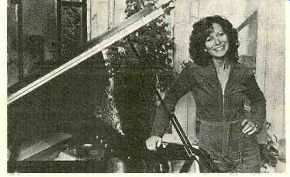
The first is by the singer/songwriter Alberta Hunter, who since October of 1977 has been performing regularly at a Manhattan club called the Cookery. At eighty-three (9 Miss Hunter is experiencing the renaissance of a career that began in Chicago more than seven decades ago. Her life story was told in these pages by Chris Albertson ("Roots of Jazz," December 1977) and has since been retold in such general magazines as Newsweek, the New Yorker, and even Penthouse.
On her frequent television appearances in the last year Miss Hunter herself has told the story that began when she left her home in Memphis, Tennessee, at the age of eleven and went to Chicago. Protected by pimps, prostitutes, and Providence, she found work in Chicago as a singer and went on to great success not only in the Middle West, but on Broadway and throughout Europe and Asia. After years of acclaim, she suddenly retired from show business when her mother died in 1954, and she spent the next twenty years in obscurity, working as a nurse in a New York hospital. In 1977 her impromptu performance at a party for her friend Mabel Mercer resulted in an engagement at the Cookery which brought her back into public life.
Miss Hunter's second career is a bit more sedate than the first. At the Cookery there are no giant birdcages filled with feathered chorines (a feature of her act in 1934), and she no longer wears the sparkling beaded dresses that emphasized every shimmy in her Chicago days. Now she usually wears a simple black dress and has her hair pulled back in a tight bun when she stands at the microphone, rocks back on her heels, and delivers in a robust voice, "I want a two-fisted, double-jointed, rough-and-ready man." Her musicianly, unobtrusive accompaniment is provided by Gerald Cook on piano and Al Hall on bass.
Her audiences, who are surprisingly young, shower her with affection, and standing ovations are common wherever she performs.
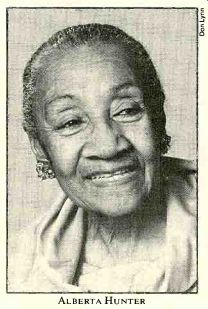
--- ALBERTA HUNTER
And, of course, she is recording again. She wrote and performed the entire score of Robert Altman's film Remember My Name. This music track has almost no bearing on the odd ball plot of the movie. Miss Hunter's music is grafted onto the story by the device of having it played on the heroine's phonograph. The soundtrack album (Columbia JS 35553), then, is simply a collection of ten Alberta Hunter songs, not an integrated body of music created to further the drama, and so it stands firmly on its own as a record. "Remember My Name" features the Cookery lineup plus five other musicians. With a sensitivity that comes from their long association, Cook weaves a responsive piano background for Miss Hunter's mature, robust voice, and Hall's bass provides a foundation for both. Except for Wally Richardson's guitar, the other instrumentals don't fare so well either on the Hunter classics (such as Downhearted Blues) or on the new material written in classic blues style.
They just never swing. But Alberta's spirit comes through nonetheless. An expressive undercurrent of emotion enriches the lyrics of the new ballad The Love I Have for You, and her sophisticated sass keeps the old songs, like Workin' Man, sounding fresh. In the liner notes she is quoted as saying, "We sing the blues because our hearts have been hurt, but when you sing the blues, let it be classy." HUGH SHANNON, cabaret artist (or "saloon singer," as he calls himself), has gone a step further; not only everything he sings, but everything he does must be classy. Elegant in evening clothes, and occasionally sipping champagne, Shannon can be found most winter evenings behind the piano at David K's, a Manhattan restaurant and club. In the course of a career approximately thirty years shorter than Alberta Hunter's, Shannon has built a repertoire of the finest gems of American popular song. They range from such little-known tunes as Hoagy Carmichael's Baltimore Oriole to those as familiar as Herman Hupfield's As Time Goes By, with generous portions of Cole Porter and George Gershwin and smaller ones of Stephen Sondheim and Billy Joel.
Shannon has usually performed in the small, international-style clubs that have been the havens of cabaret artists Mabel Mercer, Bobby Short, and Blossom Dearie. But if you've missed him in Paris, Rome, or Capri these past few years, and if you're not going to be around to catch him in New York this winter or Monte Carlo next summer, don't fret. A Shannon performance will be arriving from Audiophile Records early this spring, and to enjoy his rugged, urbane baritone and muscular supportive piano you need only put "True Blue Hugh" (AP 140) on your turntable. You might want to open a bottle of champagne for atmosphere, but he will sound just as good if you kick off your shoes and drink a beer straight from the can.
The album reproduces the musical portion of Shannon's appearance on Alec Wilder's excellent (but now defunct) radio series American Popular Music. Although the witty, informative commentary that enlivened the original broadcast is not on the disc, the conviviality of the event is palpable in each lovingly selected tune. Shannon is relaxed and in complete artistic control. I've heard an advance pressing of this marvelous record, and I advise you-along about April-to send $6.98 plus $1.00 for postage and handling to Audiophile Records, 3008 Wadsworth Mill Place, Decatur, Ga. 30032 and order "True Blue Hugh," which will turn any evening at home into a festive party.
IN writing my letter to Santa Claus last month and analyzing the rock records that had come out in 1978, I found that the qualities I admired most in the rock music I really liked were sincerity and commitment to the music. Though their styles differ from rock, I hear the same kind of honesty in the work of Alberta Hunter and Hugh Shannon. They convince me. I believe them. I think you will too.
+++++++++++++++++
====================
Also see:
Digital Mastering--A Progress Report (Jan. 1979)
Turntables -- What Are Your Options (Jan. 1985)
Source: Stereo Review (USA magazine)