Ivan Berger reconnoiters a crop of stocking stuffers that will make your system's Christmas a happy one.

YOUR stereo system's been good to you all year; why not remember it at Christmas with a little accessory something? Audio salons are full of such little some-things for your system as well as those of your audiophile friends and neighbors. Those stores are full of big some-things that could be called accessories too: equalizers, analyzers, noise reducers, companders, delay units, and the like. But each of those is (or has been--see box on page 78) worth an article by itself; what I'd like to examine now are those stocking-stuffers of various sizes that don't merit a full-dress treatment.
There are so many of them available, in nearly every price range, to make a good system do its thing better, more conveniently, or with greater panache, that finding one to fit seasonal gift-giving needs or year-long listening ones is no problem at all.

Accessories are sometimes called for because you're making a significant change in your system-adding extension speakers, for example, in which case you may need an outboard speaker-selector switch if there isn't one al ready in your amplifier or receiver.
Audiotex, Switchcraft, and others make them, and Russound even has models that let you adjust the levels of each set of speakers independently.
Similarly, if you keep extra cartridges on hand, for whatever reason, you'll need extra head shells or slides to hold them. If your turntable uses the four-pin, plug-in "universal" shell found on many tone arms, you can get extra-light versions from Audio-Technica, low-resonance carbon-fiber ones from Adcom, and four models in graduated weights (to help you adjust arm/ cartridge resonance or to simplify re balancing when you change cartridges) from Fidelity Research. If you need a place to hold the holders, Audio-Technica has a plastic case for three universal shells, with a separate, plastic mini-bell-jar cover for each.
When you install a cartridge in its shell and the shell on its arm, proper alignment will ensure the best possible sound from any cartridge--so Osawa and db Systems make protractors to help you make this alignment properly.

(Incidentally, space limitations pre vent listing every brand of every item; in any event, not all are available everywhere. Inclusion does not constitute an endorsement nor omission the reverse; most small accessories are helpful, and some are excellent.) Turntable Gremlins Since the phonograph is both the most popular and the most problem-ridden signal source, it gets the most attention from accessory manufacturers. Most of that attention is concentrated in two areas: the mechanical one of resonance, warps, and acoustic feedback, and the "housekeeping" one of record cleanliness.
Common turntable problems can seem like poltergeists that playfully toss your tone arm from the record or like ghosts that haunt your system with strange thumps and rumbles. There are plenty of accessories designed to help exorcise these evil sonic spirits. Whether caused by acoustic feedback from speaker to turntable or infrasonic vibrations (rumble) in your turntable (or in the one used in cutting the master record), very-low-frequency noise can cause problems even when it is not audible. A high-level infrasonic signal can drive speakers into distortion, and even a low-level one can steal power from the amplifier. The simplest solution is to filter it out; if your amplifier lacks suitable infrasonic filters, you can get external ones from Ace Audio and Warp-Knot.
Acoustic feedback can cause noise, distortion, and tracking problems, and it usually occurs at audible frequencies, so you should do what you can to eliminate it too. Netronics and Cotter offer turntable-isolation platforms (Cotter's weighs 130 pounds!), while Audio Technica, Discwasher, Enid, Iso-Base, Keith Monks, Realistic, and others make specially designed isolating de vices to fit under your turntable and/or speaker.
But even if the record player is adequately insensitive to acoustic vibrations, records can still pick them up from the air. This is one reason for the profusion of hold-down weights for discs (they are also claimed to reduce warp effects) from Audio-Mate (Elpa), Audio-Technica, Bib, Metrosound, Keith Monks, and others. Anti-resonant turntable mats such as the Waterloo Platter Pad and Osawa DISK-SE22 are also aimed at disc vibrations, both transmitted and developed from disc/cartridge/arm resonances. Since the source of the problem may just possibly not be what you think it is, any of these expensive curative accessories should be bought with a money-back guarantee. Arm and cartridge resonances can also be at tacked directly with the Discwasher Disctraker and Adcom Discotrace.
Both are arm-mounted, their motion-damped pads gliding along the record surface to minimize tone-arm mis behavior on warps.
Dirty Discs Dust, and the static electricity that attracts it, are among the biggest problems in phonograph reproduction, and there are probably more accessories to counteract them than for all other hi-fi purposes combined.
Antistatic guns, with piezoelectric elements that fire neutralizing ion charges, are available from Discwasher, Bib, Metro Sound, Empire (Audio Groome), Audio-Mate, Radio Shack, and others. Audiotex and Le-Bo devices are brushes with neutralizing generators built into their handles.
Nuclear Products' Static-master brush has a built-in strip of polonium, whose mild radioactivity also neutralizes static charges. Stanton's Permostat is an antistatic solution intended to give lasting static immunity; other antistatic sprays or liquids are available from Ampex, Audiotex, Bib, Fidelitone, GRT Design, Recoton, and Vac-O-Rec.
Conductive brushes, which can draw off record-static charges to a ground point, are widely available. Models from Decca, Goldring, Keith Monks, and others even track and de-staticize the record during play. Lenco's new model mounts on (and descends with) the dust cover, contacting the disc it self with a radially tracking conductive brush, and the spindle with an additional grounding contact; a conductive platter mat comes with it. And if you want to see how effective your antistatic measures are, Bib and Sound Guard both offer simple static detectors.
Nonconductive brushes that track the disc during play are even more common than the conductive kind. In addition to the original Watts Dust Bug, there are now units available from Audiotex, Audio-Technica, Bib, Calibron, Canton, Fidelitone, Leda, Metrosound, Recoton, Robins, Sound Saver, and many others. Duotone has a device that looks like a tracking brush, the moderately expensive ($89.95) Groovac, but it is actually the nozzle of a tiny vacuum cleaner; its power and dust-collector sections are in a small box styled like a hi-fi component-which, in a way, it is.
Manual brushes abound too-Disc washer's has one-way bristles that dig down into the groove when stroked one way but disgorge their captured dirt when stroked the other. Others are Transcriber's Classic 1 and the Watts Disc Preener, both with built-in humidifiers, the Memorex, the Groove Tube, and the venerable Watts manual Parastat. Then there are powered brush systems, ranging from the hand held, battery-powered Panasonic to the more elaborate groove-cleaning de vices from Vac-O-Rec and the most expensive record-care accessory, the Keith Monks machine at $695. To be on sale in 1980, it washes and vacuum-drys records in a continuous process.
Some cleaners lift disc dirt off by adhesion. Rollers with surfaces sticky to dirt but not to the record surface range from the Sonic Research Pixoff, with a replaceable tape surface, to permanent-surface rollers from Bib, Fidelitone, Metrosound, and Rotel. Empire's Audio Groome Discofilm is a coating applied to the disc; when dry, it is peeled off with the dirt in its grip.
If keeping a record clean lengthens its life, so can lubricating it. Sound Guard pioneered this approach with a non-gumming lubricant; Sound Saver and Recoton now offer other lubricants, while Audio-Technica's Life Saver and Audio Kare's Quietone combine lubrication with an antistatic agent.
A little dust accumulation on the stylus can do more sonic harm than the same amount spread over the record surface. So there are stylus cleaners too. Watts and Discwasher were among the first to make special stylus brushes, while Audio-Technica pioneered with special stylus-cleaning solutions. Now nearly every manufacturer of record-care accessories offers one or the other, and many offer stylus-balancing scales to check stylus force.
Disc Efficiency
You get the benefit when your records stay in better shape. But there are accessories which benefit you more directly. For example, if you've ever tried to cue up a band of a record when the turntable is resting on a dimly lit shelf, you'll appreciate a light that mounts in the dust cover and goes on when the lid is raised: Lenco, Goldring, Radio Shack, and Robins all make them. Discwasher has a small offset-mirror/flashlight combination to help you examine styli, check connections behind your set, and so on. And for those who don't have tone arms with automatic functions, Thorens, Audio-Technica, AudioSource, and Bib all have gadgets that will automate the end of a record.
You should be putting your records away right after playing each one, but most people let them accumulate around the turntable and then re-file them all at once. A number of new products deal with that problem:
GRT's " London" and " New York" record housings hold small batches up right; the New York model can be stacked and interlocked to hold a full collection. Discwasher's DiscKeeper, of wood and metal, holds up to fifty albums upright and flat against the wall, yet lets you leaf through them at will. Metrosound's Mill record storage system is an all-aluminum, table-mod el rack that holds up to sixty records.
Tape Care
Now that the cassette deck is almost as standard in stereo systems as the turntable, accessories for tape care have become almost as common as those for record care. Tapes them selves need less care and cleaning than records, but tape heads need at least as much attention as phonograph styli.
Heads need to be demagnetized and checked for wear. And though they re quire cleaning, they don't need to be cleaned with as delicate a touch as styli.
Head-cleaning kits such as Maxell's and TDK's have been with us for ages, as have long-nosed head demagnetizers. The latest wrinkle, though, is cleaners, demagnetizers, or combinations of the two built into cassette or eight-track cartridge shells. Head-cleaning cassettes are available from Ampex, EMI Audiocare (Empire), Fidelitone, Memorex, Nortronics, Recoton, and TDK. For demagnetizing cassettes, try Nortronics, Robins, and TDK; GRT has combination clean/ de-mag models.
There are some interesting new touches in the long-nosed type of de magnetizer too. Calibron and Radio Shack, for example, have illuminated models to help you see what you're de magnetizing. TDK makes a battery-powered one that bends in the middle for easier access to cassette heads. And if you want to get really fancy about head care, R.B. Annis makes magnetometers that enable you to check how well your demagnetizer did its job.
Test tapes are probably easier to find today than test records are (STEREO REVIEW, though, still markets one of the latter see accompanying box). Aspen, Audiotex, Fidelitone, Nortronics, and TDK offer these, with TDK having about the most extensive line of test cassettes.
Tapes, unlike records, can be edit ed-even, when necessary, spliced.
Splicers come in two basic types: the clamp-and-hold type, such as the well known Robins "Gibson Girl," and the open splicing block, such as the original Editall. Those who splice only occasionally seem to prefer the former, those who edit professionally prefer the latter (once mastered, it is simpler and faster). An interesting hybrid is the Nagy splicer line, an open-block type incorporating a built-in cutter like the clamping type. Splicing blocks with side-by-side cassette (1/7-inch) and open-reel (1/4-inch) channels are made by Leda (in metal) and by Radio Shack (in plastic).
More and more recorders feature "timer standby" circuits that permit you to record a program off the air while you're away, or wake you up by playing your favorite tape. But the timers needed to use this facility have been hard to find until lately. Today, such timers are available from Sanyo, Onkyo, Pioneer, and Nakamichi, with another possibly coming soon from Marantz.
Tuner Aids
You almost certainly have an FM tuner, quite likely with an AM section too. But with TV sound improving, you might want to add a TV tuner (from Pioneer, Rhoades, Finco, and others), unless--you're willing to wait a few years for the onset of stereo-sound TV.
Whatever bands you're equipped for, you'll probably receive them better if you add a good antenna. Outdoor FM and TV antennas are available from many sources, while McKay Dymek offers good outdoor and indoor AM ones, and Sansui has an outdoor antenna for both AM and FM. For indoor use, B.I.C. has two models of low-gain but directional and somewhat tunable Beam Box antennas, while JFD has a nondirectional, signal-amplifying in door/outdoor weatherproof unit. And Audio Marketing by Von has the Magnum FM Power Sleuth, a tunable FM antenna-signal amplifier.
Not all accessories, of course, are devoted to just one signal source, as those for phono, tape, and FM are; there is a whole world of ancillary equipment that works with your amplifiers and speakers and therefore affects all your listening.
Other Helpers
Actually, there aren't many kinds of amplifier accessories. Power meters and displays are the main ones, either for use with amplifiers that don't tell you how much power they're delivering, or for those whose meters are mounted out of sight. Heathkit, Crown, Radio Shack, Technics, and Draco are among those making add-on power meters, with Heath's kit dou bling as a speaker switch and headphone-jack box. Crown's does all that and monitors a.c. line voltage and the power from a second amplifier as well.
The Technics model has a 25-minute peak hold for such tasks as checking maximum level over an entire record side. Somewhat jazzier are the illuminated linear power displays from Audio Innovations, Audio Technology, Heathkit, Agian, Lux, and Uni-Sync.
And if you want to know how much sound is resulting from all that power, Radio Shack and BSR offer inexpensive sound-level meters.
As your components grow in number, so the number of your amplifier's jacks seems to shrink into inadequacy.
But no need to buy another amp; you can buy accessory boxes with extra switching and inputs for any need in stead. The Audiotex Director, for ex ample, adds two auxiliary inputs, two tape monitors with direct dubbing in either direction, plus a third loop for a signal processor or another tape deck.
Russound has switchers for three or five tape decks or other sources, and Superex has a three-deck switcher.
And Series 20 has a component-style switcher with four tape-monitor loops, a built-in dubbing bus, two auxiliary inputs, three phono inputs, and three power-amp outputs.
If you prefer the flexibility of professional-style patch bays and patch cables to the convenience of switchers, that's easily arranged too. Switchcraft makes rack-mounting patch bays for regular and "tiny" phone jacks, Teac has one for regular phono plugs, and Russound has one using miniature phone plugs. Russound also makes both stereo and quadraphonic control centers that combine switching and patching features.
Leading into and out of the amplifier are cables, of course. Premium interconnection cables with non-corroding gold-plated plugs and contacts are widely available. So are premium speaker cables, said to provide low capacitance, more "skin effect," and more conductor area for lower resistance. Experts disagree as to whether such cables can audibly improve the sound, but there is no disagreement that some amplifiers react violently to the extra capacitance found in a few fancy speaker cables. If your amplifier's maker gives you the go-ahead, however, and if you can hear a difference worth the extra cost, then you'll have plenty to choose from. Audio source, Audiotex, db Systems, Discwasher, Fulton, Marcof, Megastrand, Mogami, Monster Cable, Polk, Recoton, Sansui, and many others make them. There's also a phono-impedance matching kit from db Systems to optimize phono-cartridge response.
If the speakers at the other end of your cable sound boomy, it may be because they're sitting on the floor bookshelf speakers seem to spend less and less time on bookshelves lately. If this is your problem, consider raising your speakers on speaker stands such as those from Speaker Uppers. This is one accessory whose utility you can test before you spend a cent: set your speakers on some books or chairs and see if the bass sounds more realistic. If it does, speaker stands will help. They may also reduce the bass feed-through that annoys your downstairs neighbor, and the tilt-back of most stands may aim your tweeters in a more suitable direction. There might even be some reduction in acoustic feedback. There are housekeeping advantages, too: stands let you clean the floor beneath the speakers, and those on rollers make it easy to move them out of the way or into an acoustically better (if logistically inconvenient) location for critical listening or just into another room.
And, by the way, when you're tinning the ends of your speaker wires, a port able, rechargeable soldering tool from Wahl might come in handy.
----------------

STEREO REVIEW'S SRT 14A- test record, an accessory in itself, is de signed to assist in audio-system setup and maintenance, and it includes tests for evaluation of frequency response, stereo balance and spread, phasing, and record-player adjustments. It costs $7.95 (plus sales tax where applicable) by mail from:
TEST RECORD, P.O. Box 278, Pratt Station, Brooklyn, N.Y. 11205.
The following articles from previous issues of STEREO REVIEW relate to aspects of accessories not covered in this brief Christmas survey. The magazines may be available at your local library, or reprints can be ordered as indicated below.
40902 How to Select a Microphone (March 1975)
40909 Audio Equalizers (May 1976)
40926 All About Noise Reducers (October 1977)
41365 FM Antennas (September 1978)
41366 Time-delay Systems (October 1978)
41367 Hi-fi Equipment Racks (December 1978)
Reprints are $2 each (minimum or der $4).
Please order by number from STEREO REVIEW REPRINTS, same ad dress as above.
--------------
And for the rest ...
There is no end to the accessories you can add to your system, of course. More of them have doubtless entered the market even as you read this, including some that don't fit into any neat category. Elpa's Audio Buff cleaner and polish for plastic dust covers is one example. Audio furniture is another: when you have a fully equipped system, you need somewhere to put it. Most of the major component makers now offer racks and cabinets, as do a growing number of cabinet specialists. Apres Audio, Crown, Gusdorf, Inttra, Mariani, O'Sullivan, and Sound Stack have some especially interesting designs along these lines, but there are many others. Sansui (they have a bolt-in rack themselves) also makes rack-mounting accessory drawers-an accessory for an accessory, so to speak, designed to hold other accessories. And that, I guess, is about as far as you can go in that line.
Audi, HiFi and Music Books for Xmas

Compiled by Louise Gooch Boundas
This Is Music, by David Randolph. Cornerstone Library, New York (1979), 222 pages, $3.95 (paper). A distinguished conductor and lecturer, Randolph is also a gifted teacher, and it is good to have his introduction to the appreciation of music back in print. It is not a history of music, but a discussion of its principal components-melody, harmony, rhythm, tone color, and form. Con tending that you don't have to be able to read a single note to understand and enjoy music, the author demystifies music appreciation.
Common sense and love of music pervade the book. An excellent first book for a beginner, it will also enhance the listening pleasure of more experienced music lovers.
The Pursuit of Perfection, A Life of Maggie Teyte, by Garry O'Connor. Atheneum, New York (1979), 327 pages, $15.95. The art of the English soprano Maggie Teyte (1888-1976) is well documented on records, and in this excellent biography her grand nephew documents her life as well as her career. Particularly renowned as an interpreter of French vocal music, she studied in France with Jean de Reszke and worked closely with the composers Reynaldo Hahn and Claude Debussy. The book is candid about her personal life (she had affairs with Georges Enesco and Sir Thomas Beecham), but not sensational. The appendices include brief articles by Teyte herself and a complete discography. This ranks among the best biographies of singers ever written.
-W.L.
The Music Criticism of Hugo Wolf, translated, edited, and annotated by Henry Pleasants. Holmes & Meier Publishers, Inc., New York (1979), 291 pages, $24.50. Uninformed critics of critics tend, sooner or later, to fall back on the old saw "those who can, do; those who can't, criticize," unaware that some (though far from all) of the best musical criticism has been written by composers: Schumann, Debussy, Berlioz-and Hugo Wolf. English translations of the critical writings of the first three have long been available (though few have read them), but Hugo Wolf's brief career as a critic (a little over three years) has been accessible only to those equipped to deal with his difficult German.
Those not so equipped may know only that Wolf was not a fan of Brahms (as Hanslick was not of Wagner) and so dismiss him.
Henry Pleasants' translation should correct the record for Wolf as his earlier (1950) Vienna's Golden Years of Music did for Hanslick. The content is fascinating and instructive, and the style (close to a hundred years later) is startlingly contemporary.
Wolf--the critic and the composer--clearly deserves more attention than he has been get ting lately.
American Musical Theatre, A Chronicle, by Gerald Bordman. Oxford University Press, New York (1978), 749 pages, $35. An incredibly comprehensive yet surprisingly readable reference work. Every musical production on (and many off) Broadway from 1866 through 1978 is discussed, often in considerable detail, and a prologue covers even earlier works. The season-by-season chronicle is interspersed with short biographies of the principal creative figures, and the several indexes make it easy to locate anything of special interest.
Fundamentals of Musical Acoustics, by Arthur H. Benade. Oxford University Press, New York (1976), 596 pages, $15.95. Recommended for music lovers and audiophiles who want to know more about the physics of musical sounds. Starting with basic sounds and principles, Benade takes the reader through what he calls "vibration recipes" to fascinating discussions of musical-instrument acoustics. All the instrument families are covered in detail, as is the ever-popular and controversial subject of room acoustics. The explanations and illustrations are entertaining and clear, and there is extensive bibliographical information for those who can't get enough of the subject.
Benjamin Britten, Pictures from a Life, compiled by Donald Mitchell. Scribner's, New York (1979), 440 illustrations, unpaged, $25. The late Lord Britten was said to be a bit camera shy, but few lives in music have been so lavishly documented graphically as his is here. The pictures include not only original photos but also facsimiles of paintings, drawings, posters, manuscript pages, correspondence, and program notes, and the subjects include, besides Britten, many other people important in his life and career, especially his close friend and colleague Sir Peter Pears. A feast.
-D.S.
An Autobiography, by James Galway. St. Martin's Press, New York (1979), 181 pages, $8.95. One of the world's most elegantly polished flutists tells his own story in rough hewn but generally charming prose. The homespun "philosophy" gets a bit thick Galway has come to view his musical career virtually as a religious vocation-but the many stages of his journey from Belfast to Berlin and beyond are convincingly evoked, and the anecdotes about famous musicians he has known or worked with (especially "Herbie" von Karajan) are delightful.
-D.S.
The Music Makers, edited by Clive Unger-Hamilton. Harry N. Abrams, Inc., New York (1979), 264 pages, 612 illustrations (including 221 in full color), $35. This is the music coffee-table book par excellence. Not only is it a beautifully produced volume Abrams is, after all, a publisher of art books-it is well written and informative, covering music from the troubadours to "The Electronic Revolution," composers and per formers from Guido d'Arezzo (who flourished around the year 1000) to Paul McCartney's Wings. The book's organization may seem peculiar at first, for everything is chronological, but once you get used to using the index you will appreciate the advantages of being able to refer to subjects in the context of their times, to composers and performers in the context of their contemporaries. And the illustrations, many in full color, are magnificent. You just can't beat this for browsing. If you're lucky enough to get it, leave it on your coffee table for a few weeks at least. When you do get ready to put it away, it will fit conveniently on the shelf with your LPs-it is the same height and depth as an album jack et. Expensive, but worth it.-L.G.B.
To Be, or Not ... to Bop--Memoirs, by Dizzy Gillespie with Al Fraser. Doubleday, Garden City, N.Y. (1979), 552 pages, $14.95. "Naturally, I know my own contribution to jazz. I know just what I created that someone else didn't, and what Monk did and what Charlie Parker did; what their contributions have been. I was just digging and I said, `Now, let me see, what did I do that is going to be hard to get rid of?' " This book is "going to be hard to get rid of," for one thing. John Birks "Dizzy" Gillespie is, of course, a great jazz (bebop) innovator, and anything he wrote would be of interest to jazz enthusiasts.
But Gillespie and his collaborator Al Fraser have done a lot of digging for these memoirs, and the book turns out to be much more than the autobiography of the man with the extraordinary chops and the cocked horn. It is an intelligent, provocative, opinionated history of the music and the people, mainly black, who made it. To Be, or Not .. . to Bop has a remarkable vernacular flavor, and it is full of wonderful anecdotes. There is a twenty-page "Selected Discography" at the end, and that alone would make the book a must for the record collector.
-L.G.B.
Celebration: The Metropolitan Opera, by Francis Robinson. Doubleday, New York (1979), 304 pages, $30. The author, an executive at the Met for more than thirty years, probably knows the background and workings of the company better than anyone else alive.
Also an excellent raconteur, he enlivens this affectionate account of the Met's past and present with many anecdotes about those who have helped to make the company great. For an opera fan the four hundred well-chosen illustrations alone would make the book worth its price.
Vintage magazine ADs:
THE ONKYO TX-MKII RECEIVERS...
COMMITTED TO QUALITY
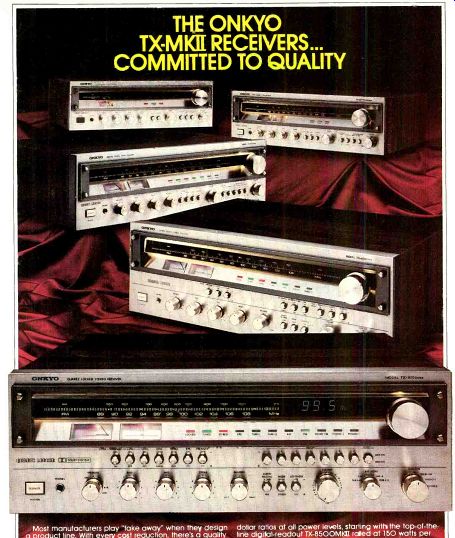
Most manufacturers play "take away" when they design a product line. With every cost reduction, there's a quality loss. Onkyo takes a different approach. Each of the five models in the TX-MKII sexes of receivers represents an exceptional value for price. And vital performance features such as Onkyo's exclusive distortion-free, quartz or servo-
locked FM tuning are built into each of the receivers, as is the sophisticated HTSTM (human Touch Sensor) control. HTSTM senses your touch on the tuning knob and "unlocks" the station. You rough tune to another station, release he knob, and the HTSTM analog comparator circuits automatically find and precisely lock into the most distortion-free station setting.
And aside from the excellent signal-to-noise ratios at all inputs, the Onkyo TX-MKII series provides excellent value-to-dollar ratios at all power levels, staring with the top-of-the-line digital-readout TX-8500 MkII rated at 150 watts per channel with 0.05% total harmonic distortion, both channels driven into 8 ohms from Kt Hz to 20 kHz, to the modest TX-1500-MKII at 17 watts per channel and 0.03% THD under the same conditions Don't step down in quality. Step Lip to Onkyo.
Artistry in Sound
++++++++++++
Put metal tape where it will do the most good.
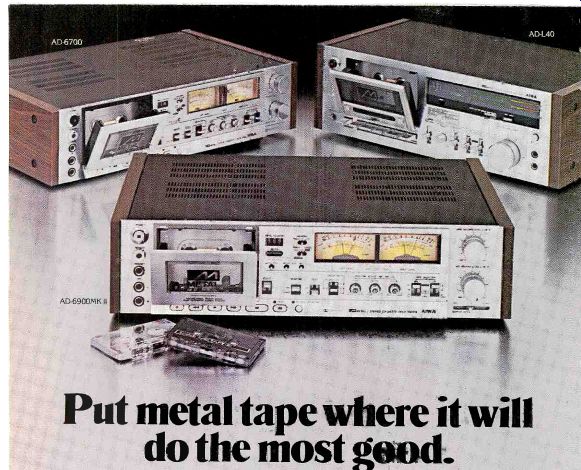
Again AMA leads the way toward the ultimate in cassette technology-with three of the most sophisticated metal-capacity decks you can buy: the AIWA AD-6900MK II, AD-6700 and AD-L40 Performance is simply unparalleled.
At-20 dB recording, AIWA's state-of-the-art AD 6900MK II boasts a frequency response of 20'20,000 Hz with metal tape. Even at 0 dB, frequency response is an exceptionally broad 25-k.,12,500 Hz 1 dB.
This superb performance is maximized by AIWAs extremely durable Ferrite Combination V-Cut (CVC) play back/record head. With the best possible gap widths of 5 microns for recording and 1 micron for playback.
The AD-6900MK unique 3-head de sign not only lets you compare source with tape during recording-it also permits the most precise bias adjustment available today for FeCr, CrO2 and all other LH/Normal tapes: AIWA's exclusive FLAT RE SPONSE TUNING SYSTEM.
And only AIWAs AD-6900MK ii and AD-6700 offer advanced feather-touch logic controls including Cue & Review-plus exclusive full-function wireless remote control from across the room. Both decks also feature AI WA's exclusive Double Needle Meters for simultaneous monitoring of Peak and VU.
AIWA's newest AD-6700 and AD-L40 are just as sophisticated.
The AD 6700 offers 2-head design, convenient Auto/ Repot with Memory Switch, furl-function wireless remote control and an amazingly accurate 9-point LED peak power display in three dramatic: colors.
AIWA's ultra-modern AD-L40 offers the only 20-point LED horizontal peak power bar graph you can buy-for instant three-color warning of distortion.
All three decks were designed with a special Ferrite double-gap erase head and high-power erase circuitry.
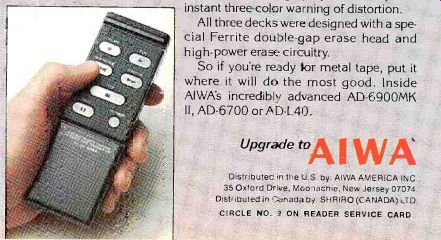
So if you're ready tor metal tape, put it where it will do the most good. Inside AIWA's incredibly advanced AD-6900MK II, AD-6700 or A D-L40.
Upgrade to Aiwa Distributed in the U S. by: AIWA AMERICA INC., 35 Oxford Drive, Mooiachie. New Jersey 07074.
++++++++++++
From the country-of-the-art comes the state-of-the-art.
In the land of Japan where high fidelity enthusiasts especially revere new, practical ideas, Sony can't settle for practically new technology.
That's why we've been fast-forwarding through some pretty fast competition since we introduced the first open reel deck and the first cassette deck to Japan years ago.
In the country of the stereo art, Sony is the leading word in higher-fi technology.
And that's why our new, state-of-the-art cassette deck is going to give fellow music lovers reason to pause.
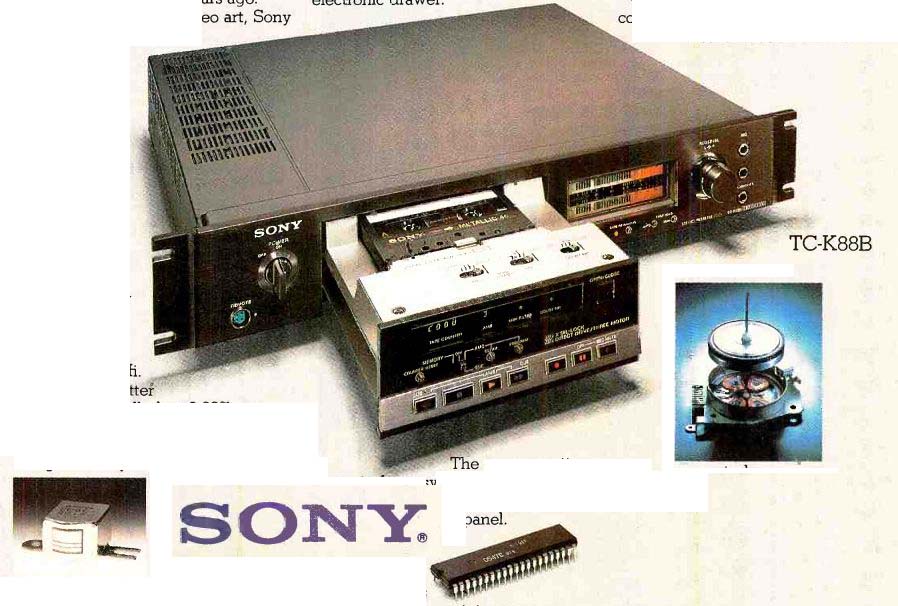
Introducing the Sony TC-K88B.
It's the culmination of Sony cassette technology.
The highest of fi.
Wow and flutter is a phenomenally low 0.03 %.
Frequency response specs from 20Hz to 19,000Hz (measured NAB) using metal tape. Metal? Yes, and a specially designed S&F (Sendust & Ferrite) head captures the stunningly audible difference.
The lifelike clarity may even inspire you to take a music appreciation class.
Three linear torque BSL motors very carefully handle tape transport.
One drives the capstan.
Another drives the supply reel. The third drives the take-up reel.
All are direct drive and their brushless and slotless design in a major engineering break through prevents uneven torque distribution.
A quartz crystal oscillator precisely locks motor speed for silky smooth record and playback accuracy. This Magnedisc Servo-Control System employs a pickup head and a magnetic pattern imprinted on the motor rotor to monitor speed changes through a sensitive phase comparator.
The new Sony Power Loading Cassette Module makes the TC-K88B the slimmest tape deck in the world.
One touch of a button automatically slides out the module as if it were an electronic drawer.
The tape cassette drops in for easy loading and at another touch the module closes flush with the front panel.
A microcomputer controls all functions and even calculates the amount of remaining tape.
Logic? Any move will do.
The Peak Program Meters are clearly revolutionary. Thirty-three liquid crystal electronic elements per channel display peak levels in two colors and in two modes. On "Auto" the highest peak is held for 1.7 seconds. On "Manual" the peak is displayed and maintained.
Our TC-K88B art is a masterful combination of beautiful features.
Hear it. See it. Art works.
TC-K88B
SONY
+++++++++++++++
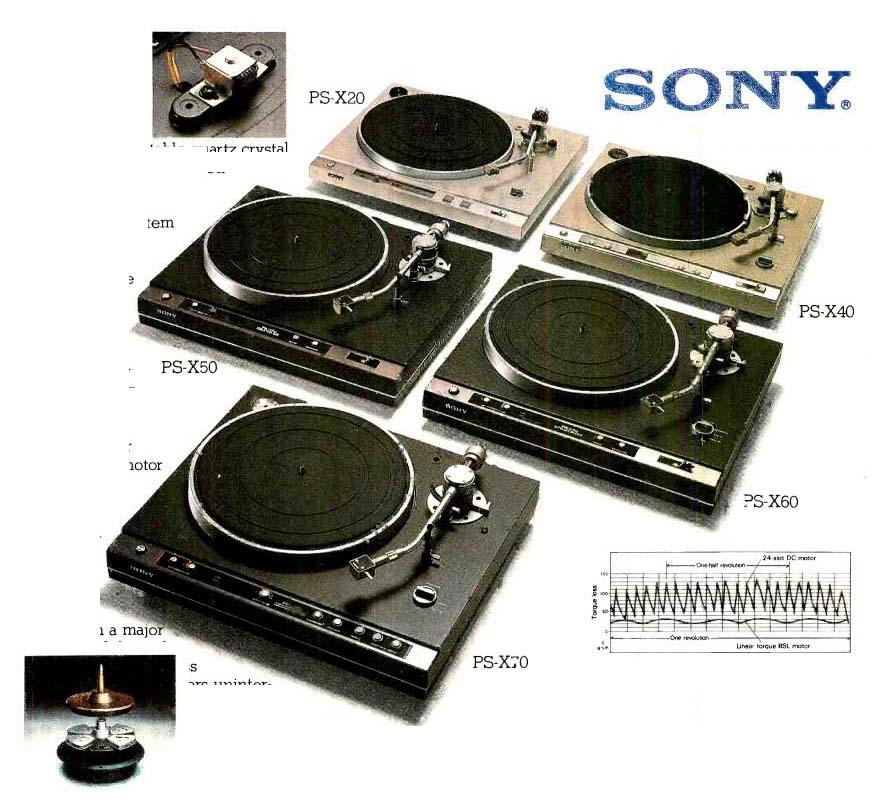
Sony's Quartz Crystal Revolution.
Sony presents five turntables that are turning the tables on the competition. Revolutionary precision and exciting features make which ever one you choose a jewel of an investment.
Sony's Quartz Lock Magnedisc Servo System in each turntable polices the platter speed limit through a highly stable quartz crystal oscillator. Just the ticket you need for higher-fi music reproduction.
The Servo System instantly corrects speed deviations and locks-in the perfect speed electronically.
Temperature, load or voltage changes simply can't affect your stereo system's goal of precise platter rotation.
We gave our radically new motor the brush-off by doing something very daring with the brushes.
We threw them away.
Through a major design breakthrough, our new BSL (Brushless & Slotless) motor delivers uninterrupted power, silky smooth platter rotation and virtually eliminates wow and flutter. No slots eliminate uneven torque distribution.
So "togging" is a thing of the past. Torque is high.
Speed is reached almost immediately.
Tonearms use a long-span pivot support* to give you precise vertical and horizontal alignment for greater tracking accuracy. And separate tracking force and anti-skating controls are easily adjustable.
Cabinet material of SBMC (Sony Bulk Molding Compound) insulates against feedback howl. And new gel-filled insulators* absorb acoustic energy to prevent feedback between the turntable and speakers.
Controls located on the front of your turntable let you carry out any stereo mission even with the dust cover closed.
And you can choose the turntable that gives you the exact degree of convenience you need to listen to the stars of Bach and rock. Fully automatic. Semi-automatic. Feather-touch operation. LED indicators and more.
Sony's quartz crystal revolution.
Be the first to hear it.
*Not available with PS-X20.
SONY
+++++++++++
EPI
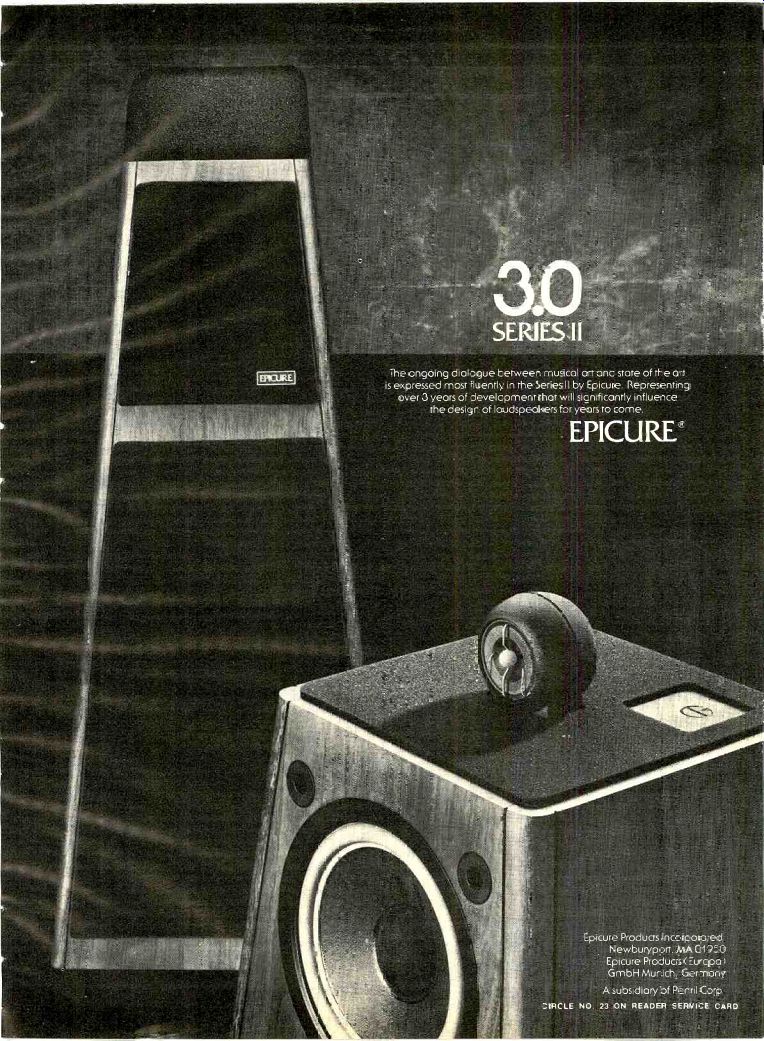
The ongoing dialogue between musical art and state of the art is expressed most fluently in the Series II by Epicure. Representing over 3 years of development that will significantly influence the design of loudspeakers for years to come.
+++++++++++
THE $450 TUNER THAT CAN'T MISS.
Some tuners use a "digital readout" that looks precise, but the station can still be mistuned. But in the Phase 5100 Digital Synthesized Tuner, the digital frequency you select is referenced to a quartz crystal oscillator, and locked in by a Phase Lock Loop circuit. You tune with absolute accuracy, so you can't miss. You enjoy every broadcast with minimum distortion, and maximum signal/noise ratio. And the 5100 will never "drift" off-station.
The Phase 5100 has a memory that can store up to 6 FM stations and 6 AM stations, a total of 12 stations. Just touch a memory button, and a favorite station is immediately in perfect tune. Automatic scan up and down the band. Outrageous specs.
And a price that'll make life tough for other tuners.
Hear it at your Phase Linear audio dealer.
20121 48th Avenue West, Lynnwood, WA 98036
++++++++++++
Now! The complete solution to long-life record care from the leaders in phono cartridges and state-of the-art recording.
Audio Technics LIFESAVER.
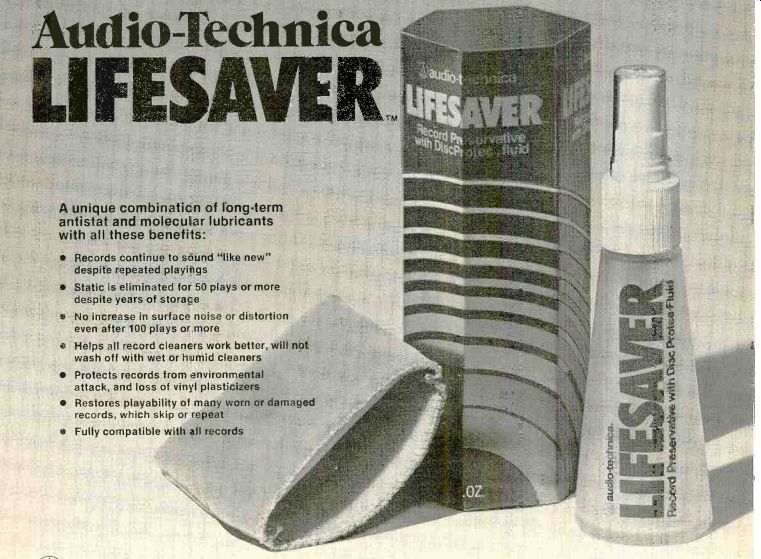
A unique combination of long-term anti-stat and molecular lubricants with all these benefits:
Records continue to sound "like new" despite repeated playings
Static is eliminated for 50 plays or more despite years of storage
No increase in surface noise or distortion even after 100 plays or more
Helps all record cleaners work better, will not wash off with wet or humid cleaners
Protects records from environmental attack, and loss of vinyl plasticizers
Restores playability of many worn or damaged records, which skip or repeat
Fully compatible with all records 46\ Introducing the most sophisticated approach to total record preservation:
LIFESAVER with DiscProtec formula.
Unique because it combines both a lubricant to combat record wear, and a long-lived anti-stat which reduces static charge buildup for years.
Applied in moments, LIFESAVER buffs to form a protective interface only three millionths of an inch thick, molecularly-bonded to the playing surface. Specially formulated for long-term stability. Nor can it build up on the playing surface, even with repeated applications. Years from now, even your often-played favorites still sound new, still enjoy full protection.
The exclusive LIFESAVER formula uses both ionic and non-ionic chemistry to eliminate dust-attracting static. Its unique combination of ingredients dramatically reduces record and stylus wear. And the slippery surface is easier to clean- keep clean-than any untreated record.
LIFESAVER with DiscProtec formula has already stood the test of time, and rigorous examinations in the laboratory and in the field. It has been enthusiastically endorsed by FM stations, disco operators, and major component equipment and record manufacturers.
Every new record deserves the kind of protection only LIFESAVER can offer.
And it's not too late to save many of your own wan or damaged records. Preserve and improve your valuable record collection today with the finest protection science can provide: LIFESAVER with DiscProtec. At Audio-Technica dealers now, or write today for our free booklet. AUDIO-TECIHNICA U.S., INC., Dept.129F, 33 Shiawassee Ave., Fairlawn, Ohio 44313.
audio-technica.
Phono CARTRIDGES AUDIO-TECHNICA PROFESSIONAL AND HOME PRODUCTS FOR BETTER SOUND AUDIOPHILE RECORD CARE RECORDS PRODUCTS
+++++++++++++++++++
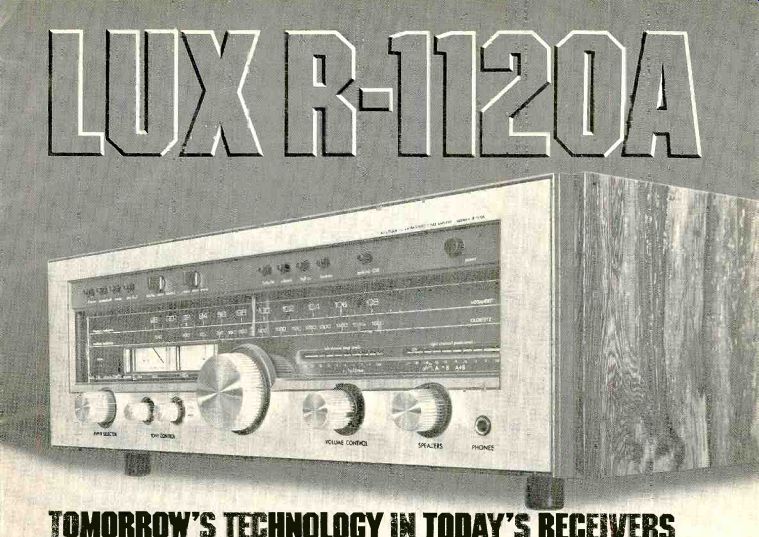
TOMORROW’S technology IN TODAY'S RECEIVERS
Lux remains in the forefront of product development because we refuse to rest on past achievements. For Lux, today's best is just not good enough for tomorrow's audiophile listener! Excellent examples of this Lux philosophy in action are found in the Lux Tuner-Amplifier R series: the R-1030, R-1040, R-1050, R-1070 and the fantastic top-of-the-line R-1120A. Rated at 120 watts per channel from 20 to 20,000 Hz, both channels driven into 8-ohm loads, the R-1120A has no more than 0.02% 1M or harmonic distortion.
Check the typical advanced technological features incorporated into the R-1120A, such as:
The emitter ballast driver and triple diffusion planar type power transistors, radically new semi-conductors serving the real-time processed DC amplifier section, With high frequency cutoff reaching 200 MHz; a perfect complement to the triple diffusion planar output transistors with their 60 MHz high frequency cutoff.
The MC head amp employing specially selected FETs in a new complementary input circuit configuration inherently resistant to extreme and internal electrical noise sources. This exclusive circuit automatically adjusts its gain according to the impedance of the phono cartridge used.
The exclusive CLL (closed-loop lock) tuner system which precisely adjusts all stages of the FM section-from front end to the detector-for optimum reception of the tuned frequency. An improvement over the best of the conventional tuner technology, the quartz locked synthesizer system, the CLL tuner system's accuracy is used to trigger Lux's innovative Accutouch tuning mechanism which produces a momentary electro-mechanical tuning knob lock at the point of exact station tune-in.
The sophistication of the internal circuitry of the R-1120A has been realized in scaled-down form in other less expensive tuner-amplifiers of Lux's R series. And the elegant styling and rosewood finished cabinetry maintained throughout the line.
The receiver designs of tomorrow can be seen at your Lux dealer today.
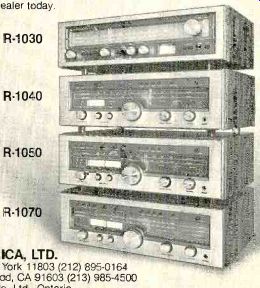
R-1030 R-1040 R-1050
LUX AUDIO OF AMERICA, LTD.
East Coast: 160 Dupont St., Plainview, New York 11803 (212) 895-0164 West Coast: 11200 Chandler. Blvd., N. Hollywood, CA 91603 (213) 985-4500 In Canada: Lux Audio of Canada, Ltd., Ontario
A SPECIAL OFFER: Buy the sound system you've waited for, and Lux will return part of the cost.
In cash. Get Lux quality and Inflation-fighting economy.. Check your local Lux dealer for details.
+++++++++
fact: professional studio technology comes to home hi-fi!
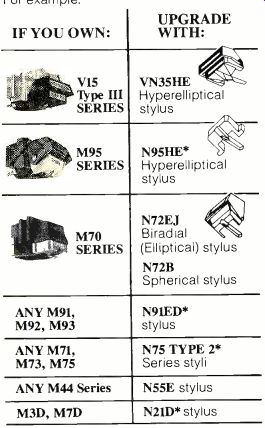
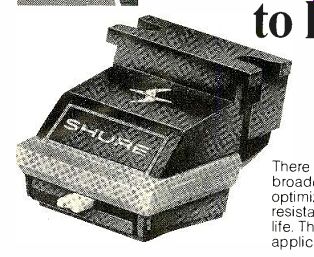
There is a new phono cartridge line that is the task of the recording and broadcasting industries: the Shure SC39 Series. It is the first professionally optimized combination of true high fidelity performance, superb trackability, resistance to stylus damage under grueling conditions, and prolonged record life. These unique features make the SC39 ideal for high quality home applications as well.
if you transfer discs to tape Use the cartridge developed for professional recording studios. The SC39 Series has a special strengthened internal stylus-support wire and elastomer bearing to improve stability when professional back-cuing and slip-cuing techniques are employed.
In addition, the SC39 offers a unique stylus tip not available on any other cartridge:
the MASAR'' tip, designed for playing even delicate lacquer masters, without objectionable noise buildup or "cue-burn" damage. It even helps when playing discs with high surface noise, or 45 rpm records made from reprocessed, substandard vinyl or polystyrene.
have access to your hi-fi This cartridge also comes close to being–butter-finger proof." Most stylus damage is caused either by dropping the cartridge or by pushing the stylus sideways against the edge of a record. To protect against this, the SC39 is equipped with two remarkable features. The first is the Lever-Operated Stylus Guard, which locks the stylus guard in safety position when not in use. With the flip of a thumb, Lever-Operated Stylus Guard the guard snaps up and the operating lever turns into a handy cuing aid.
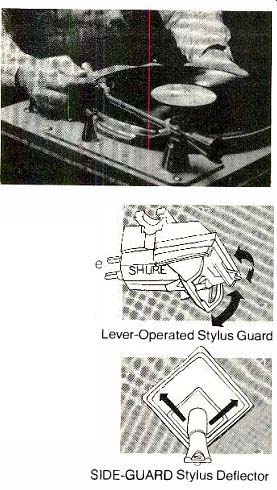

In addition, the SIDE-GUARD Stylus Deflector protects the stylus shank from damage by withdrawing it safely into the cartridge body in response to sideways impacts.
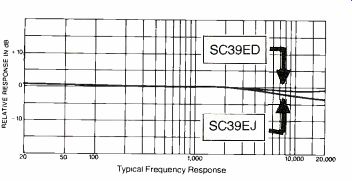
if you prefer professional response The transparent sound of the SC39 Series is due to its optimized professional response which is virtually flat through the upper mid-range, with a smooth and gentle rolloff at the highest frequencies. It is especially pleasant when used with loudspeakers that tend to exaggerate the high frequencies.
There are three models in the SC39 Series: SC39ED-Biradial (Elliptical) stylus for 3/4 to 1 1/2 gram tracking; SC39EJ-Biradial (Elliptical) stylus for 1 1/2 to 3 gram tracking; and SC39B-Spherical stylus for 1 1/2 to 3 gram tracking.
Send for brochure AL620.
SIDE-GUARD Stylus Deflector
Typical Frequency Response
SC39 series professional phono cartridges... by Shure Brothers Inc., 222 Hartrey Ave., Evanston, IL 60204 In Canada: A. C. Simmonds & Sons Limited Outside the U.S. or Canada, write to Shure Brothers Inc., Attn: Dept.
J6 for information on your local Shure distributor.
Manufacturers of high fidelity components, microphones, sound systems and related circuitry.
++++++++++
The Evolution of Excellence.
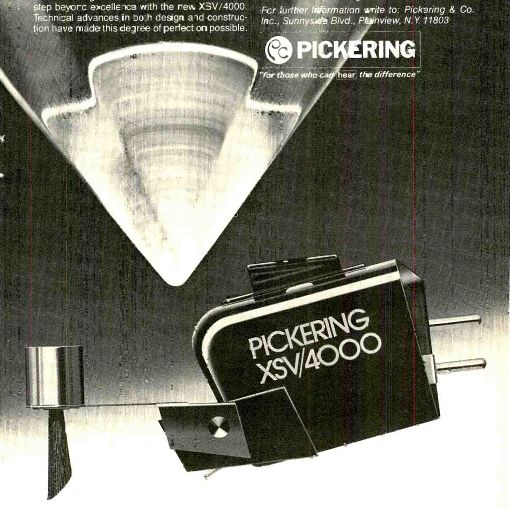
In 1947, Pickering built the first magnetic cartridge and holds 13 U.S. and numerous foreign patents on cartridge design. In 1976, Pickering launched a new modern high fidelity era by introducing the first of a new generation of phono cartridges, the Pickering XSV;3000, acclaimed a top performer by critics and reviewers worldwide.
1979 PICKERING & CO. INC
+++++++++++
... just one look is all it takes to appreciate the exceptional value of the Mazda RX-7 versus Datsun 280ZX or Porsche 924.
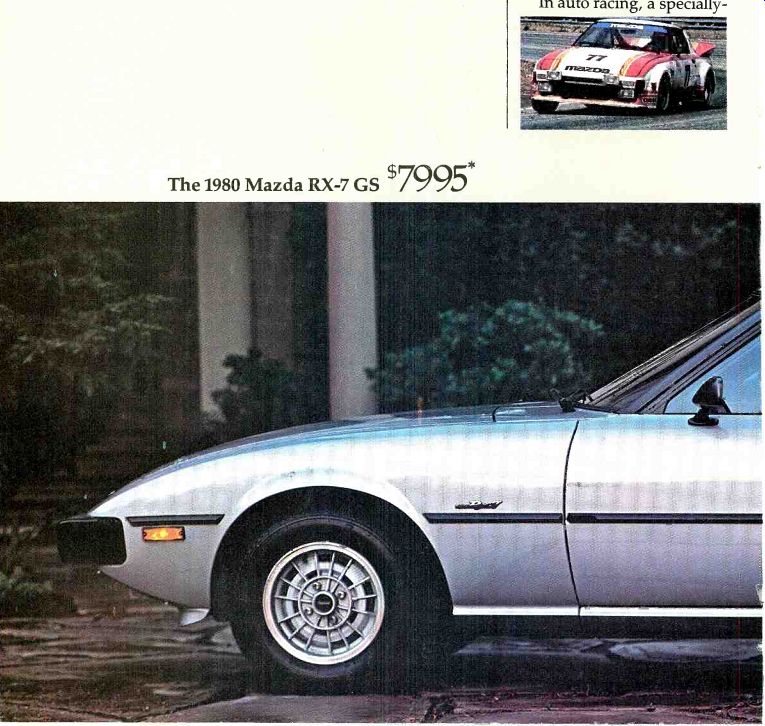
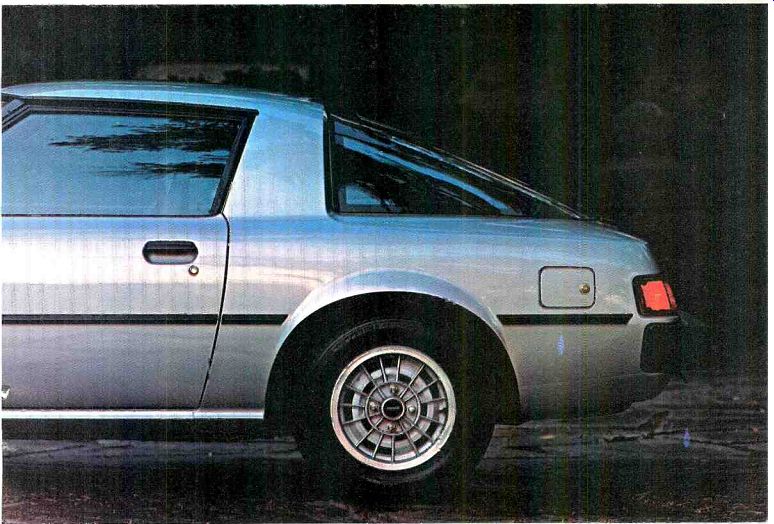

The 1980 Mazda RX-7 GS '7995 As remarkable as the Mazda RX-7 is on its own merits, it looks all the better when compared with the competition. Because the sleek, aerodynamic RX-7 is virtually everything you could want in a refined sports car-at an almost un believable price.
It can reach 0-50 in 6.3 seconds. Its inherently compact rotary engine is placed behind the front axle, for ideal weight distribution and superb handling.
In auto racing, a specially-prepared RX-7 won its class at the Daytona 24-hour race.
Another RX-7 set a world speed record at Bonneville.
The incredible smooth ness of the rotary engine makes the RX-7 a quiet sports car. All this performance from a car that can attain excellent gas mileage on the open road.
But one of the most remarkable aspects of the front mid-engine RX-7 is that it offers infinitely more than performance. It also provides extraordinary comfort.
So if you know what you want in a sports car, and you don't want to pay a king's ransom to get it, take a look at the RX-7 GS or S Model.
The beautifully- styled, high-mileage, high- performance sports cars from Mazda.
You're also going to like the looks of RX-7 GS standard features.
AM/FM stereo radio with power antenna Side-window demisters Cut-pile carpeting Tinted glass
5-speed Tachometer
Styled steel wheels
Steel-belted radial tires
Front and rear stabilizer bars
Ventilated front disc and finned rear drum brakes with power assist
Electric remote hatch release. 3-speed automatic transmission, air conditioning, aluminum wheels and sun roof available as options.
*Manufacturer's suggested retail price for GS Model shown. S Model $7195. Slightly higher in California. Actual prices established by dealers. Taxes, license, freight, optional equipment and any other dealer charges are extra. (Wide alloy wheels shown $275-S295 extra.) All prices subject to change without notice.
**EPA estimates for comparison purposes for GS Model with 5-spd. trans. 'The mileage you get may vary depending on how fast you drive, the weather, and trip length. The actual highway mileage will probably be less. California, 16 estimated mpg, 27 estimated highway mpg.
Mazda's rotary engine licensed by NSU-WANKEL.
The more you look, the more you like.
++++++++++++++
Inside, most speakers look pretty much the same. Drivers, baffle board and enclo sure. Which is why some manufacturers make so much noise when they come up with anything new.
But in the midst of all the uproar, Kenwood's engineers have quietly devel oped five important design improvements you won't find anywhere else.
1. Separate front baffles. We mounted the mid and high frequency drivers on a separate baffle board. That keeps the woofer's vibrations from interfering with the mid and high frequencies. So you can get solid bass without losing any of the vocals.
2. Cross-over coil positioning. We found that two coils next to each other on a crossover network can cause signal leakage from the midrange to the woofer. By isolating the coils away from each other, we eliminated cross-talk and muddy midrange.
3. Thermal/shock cone construction.
We manufacture our own wood-pulp cones by applying our exclusive heat/shock treatment. This creates a cone that is more rigid than the usual pressed type for low distortion, yet light enough to deliver much better efficiency.
4. Midrange stabilizer. To get the nasal sound out of the midrange frequencies, where most of the music is, we introduced a center support system and a 3-point cone suspension. To you that means dear sound imaging and better transient response.
5. Power linearity. The frequency response of most speakers deteriorates at high power levels. By using a computer, we de signed the LS-1200 to deliver the same linear frequency response throughout its power handling range. From solo flute to full orchestra.
Listen to the LS-1200 at your Kenwood dealer and discover that, even at low listening levels, you get exceptional depth, clarity and fidelity. At high volume, it delivers the kind of tonal quality you normally expect from a live performance with a clean, punchy bass and clear, open highs.
That's one more reason the LS-1200 is simply too good to keep quiet.
Your speaker's reputation should be as good as your receiver's.
KENWOOD
For the Kenwood dealer nearest you, see your Yellow Pages, or write Kenwood, P.O. Box 6213, Carson, CA 90749.
In Canada: Magnasonic Canda. Ltd.
Speaker design takes five steps forward.
++++++++++++++++++
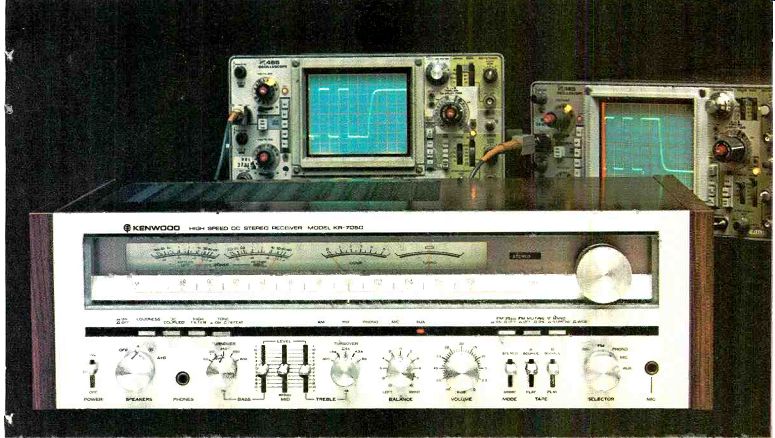
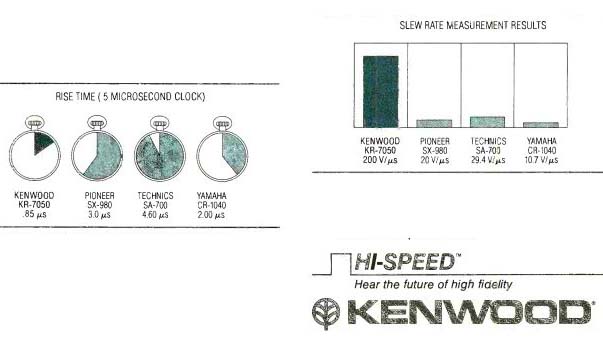
INDEPENDENT TEST BEFORE KENWOOD HAS BETTER TRANSIENT RESPONSE THAN PIONEER; TECHNICS OR YAMAHA.
Recently, we asked an independent testing laboratory to measure Kenwood's new Hi-Speed receiver against the competition. Each one "off the shelf" in unbroken factory cartons.
The results were impressive, if not surprising.
The Kenwood receiver outperformed comparable models of other brands in both rise time and slew rate, the same new specifications that are used to measure a receiver's ability to handle complex musical signals.
Of course, the Kenwood receiver had one unfair advantage: Kenwood's exclusive Hi-Speed circuitry.
Hi-Speed allows an amplifier section to react faster to changes in music to minimize audible transient intermodulation distortion.
In the laboratory, this shows up as superb specs and an almost perfect square wave on an oscilloscope.
In your home, you'll hear superior clarity and definition with excellent imaging. For example, you'll be able to identify an individual singer in a vocal group.
SLEW RATE MEASUREMENT RESULTS
Your Kenwood dealer can show you the entire line of hi-Speed receivers.
Because if you're going to buy a receiver, why not go with the best performer? HI-SPEED Hear the future of high fidelity KENWOOD
For the Kenwood dealer nearest you, see your Yellow Pages, or write Kenwood, P.O. Box 6213, Carson, CA 90749.
In Canada: Magnasonic Canada, Ltd. / Test data available was request.
Rise time and slew rate measured by slope at zero crossing method.
++++++++++++++++
Sony Tape.
Full Color Sound.
Sound has color. All kinds of wild and way-out and wonderful color.
That's why Sony is introducing audio tape with Full Color Sound.
To reproduce every shade, every tone, every tint of color that's in the sound itself.
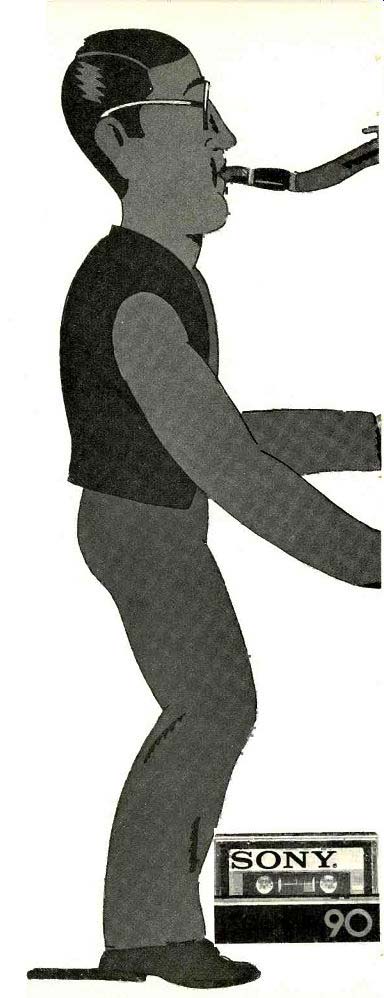

Sony tape with Full Color Sound has such a full frequency spectrum it can actually record more sound than you can hear.
If your tape recordings don't sound the way this ad looks, switch to Sony audio tape. And be up to your ears in bright brilliant beautiful color.
++++++++++++
TEAC THE X-SERIES.
TEAC TODAY:
You're looking at four new machines that have more in common with data recorders than audio recorders.
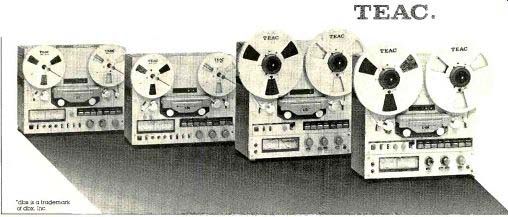
Together they are called the X-Series. And they bring a totally new kind of technology to the open reel format.
Each X-Series transport is an instrumentation mechanism.
For 15 years, this TEAC design has stood the grueling test of time in computer installations where dependability is worth millions.
The basic configuration is closed-loop dual capstan. It's extraordinarily quiet, stable and precise. Wow & flutter is very low. Speed accuracy very high.
Three DC motors drive the tape. They're used to keep changes in motor tempera ture to a minimum under different loads so constant torque is maintained.
Our Magnefloat flywheel assembly, a completely new concept, uses magnetics rather than mechanics to eliminate problem-causing springs and pressure plates.
Axial variations between the tape and capstans are pre vented so proper tracking is assured. The result is highly accurate audio reproduction even after years of hard use.
The X-Series transport maintains ideal tape-to-head contact. Audible drop-outs, level and frequency losses are absolutely minimized.
Frequency response is wide and flat. And signal articulation is unusually clear.
The brain behind the transport is our LSI control chip.
It eliminates the need for mechanical relays so transport control is faster, more positive and reliable. The LSI also lets us provide full motion-sensing in the X-10 and X-10R.
Within the X-Series, machines have been specifically designed for bi directional record and play back. Perfectly symmetrical head stacks (6 heads in all) assure top performance in both directions. There's automatic reverse and repeat. And two-way cue monitoring.
New audio electronics accompany this new trans port technology. Record and playback amplifiers are quieter and completely free of audible distortion. The sound is cleaner, more faithful to the source. The fidelity is unsurpassed.
An option previously available only on our professional recorders can now be added to any X-Series machine. Called dbx I: this noise elimination system adds 30dB to the already high S/N and over 10dB of head room to give you master-quality recordings.
If your audio perception is critical, your listening standards high, audition an X-Series recorder. The performance is flawless.
The sound peerless.
dbx is a trademark of dbx, Inc.
1979 TEAC Corporation of America, 7733 Telegraph Road, Montebello, CA 90640.
In Canada. TEAC is distributed by White Electronic Development Corporation (1966) Ltd.
++++++++++++++++
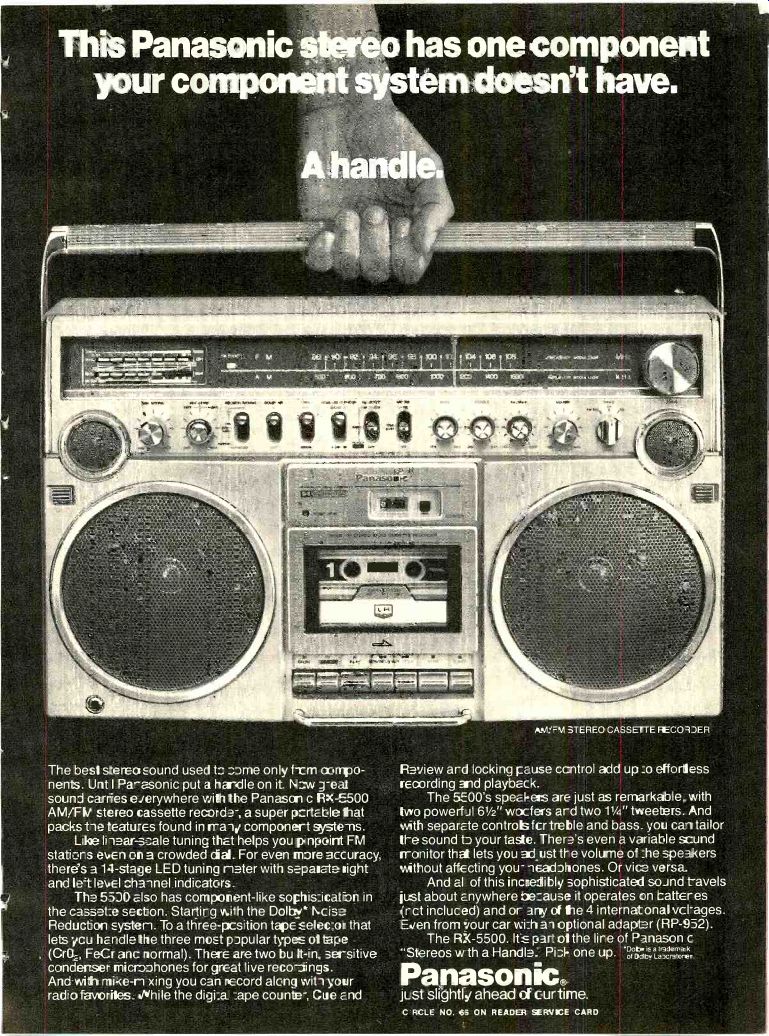
This Panasonic stereo has one component your component system doesn't have.
A Handle
++++++++++++++++++
"THE MISSING LINK IN STEREO"
"The Koss K/4DS Digital Delay System turns your room into a cabaret, theatre, auditorium or concert hall”
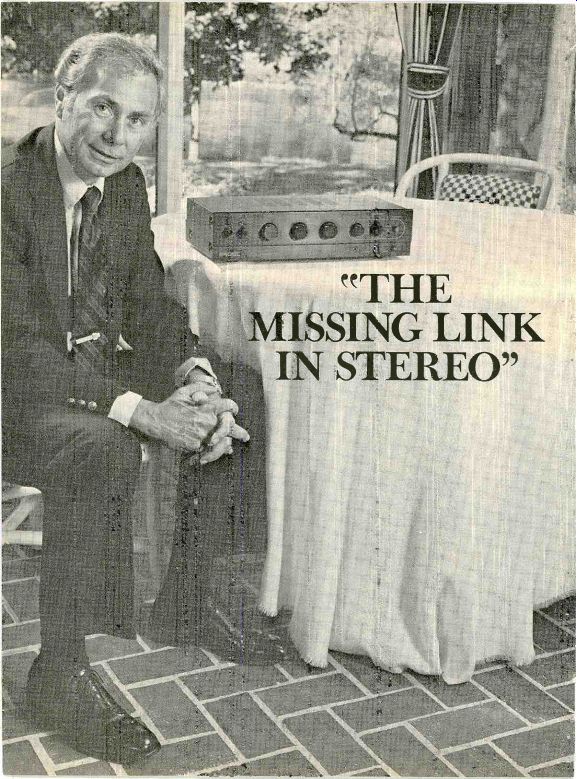
"From the beginning, Koss has been involved in creating unique listening environments to enhance the enjoyment of recorded music.
With the invention of Koss stereophones, we created a uniquely private and singularly personal listening environment.
"Now, we are delighted to utilize our in-depth experience in acoustic and psycho-acoustic phenomena in the development of a home listening environment that is virtually a perfect replica of the actual environment in which the live performance took place. In other words, we've brought home not only the orchestra but your seat in the concert hall as well.
"Through the magic of the latest computer technology, Koss engineers have developed a 16,384 bit computer circuitry system that has been programmed to permanently store, in digital format, four ideal live performance rooms: a club, a theatre, a concert hall and an auditorium. Thus, with the K/4DS hooked into your system, all you have to do is simply turn the selector switch to the setting that corresponds to the most natural environment of your recorded material. The K/4DS will automatically delay the recorded material to conform with the optimized ideal room stored in the computer and play it back through a set of secondary or ambience speakers located at the sides of your listening room.
Believe me, what you'll hear is the most life-like and realistic illusion of a live performance you've ever heard "To further match, as accurately as possible, the acoustics of a live situation, the K/4DS features a special cross channel circuitry that delays and channels portions of the right audio signal to the left ambience speaker and vice versa. In addition, portions of the delayed signal are recirculated through the system again and again to simulate the actual decay rate that occurs during a live performance.
"Unlike most delay systems on the market; we've designed the Koss K/4DS with its own built-in amplifier. You need only add a pair of speakers that operate adequately up to 8,000 Hz to transform your current stereo system into an unbelievably exciting sound experience.
"For versatility, we've provided a speaker selector with three
------------
_
---------------------
settings: K/4DS 4th dimension sound, stereo only, and stereophones only. There's also an EQ switch to enhance the bass response of your ambience speakers and to roll-off the bass response below 50 Hz in order to eliminate possible distor tion. And, of course, the K/4DS wouldn't be Koss without dual stereophone jacks, special built-in phone amps, and a 4th dimension to stereo comparator switch.
"Our new Koss K/4DS Digital Delay System has been carefully designed to offer the best possible in-home live sound experience at an affordable price. To achieve this goal, we've made the K/4DS an easy-to-operate, factory optimized digital delay system. You won't need to be an audio engineer to recreate at home the realism of the live performance.
"I urge you to hear the Koss K/4DS Digital Delay System at any of these exclusive dealers.
to take advantage of our special
$20 introductory discount. Never since the introduction of stereo has a product so dramatically increased the listening enjoyment of recorded music. It's truly a remarkable achievement in sound reproduction and one I know you won't want to miss:"
KOSS CORPORATION .
Write c/o Virginia Lamm, for more information about the Koss K/4DS Digital Delay System or about our world
.famous line of stereophones and loudspeakers.
K/4DS Digital Delay System hearing is believing. 1979 Koss Corp.
KOSS CORPORATION, 4129 N. Port Washington Ave., Milwaukee. Wisconsin 53212 International Headquarters Milwaukee facilities Canada France Germany Ireland
-----------------
+++++++++++++
Yamaha decks the competition.
TC-720.
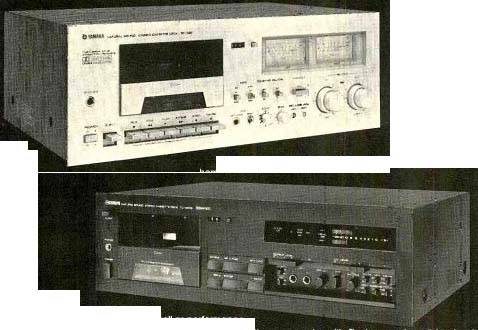
The 3-head deck tor the creative recordist.
If you like to get inspired with your tape recording, this is the deck for you. The bias rotary control and built-in pink noise generator allow you to fine-adjust the deck s high frequency response lp best suit the particular tape you are using The REC LEVEL ADJ controls and REC CAL switch allow you to further adjust the recording sensitivity for proper Dolby NR-tracking, resulting in very high signal-to noise ratio and exceptionally clean sound. The TC-720 also has a unique built-in "real time" echo facility. You can use this to add new dimensions of studio realism to tapes TC-920B.
Matching the Industry's finest separates in appearance as well as performance.
For unparalleled performance, the TC-920B stats with the heads. Yamaha’s unique Pure Plasma Process results in recorded for playback in both your car and your home. All these front panel features(and more) are backed by reliable, advanced electronics Tie Closed-Loop Dual Capstan Drive keeps the tape at an ideal tension for smooth head contact. An advanced Frequency Generator servomotor transports tie tape at a constant, accurate speed with very high torque. High-performance, low-noise amplifying circuits are used for the mic and line inputs. All this superior performance is wrapped in a beautiful simulated ebony cabinet.
… sound quality.
The bar-graph peak level meters have a fast/slow switch to adjust the recovery time of the meters.
++++++++++++++++++
YOUR TURNTABLE PROBABLY DESERVES BANG & OLUFSEN.
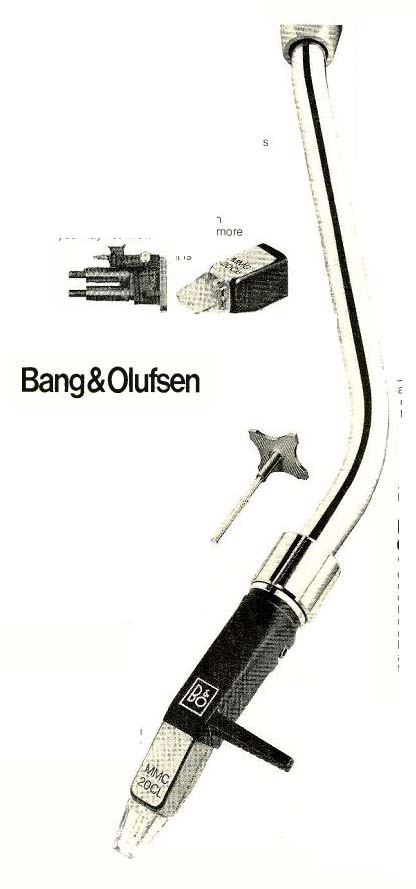
If you've spent a fair amount of time and money on your audio system, it's likely your turntable is ready for the new MMC 20CL cartridge. You do need a tonearm which can track successfully at one gram, one that has its own resonance well damped, and one which features minimal horizontal and vertical friction. Many of today's higher quality units meet these criteria; more likely than not so does the one you own.
THE MMC 20 CL, A REFRESHING PERSPECTIVE IN CARTRIDGE DESIGN.
Critical acclaim has identified the MMC 20CL as an exceptional cartridge. It is. It will not only give you more music from your records, but will insure those records last significantly longer. However, it is not one of those 'astounding breakthroughs' that always seem to be hovering around cartridge design and its promotion. No, while the 20CL does incorporate new thinking, new materials, and new manufacturing methods, it should be reasonably viewed just as it is: simply one step closer to the theoretical ideal. When we introduced the first stereo cartridge to Europe over 20 years ago, we knew that someday we would have the 20CL. Our approach to cartridge engineering tells us that 20 years from now we will have something significantly better.
SINGLE CRYSTAL SAPPHIRE, BECAUSE THE CANTILEVER IS CRITICAL.
Unlike aluminum and beryllium, single crystal sapphire transfers the motion of the stylus tip without adding any measurable vibration, and hence distortion, of its own. The absence of this vibration and flexure in the cantilever means the undulations in the record groove are transferred exactly and generate an exceptionally accurate electrical signal.
Music is no longer lost between the stylus tip and the armature. Your records open up and music unfolds with new clarity, definition, and spaciousness.
Give your turntable what it deserves.
The MMC 20CL with our new universal connector can be mounted directly on most high quality tonearms.
REDUCING EFFECTIVE TIP MASS, BANG & OLUFSEN'S ENGINEERING TRADITION.
As early as 1958, our research demonstrated that effective tip mass (ETM) was the single most determining factor behind record wear and the loss of high frequency sound information. While some manufacturers are now beginning to realize the importance of this specification, only Bang & Olufsen can look back upon a continuous chain of improvements in this critical area. Today, the MMC 20CL with its Contact Line, nude diamond, ultra-rigid sapphire cantilever, and the patented Moving Micro Cross armature features an ETM value of only 0.3mg.
LOW INDUCTANCE, OUTPUT REMAINS CONSTANT REGARDLESS OF LOAD.
As you know, low inductance in a cartridge is related directly to the strength and constancy of the electrical signal fed to your preamplifier input. What you may not know is that the MMC 20CL has an inductance among the lowest of all high quality cartridges available today. This is due to a design which incorporates an exceptionally powerful permanent magnet and coil cores of very low permeability.
This design results in very low cartridge induced noise. Subsequently you receive an excellent signal-to-noise ratio without being required to use auxiliary equipment.
INDIVIDUALLY CALIBRATED.
When you manufacture very high quality cartridges, each unit must be tested-not one out of two, or ten, or twenty, but each one. This is why when you purchase the MMC 20CL, you will receive the test results for your individual cartridge. These results include: output voltage, channel balance, channel separation, tracking ability, and a frequency response graph for each channel.
THIS TIME MAKE THE RIGHT CONNECTION
Bang & Olufsen Bang & Olufsen of America, Inc., 515 Busse Road, Elk Grove Village, Illinois 60007
+++++++++++
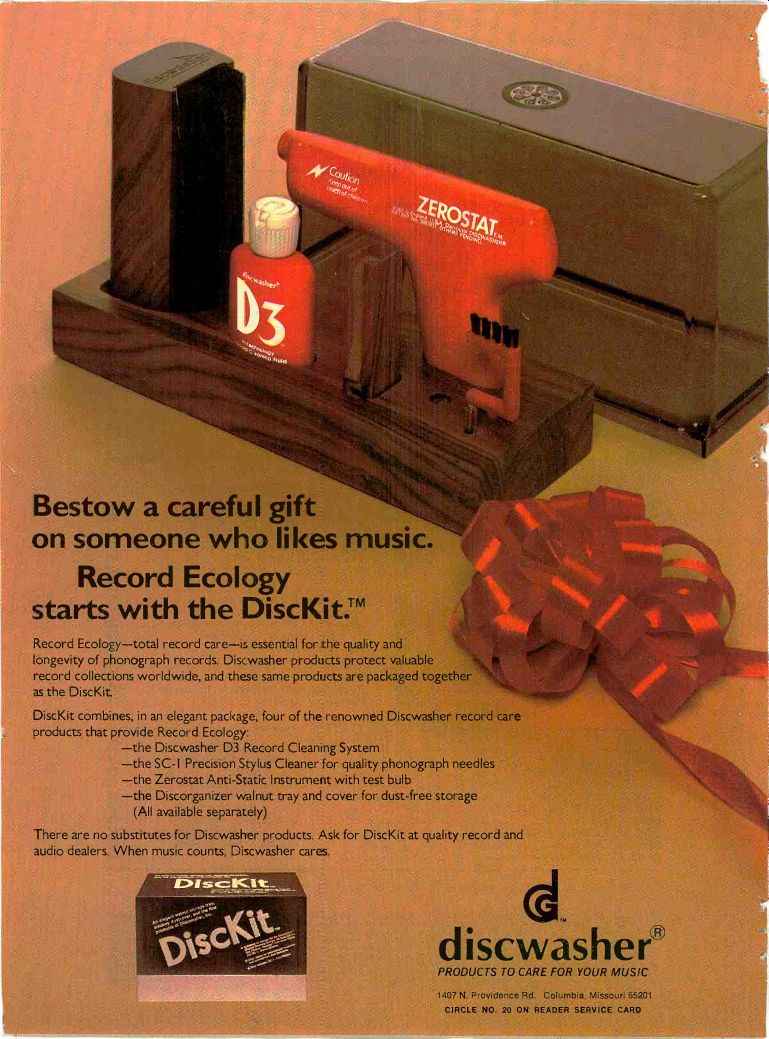
Bestow a careful gift on someone who likes music.
Record Ecology starts with the DiscKit.
Record Ecology-total record care-is essential for the quality and longevity of phonograph records. Discwasher products protect valuable record collections worldwide, and these same products are packaged together as the DiscKit.
DiscKit combines, in an elegant package, four of the renowned Discwasher record care products that provide Record Ecology:
-the Discwasher D3 Record Cleaning System
-the SC-1 Precision Stylus Cleaner for quality phonograph needle--the Zerostat Anti-Static Instrument with test bulb--the Disc-organizer walnut tray and cover for dust-free storage (All available separately) There are no substitutes for Discwasher products. Ask your audio dealers. When music counts, Discwasher care.
Discwasher
PRODUCTS TO CARE FOR YOUR MUSIC
1407 N. Providence Rd. Columbia, Missouri 65201
++++++++++++++++++
RODRIGUES TAKES A LOOK AT STEREO CLINICS
Stereo Clinic:

---cartoon "All right, Smedley, this is Captain Mulholland. Throw out that videotape recorder and all those pirated-off-the-air videotapes!"
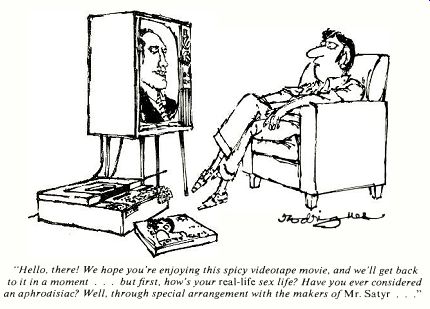
--------- "Hello, there! We hope you're enjoying this spicy videotape movie, and we'll get back to it in a moment . . . but first, how's your real-life sex life? Have you ever considered an aphrodisiac? Well, through special arrangement with the makers of Mr. Satyr . . ."


Source: Stereo Review (USA magazine)