Reviewed by: CHRIS ALBERTSON EDWARD BUXBAUM NOEL COPPAGE PHYL GARLAND PAUL KRESH PETER REILLY STEVE SIMELS JOEL VANCE
BLONDIE: Eat to the Beat. Blondie (vocals and instrumentals). Dreaming; The Hardest Part; Union City Blue; Shayla; Die Young Stay Pretty; Atomic; and six others. CHRYSALIS CHE-1225 $7.98, C) 8CH-1225 $7.98, CCH-1225 $7.98.
Performance: Good
Recording: Good
Something of a tempest in a teapot has surrounded Blondie since the, group enjoyed its first hit single with Heart of Glass last year.
Some rock critics, the press in general, and possibly a lot of fans from Blondie's early days at the New York punk club CBGB claim that the group has sold out since breaking the disco Glass. And the band has reacted to its critics and to its success with incredible defensiveness. What the fans and critics don't seem to realize is that Blondie has always been much closer to the fashion/pop-art world than most other groups on the punk scene. What the group doesn't seem to under stand is that the punk world is just like any other insular little clique in which everybody loves you only as long as you're their private fetish. From a group as breezy and fun as Blondie started out to be, all this defensive solemnity is intolerable. As far as I'm concerned, their first album is the best they've made yet, because it has a delightful, un-self conscious, comic-strip quality.
Explanation of symbols:
= open-reel stereo tape
= eight-track stereo cartridge
= stereo cassette
= quadraphonic disc
= digital-master recording
= direct-to-disc recording
Monophonic recordings are indicated by the symbol…
The first listing is the one reviewed; other formats, if available, follow it.
Maybe they were too innocent to take themselves very seriously back then, but that's where most of their best songs are.
Yet Debbie Harry is a better singer now, and she sometimes displays a passion that was almost entirely missing in the past. The band (and they are a band-five of the six share songwriting credits) is growing with her, though there's still nothing really out standing about their playing, and the new songs are mostly pretty serious stuff. Maybe that's why I'm having trouble with "Eat to the Beat," not because there's anything wrong with the music-there are at least two beautiful songs here, Dreaming and Shay la-but because, for my taste, pop groups were never supposed to be this heavy and grim. Blondie doesn't sound much happier than they look in recent photographs, and I wonder how much more exciting they might be if they'd just lighten up a bit. As Mick Jagger once said, "You should relax is my impression."
-Lester Bangs
KARLA BONOFF: Restless Nights. Karla Bonoff (vocals, guitar); Russ Kunkel (drums); Kenny Edwards (bass); Dan Dugmore, Waddy Wachtel (guitars); other musicians. Trouble Again; Restless Nights; The Letter; Only a Fool; Baby Don't Go; Loving You; and three others. COLUMBIA JC 35799, $7.98, JCA 35799 $7.98, JCT 35799, $7.98.
Performance: Good
Recording: Good
A songwriter-singer has all the time in the world to write the songs for a first album and a lot less time to write those for a second al bum, and the difference usually shows. It does in this case; the songs in Karla Bonoff's second batch don't have the bite of those in the string recorded by Ronstadt nor the regal beatific beauty of Home, recorded by Raitt.
These show craftsmanship and facility, and Bonoff's vocal style is further clarified, but mostly they seem trivial beside her best stuff.
Producer (and Ronstadt bassman) Kenny Edwards did all he could; the thing abounds with lovely sounds and taste. As albums go it's more than passable, but it isn't going to stand up, in the long run, as one of the best of Bonoff. N.C.
CARLENE CARTER: Two Sides to Every Woman. Carlene Carter (vocals); instrumental accompaniment. Do It in a Heartbeat; Lies; Swap-Meat Rag; Gold-Hearted Lady; Two Sides to Every Woman; It's No Wonder; and three others. WARNER BROS. BSK 3375
$7.98, C) M8 3375 $7.98, M5 3375 $7.98.
Performance: Something amiss
Recording: Good
Carlene Carter, daughter of country singer Carl Smith and June Carter (now June Carter Cash) and granddaughter of the late Maybelle, is rather spectacular evidence that musical aptitude is inherited. She's a major talent. But . . . something I vaguely sensed about her first album bothers me about the second. There's something impersonal, cold blooded, almost academic about it. This time it's clearer in the production, by Lance Quinn and Tony Bongiovi, in that the instrumentals seem detached and calculated, almost as if the players didn't know the songs all that well by ear. Carlene's vocal delivery is not cut of the same cloth, at least not usually, not when she's singing as opposed to acting. But that brings us to the songs, most of which she wrote, some of which I think call for her to act and others of which could be stumping the band, so to speak. It seems to me that she has been in a hurry to establish rock credentials, above all others, for herself, and this works fine to the degree that she has a natural feeling for the style. But she seems to force it beyond that. Including Lies, by Nick Gravenites and R. Troy, is an example of forcing it.
The thing is as lifeless and pointless as it is tuneless; the only thing you can say for it is that it's hard-edged rock extreme enough to help shape an image. Then comes Carter's own poorly thought-out Swap-Meat Rag; it purports to be disdainful of spouse swapping, but in order for its line of disapproval to work it has to regard spouses as property to begin ...
--------------
Chuck Berry
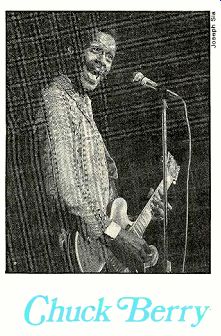
LISTENING to "Rockit," Chuck Berry's masterly new Atco album, led me to replay "Golden Decade" and a few other collections of his hits and near hits, which began with Maybellene in 1955. An evening spent listening to Chuck Berry records, old or new, is an evening well spent, for he is a remarkable songwriter and performer.
Berry was the first literate lyricist in rock and-roll, and, so far as I'm concerned, he's still the champ. His delighted exploitation of the possibilities of the English language and his sophisticated sense of humor are unsurpassed in the field. And his guitar style is as distinctive as his lyrics, so immediately recognizable and utterly personal that other musicians have given up even trying to imitate it.
The secret of that style is a thrilling economy; Berry doesn't play a lot of notes and chords because he doesn't have to. Knowing exactly what is needed and what will work, he plays just that, no more and no less.
Berry's career has been fairly frustrating-he's never had as great a popular success as he deserved-but he has survived, and his talent has survived as well. "Rockit" is precious not merely as a reminder of what he once was, but as evidence of how great he still is. Some of the songs here, such as Oh What a Thrill, are such pure, undiluted examples of Berry's late-Fifties style that they might have been written and recorded twenty years ago.
Others are frankly updates: Havana Moon, one of Berry's B-sides from the Fifties, is re-created here without the West Indian accent he was then fond of using, and I Need You Baby is a rewrite of Elmore James' blues number. It Hurts Me Too. ( Berry has always been too proud to sing real blues himself and would often tinker with the lyrics to make them more cosmopolitan.) But three cuts here show quite a "new" Chuck Berry, different from the "classic" rock artist we've taken for granted for so long. I Never Thought and Wuden't Me are bitter, dramatic statements about being black in white America, an issue Berry's work has always previously avoided (though the "pitch" on him has always been that "he could have been as big as Elvis if he'd been white"). And the final track, Pass Away, with unabashedly romantic lyrics that are impressively spoken, not sung, suggests that Berry's ultimate ambition is to be recognized as a poet-and, perhaps even more, as an actor.
"Rockit" epitomizes Chuck Berry's past glories, demonstrates the healthy current state of his talent, and points out his possible future direction. Clearly, he is at his best as a lyricist, but he is also a consummate guitar stylist and an ingratiating singer. All rock musicians today are in his debt, but that's not why you could buy "Rockit." Buy it because it's good.
-Joel Vance
CHUCK BERRY: Rockit. Chuck Berry (vocals, guitar); Jim Marsala, Bob Wray (bass); Kenneth Buttrey (drums); Johnny Johnson (piano). Move It; Oh What a Thrill; I Need You Baby; If I Were; House Lights; I Never Thought; Havana Moon; Wuden't Me; California; Pass Away. ATCO SD 38-118 $7.98,C) TP 38-118 $7.98, CS 38-118 $7.98.
------------------------
...with. You will forgive me, I hope, if I cynically suggest that courting the New Wave was its real purpose . . . which ain't a musical purpose. Then there's the title tune, almost systematically depersonalized by the disco trappings built into it.
To be fair to Carlene the writer, though, the songs grow somewhat more personal and heartfelt on side two and the arrangements do not. The idea of presenting Carter as the latest thing in hard-edged modern may be coming from all around her and not from her.
Ironically, her voice is full of warm tones; if the writing and production could simply follow the way she sings decent stuff, be it her own slightly romantic Gold-Hearted Lady or Elvis Costello's entirely different Radio Sweetheart, the album would seem more unified and, for me at least, more alive. "Two Sides" has its moments, but very few of those occur on one whole side of the album. N.C.
RECORDING OF SPECIAL MERIT
JOHNNY CASH: Silver. Johnny Cash (vocals, guitar); instrumental accompaniment. The L&N Don't Stop Here Anymore; Lone some to the Bone; Bull Rider; Ghost Riders in the Sky; Cocaine Blues; and five others. COLUMBIA JC 36086 $7.98, 10 JCA 36086 $7.98, JCT 36086 $7.98.
Performance: Classic Cash
Recording: Very good
Given material semi-worthy of him, Johnny Cash can make almost anybody stop and listen, and in the last couple of years he has tightened his concentration on making al bums. Even in that context, this one is special. "Silver" refers to his twenty-fifth anniversary in the biz, and it is worthy of the title--with the proviso that parts of it probably will turn gold. It comes off as an expression of Johnny Cash as he is today, settled down, responsible, Christian, an American institution even-but it also reminds you of the old wild ness. The old rockabilly energy and high style are still there, the old spartan upbringing and perpetual money worries are still there. The feeling of this weaves through the excellent selection of songs and is appropriately put in its place (t'other side of the jug) in the last cut, I'm Gonna Sit on the Porch and Pick on My Old Guitar, which in its quiet way finds the good in middle-age mellowness. Through it all, Cash never sang better in either the technical or expressive sense of the word. His is one of our American voices. N.C.
RECORDING OF SPECIAL MERIT
ROSANNE CASH: Right or Wrong. Rosanne Cash (vocals); vocal and instrumental accompaniment. Right or Wrong; Take Me, Take Me; Man Smart, Woman Smarter; Couldn't Do Nothin' Right; Big River; Anybody's Darlin; and four others. COLUMBIA JC 36155 $7.98, C) JCA 36155 $7.98, JCT 36155 $7.98.
Performance: Hot 'n' juicy
Recording: Very good
Bobby Bare, who sings a duet with her in No Memories Hangin Round, says Rosanne Cash has "one of those wet voices." I'll accept that. She also has one of those potent ones, reminiscent of Ronstadt in the way it can ring through the instruments. But I'm not yet pre pared to say that she's a great singer; what I'm prepared to say is that she and her husband, Rodney Crowell, who produced this and wrote most of it, sure know how to make albums. Her version of Karen Brooks' and Gary Nunn's Couldn't Do Nothin' Right, for example, doesn't match the Jerry Jeff Walker version, but it comes close enough. And it is done with style, one that combines, in this case, a Caribbean beat and country sensibilities. Rosanne is Johnny Cash's daughter, of course, and Crowell is one of the best of what he calls "second-generation country" song writers. There are hints here that he's grinding them out to meet the demand sometimes nowadays, but his grinds are better than most country songwriters' creative furies. Consequently, the thing is strong on material, well paced, vaguely country, and sort of L.A. sounding. Shucks, just another good thang from the House of Cash. N.C.
RECORDING OF SPECIAL MERIT
MARSHALL CHAPMAN: Marshall. Mar shall Chapman (vocals, guitar); Steve Schaffer (bass); Mike Dospapas (guitar); Jerry Kroon (drums); other musicians. Rock and Roll Clothes; Home to the Road; Going to Hell and Get It Back; Two Fires; Rock and Roll Girl; Runnin' Out in the Night; and four others. EPIC JE 36192 $7.98, C) JEA 36192 $7.98, JET 36192 $7.98.
Performance: Energized
Recording: Good
Well, Bette Midler fans, I finally found my type of high-class floozie-this knucklehead right here. " Marshall" seems pretty close to the kind of album Marshall Chapman has been trying to make; it is a hard rocker and at times it is hilarious and always it reflects an unsinkable spirit. Even if it does start (and intermittently continue) with the kind of thing that would be a lot better if we could also see it. The first piece, Rock and Roll Clothes, is a loosy-goosy spoof of Mick Jagger, internally about the joys of hiding behind unisex dress. Much of the rock-and-roll is about rock-and-roll, which usually doesn't work for other performers but does for Mar shall, and some of it kids our attitudes about sex unmercifully. Why Can't I Be Like Other Girls is rerecorded here, presumably because it fits so well in such a program. The draw back is that much of it is caricature, and that seems truly minty fresh only the first time you encounter it. When it palls, however, you can listen for other things, especially the drive she has built into the beat and the post-lib presumptuousness (and good health) of her attitude. Let's hear it for tough women! N.C.
DESMOND CHILD AND ROUGE: Runners in the Night. Desmond Child and Rouge (vocals); instrumental accompaniment. The Truth Comes Out; My Heart's on Fire; The Night Was Not; Goodbye Baby; Runners in the Night; Rosa; and four others. CAPITOL ST-11999 $7.98, C) 8XT-11999 $7.98, C) 4XT-11999 $7.98.
Performance: Impressive
Recording: Very good
This group's first album contained a couple of semi-electric cuts and a lot of lesser stuff. "Runners in the Night" is more even; it generally reassembles the ingredients of rock with authority. But it isn't as exciting as it figures to be. Some of the vocals are just delicious, echoing everything from basic doo-wop to Martha Reeves to not-so-early Springsteen to something more at home in the better parts of town. But I get the feeling production values were pushed a little too hard; there is a coolness in the instrumentals that doesn't quite serve the voices or the songs. I'll bet the same thing with a live mix would pass these days for a revelation. N.C.
RITA COOLIDGE: Satisfied. Rita Coolidge (vocals); instrumental accompaniment. One Fine Day; The Fool in Me; Sweet Emotion; Let's Go Dancin'; Pain of Love; and four others. A &M SP-4781 $7.98, C) 8T-4781 $7.98, CS-4781 $7.98.
Performance: Brrr!
Recording: Good
When times got hard in the Thirties, the down-and-outers by and large opted for the kind of entertainment you'd normally associate with the rich-who, in any era, would rather stick with their Eddy or Peter Duchins and similar purveyors of surface gloss and not be reminded that there's another world out there. In hard times it seems the inhabitants of that world don't want to be reminded of it either, and if you want any more proof that these are hard times, take this new Rita Coolidge album. Please. Produced by David Anderle and Booker T. Jones (!), it would not cause your average rich twit a moment's discomfort. Some of the words do ostensibly deal with pain and joy and one or two other feelings, but the production is all surface. The words are treated the way words were in the Tin Pan Alley era, and, as they were then, they deserve to be-but (like then) they are n't treated that way for that reason. Rather, it's a stylization in which the objective seems ...
-------------------
John Denver
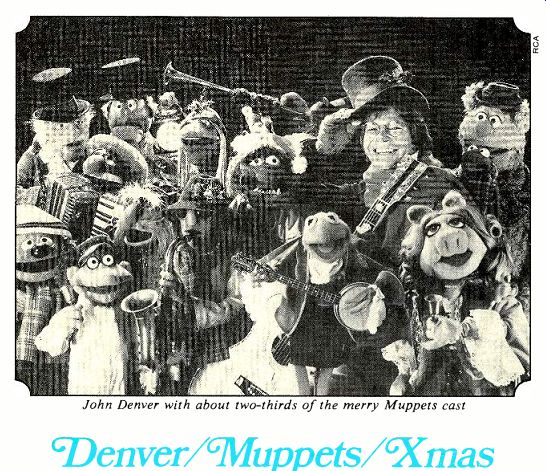
-------------- John Denver with about two-thirds of the merry Muppets cast
JOHN DENVER got himself in Dutch with the eco-freaks when he quite sensibly installed a ranch-size gas tank (or was it two?) at his Colorado layout this past summer. Who in his right mind-given the wherewithal-would have done otherwise? But if he lost a bit of his audience there, he stands to pick up another, rather heftier one with his Christmas album with the phenomenally successful Muppets.
Denver is not really the star, of course-no one can upstage the Muppets-but he is keeping the kind of classy company that cannot do a struggling young artist any harm.
(Then again, maybe he blends in so well because he's a Muppet himself-just take a look at the record jacket and you'll see what I mean.) Nonetheless, I was impressed all over again, as I have been with every new Denver album, with the sheer quality of his vocal equipment; see if you don't agree, starting with the very first notes of The Twelve Days of Christmas. (The recorded sound, by the way, has a frosty-night clarity, and the stereo effects are marvelous.) The Peace Carol (sung with Richard Hunt, as Scooter, and the rest of the cast) is for my taste the most winsomely "Christmas sy" song here, but the others have winning ways as well. Overall, the touch is refreshingly light (Miss Piggy's Carmen Miranda reading of Christmas Is Coming would guarantee that all by itself, but Little St. Nick, by Dr. Teeth and the Electric Mayhem, further ensures that any long faces in the crowd get shorter fast). Somehow I don't miss the customary solemnity at all, and a young woman of my acquaintance tells me she plans to use the album as background music at her Christmas parties. If she is planning one for December 5, however, she won't need it: John Denver and the Muppets are offering substantially the same program on an ABC-TV special that night.
One thing I haven't quite figured out for myself yet, and that is the mysterious magnetism of the character of Miss Piggy: you'd like very much to give her a smart slap across the chops, yet you can't keep your eyes (or ears) off her. In The Twelve Days of Christmas, for example, she gets to sing (hell, she probably just took it) the delicious "five go-o-old rings" line, and she milks it for all it's worth at every repeat. But she isn't satisfied with that melodic spotlight, so toward the end of the catalog she develops a trick of following it with a rudely superfluous "pa-dum-pum" underline that is inspired by the purest stage-hogging, egomaniacal gall.
It is probably something Miss P. thought of in the heat of the recording session, and they very sensibly decided to leave it in. If you find such small strokes of genius fascinating, then you'll know why the Muppets Show works.
-William Anderson
JOHN DENVER & THE MUPPETS: A Christmas Together. John Denver (himself), Frank Oz (Miss Piggy, Fozzie Bear, Animal), Jerry Nelson (Robin, Floyd, Lew Zealand), Richard Hunt (Scooter, Janice, Statler, Beaker), Dave Goelz (the Great Gonzo, Zoot, Beauregard, Dr. Bunsen Honeydew), and Jim Henson (Kermit the Frog, Rowlf, Waldorf, Dr. Teeth), vocals; instrumental accompaniment. The Twelve Days of Christmas; Christmas Is Coming; Have Yourself a Merry Little Christmas; Peace Carol; A Baby Just Like You; Deck the Halls; When the River Meets the Sea; Little St. Nick;
Noel-Christmas Eve, 1913; The Christmas Wish; Medley--Alfie, The Christmas Tree/ Carol for a Christmas Tree/It's in Every One of Us; Silent Night; We Wish You a Merry Christmas. RCA AFL1-3451 $7.98, C)AFS1-3451 $7.98, AFK1-345l $7.98.
----------------------
.... to be to avoid making the listener feel any thing. Coolidge, as always, has nice tones, and she doesn't sound like she necessarily wants to be this cold-blooded, but the setting keeps dragging her away from actually ex pressing anything. The instrumental backing is mechanical and academic, and she couldn't sink down an inch in any of the songs. My feeling about this kind of thing is that hard times may starve me, but I'm not going to let them bore me to death. N.C.
THE EAGLES: The Long Run. The Eagles (vocals and instrumentals); other musicians.
The Long Run; I Can't Tell You Why; In the City; The Disco Strangler; Heartache To night; and five others. ASYLUM 5E-508 $8.98, ET8-508 $8.98, ©TC5-508 $8.98.
Performance: They gotta be kidding
Recording: Expensive
I really don't believe this record. Yes, against all expectations (for this they labored three years?), here is still more monied Angst, lame social comment, and overproduction from the Eagles, who apparently believe that what the world needs now is a tuneless, turtle-tempo essay on the human condition as seen from the perspective of five very rich, very bored Angelenos.
Here, for example, is a potentially good idea for a song about a mass murderer at Studio 54 (The Disco Strangler) that makes the most obvious points imaginable about loneliness and alienation. Here's an unbearably smug attempted dissection of the casting-
couch mentality (King of Hollywood) ren dered in a manner so laid-back it approaches the catatonic. Here's a song about the good old days of hanging out at the Troubadour Bar (Sad Café) that is guaranteed to be of absolutely no interest to anyone outside the Eagles' immediate circle of friends. Here's a lame love song pasted together from snippets of old George Benson records (I Can't Tell You Why) and the most tired-sounding bit of blues-based rock (Heartache Tonight) they have yet essayed. Here's a vaguely funny evocation of mid-Sixties frat-house partying (The Greeks Don't Want No Freaks) that is supposed to be a throwaway yet ironically has more life than anything else in the package.
Here are tedium, a total waste of the not in considerable talents of Joe Walsh, and the sound of a band with nothing to say saying it at incredible length (King of Hollywood runs more than six minutes).
In sum, the Eagles' "The Long Run" is the most pointless vinyl extrusion of 1979, with the possible exception of "The Georgie Jessel Disco Album," which I understand A&M is readying in the wake of their success with a similar venture by Ethel Merman. Like I said, I really don't believe this record. S.S.
RECORDING OF SPECIAL MERIT
ELLEN FOLEY: Nightout. Ellen Foley (vocals); instrumental and vocal accompaniment. We Belong to the Night; Thunder and Rain; Stupid Girl; Sad Song; and five others.
EPIC JE 36052 $7.98, JEA 36052 $7.98, JET 36052 $7.98.
Performance: All right!
Recording: Fits the mood
Ellen Foley is a close musical associate of Meat Loaf, having appeared with him in concert and on recordings. It's a pleasure to re port that her first solo album is a success her singing, the songs, and the production (by Mick Ronson and Ian Hunter) are all fine rock-'n'-roll by any standard.
The standouts here are We Belong to the Night (co-written by Foley), a close parallel to Bruce Springsteen's Born to Run; What's a Matter Baby, a hit for Timi Yuro some years ago; Mick Jagger and Keith Richard's Stupid Girl; and Sad Song, which parallels It's a Heartache, the Bonnie Tyler hit (it's interesting to compare Foley's version with the recent one by nymphet Rachel Sweet). The production and performance represent a remarkable fusion of three decades of rock, from the Fif ties through the Seventies. One often seems to be hearing-all at once-a Phil Spector "wall of sound" from the Fifties, some of the more charming studio gimcrackery of the Sixties, and the obsessively clinical engineering of the Seventies. Foley shines throughout, and I heartily recommend that you hear and cheer her. J.V.
GARLAND JEFFREYS: American Boy & Girl. Garland Jeffreys (vocals); vocal and instrumental accompaniment. Living for Me; Bad Dream; City Kids; American Boy & Girl; Matador; Night of the Living Dead; Bring Back the Love; and three others. A &M SP-4778 $7.98, 8T-4778 $7.98, CS-4778 $7.98.
Performance: Jolting
Recording: Good
It is difficult for me to get a handle on Gar land Jeffreys, though there are several things about him that I immediately appreciate. He is one of people around these days who try to say something in their songs.
This is commendable at a time when much of pop music is merely chewing gum for the ears, as Frank Lloyd Wright might have said.
Jeffreys' lyrics indicate a high level of social concern and sensitivity toward the human condition. It can be jolting, as it is here on City Kids, a chilling comment on the almost casual destructiveness that has undermined contemporary urban life, particularly where the young are involved. Irony laces many of his songs, such as If Mao Could See Me Now and the title track, American Boy & Girl.
Jeffreys' style is definitely derived from rock, with rock's harsh, lean sound infusing both vocals and instrumentals. Sometimes he slips in some modified Caribbeanisms, and there are snatches of country-inspired guitar work, but the rawness of rock prevails. I do not like his music, and his singing style leaves me unmoved. But he's a talented lyricist, a brilliant urban troubadour, and I do like what he's saying. P.G.
DAVID JOHANSEN: In Style. David Johansen (vocals, guitar); instrumental accompaniment. Melody; She; Big City; She Knew She Was Falling in Love; Swaheto Woman; and five others. BLUE SKY JZ 36082 $7.98, JZA 36082 $7.98, JZT 36082 $7.98.
Performance: Good
Recording: Good
The last thing I expected from an ex- New York Doll was competence and the next to last was credibility, but David Johansen shows a measure of both here. In fact, if it were all as good as Justine and Flamingo Road, it would be a bang-up teenage album. It's pretty bang-up anyway, in the loud sense.
The dynamic range seems compressed, as in a commercial, so that everything is just about as loud as it will go most of the time. That and the fondness for a certain tempo Johan sen apparently has give it a monochromatic quality, which is compounded by his tendency to shout the vocals. And, while the backing is generally pretty good and most of the songs are better than average, there are places where thin tunes and power-pop tricks run into the ground can make you want to leave
---------------------
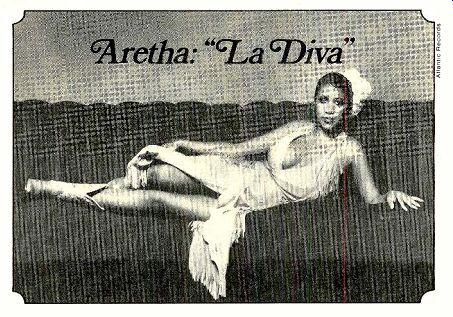
ARETHA FRANKLIN: La Diva.
THOUGH the term "diva" is usually reserved for leading ladies of the opera, it is an apt borrowing for the title of the new album by Aretha Franklin. The First Lady of Soul has shown as much toughness and endured as long as any robust Wagnerian soprano or heroine of bel canto. As she is still relatively young, it may be difficult to believe that she has been a professional singer for twenty-five years. For the first six of those she sang gospel, a career she began at the age of twelve and more or less abandoned at eighteen to shift into popular music. (Before the move, some were calling her the most likely successor to the mantle of the late Mahalia Jack son.) But even more remarkable than Franklin's staying power is the generally high quality of her output. I can't recall a single record of hers without at least one outstanding track, and several are among the all-time classics of rhythm-and-blues.
Aretha Franklin is much more than simply one of the best pop singers ever. She is also a pianist and a composer, which enables her to shape both her own songs and those of others to fit a basic musical approach that strongly reflects gospel roots. She is a true original and still sounds like nobody else, though a whole school of contemporary pop singers has followed her lead.
Of course, any career has its high and low points, and in the last few years Franklin's albums have lacked much of the electricity and emotional depth of her earlier efforts. In fact, the last one that really excited me was "Let Me in Your Life" (Atlantic SD 7292), released back in 1974. But one mark of a true diva is the ability to bounce back from a slack period with a stunning performance that confirms her high status, and that's just what Franklin has done with her new "La Diva." By now the word on the streets is probably that Aretha's "gone disco," but that's not really what's happening here. Rather, she has cleverly meshed items in her old, familiar style with others showing the influence of current pop. Her own Ladies Only, the opener, starts out in an intimate, ear-caressing way, then segues into a sassy disco groove that seems to fit perfectly with what has preceded it. Two very different sounds are made compatible by the awesome force of Franklin's performance.
MOST of the other selections, including Honey I Need Your Love and Only Star, also Franklin compositions, are vintage soul music without a trace of disco. And the range of moods and settings is further extended, in a different direction, by Zulema Cusseaux's Half a Love, which sounds like some of the delicious slow-drag dance music of the Fifties and Sixties. If there is any overall disco flavor to "La Diva," it is probably traceable to the late hustle king, Van McCoy, who co-produced it with Charles Kipps. This was one of McCoy's last efforts, and I'm glad he had a chance to work with Aretha Franklin, an artist able to bring out the best in any material she touches.
-Phyl Garland
ARETHA FRANKLIN: La Diva. Aretha Franklin (vocals); vocal and instrumental accompaniment. Ladies Only; It's Gonna Get a Bit Better; What If I Should Ever Need You; Honey I Need Your Love; I Was Made for You; Only Star; Reasons Why; You Brought Me Back to Life; Half a Love; The Feeling. ATLANTIC SD 19248 $7.98, TP 19248 $7.98, © CS 19248 $7.98.
------------------
... the room. Just turning the thing off won't do it; the whole room vibrates for minutes after wards, and so does your head. But it does rock your socks off some of the time, more of the time than most. N.C.
KRIS KRISTOFFERSON: Shake Hands with the Devi!. Kris Kristofferson (vocals, guitar);
instrumental accompaniment. Shake Hands with the Devil; Prove It to You One More Time Again; Whiskey, Whiskey; Lucky in Love; Seadream; and five others. COLUMBIA/MONUMENT JZ 36135 $7.98, 0 JZA 36135 $7.98, JZT 36135 $7.98.
Performance Largely off-key Recording. Good Well, I can see how making movies would interfere with Kris Kristofferson's songwriting (four of the ones he wrote here are five to nine years old), but the immediate problem with this album is that he can't sing for beans. (Do I hear some smart-ass saying, "Fair enough, he can't act either"? I hope so.) Actually, the songs here, several of them, are pretty nice not striking, the way Kristofferson's early songs were, but clearly the work of a pro albeit, in some cases, a pro from back in 1970. But, Lord, those vocals. For some reason, Kris keeps making it even harder on him self by casting the song in a lower key than he needs to, and he hits low notes like I would hit Tom Seaver fast balls. Of course, he never was exactly steady as a vocalist, but he was both better technically and more appealing when he was trying to do it full-time. N.C.
IAN LLOYD: Goose Bumps. Ian Lloyd (vocals, guitar); vocal and instrumental accompaniment. Love Stealer; Slip Away; First Heartbreak; Holiday; Goose Bumps; and seven others. SCOTTI BROTHERS SB 7104 $7.98, 0 TP 7104 $7.98, CS 7I 04 $7.98.
Performance: Peppy
Recording: Good
Ian Lloyd is from Stories, the vaguely Beatles-sounding early Seventies group that had some nice tunes and dumb lyrics. Lloyd, who does simultaneously sound a little-but only a little-like both Lennon and McCartney, comes on here as a hard rocker if not a would-be power popper. The format suits him at least as well as Stories did, and, taken little bits at a time, the album has several potential singles. But taken as a whole, it sure is relent less. You'll want to give your ears a rest after wards, but if it's rock with the old verve you crave, what's a little deafness? Lloyd doesn't try anything too fancy-the lyrics are generally a little less dumb than Stories'-he just lays back his ears and rocks. But there's a subtlety in getting that just right, and a lot of little things are done well here. N.C.
DAVID LOGGINS. David Loggins (vocals, guitar); Kenny Malone (drums); Steve Brantley (bass); Jon Goin (guitar); other musicians. Faces in the Window; You Made Me Feel Love; If I Had My Wish Tonight; A Woman That You Can't Have; The Fool in Me; and five others. EPIC JE 35972 $7.98, JEA 35972 $7.98, JET 35972 $7.98.
Performance: Spit-shined
Recording: Ditto
This is an abrupt turn for the Tennessee boy we used to know as Dave Loggins, and I'd call
...
---------------------
Van Morrison
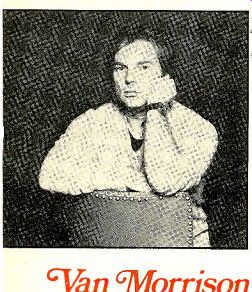
THERE is a persistent rumor about Van Morrison's struggles with stage fright. I don't know to what degree he still has it after all these years, but you can hear for your self-and in Martin Scorsese's and the Band's movie The Last Waltz you can see it again and again-that he is one nervous and wired-up performer. This is most curious, so curious that it has upended my assumption that other people's stage fright feels more or less the same as my stage fright.
I've been on the other side of the micro phone enough times to see how mine works, or to think I do, and what I find is that it erodes rapidly when I get up there and perform several nights in a row. At first it's fierce-the first two or three times I estimated I was intimidated into doing only about 45 percent of what I could do at home alone (on the instrument, that is; I think it's a little easier for vocalists). And it comes back somewhat-but never as fierce as at first-if there's a layoff or a hiatus in my getting up there and doing it. But, Lord, after a little time on the road, it gets to be not all that novel. Indeed, the usual schedule will eventually make a performer wish he were more keyed-up, not less, when the time comes to get up there and do it.
That's the way I thought it must work for everyone, but apparently it does not work that way for Van Morrison. Here's his umpteenth album, "Into the Music," and its overriding characteristic is what a coiled spring Morrison is.
This leads me to suspect that his "stage fright" is something I can't know exactly. I'm just not tense enough (though Lord knows I try sometimes). It appears to be a standard part of his way of doing things, an essential part of his personality. In a way it may have been the biggest factor in keeping him in favor, to a reasonable degree, through the shaky Seventies. For, whatever else we may have said about him, no one could accuse him of failing to try to get into the music. He has never been one to pitch (as in toss off) a song out to the audience or control room; he has always opted to crawl inside the rascal and ride it wherever it went. And he was not a passive rider, either.
Of course, usually it was a song he had written himself. The intensity Morrison the singer would later bring to it would never show in the bare lyrics (and still doesn't), but you could (and still can) hear it in the long, rubber-band melodic lines and in the beat.
This new album, being more even and listenable than most, is a good example of how, ideally, songwriting and singing merge in Morrison's world. When he's successful, his lyrics-once he's sung them-convey, at most, that what he's trying to express is beyond words. Read them or hear almost anyone else sing them and they almost always seem trite and banal. Sometimes in the past they've seemed that way even when Morrison sang them; not even he could draw enough attention away from their prima-facie dumb ness. But most of those in "Into the Music" are above the good-enough-to-be-sung threshold, and several times they suck you right into Morrison's world, where the strain on the word is more important than the word itself.
WITH all this straining and intensity, it should follow that Morrison would be limited in the emotional range he can convey. I'm not so sure he is. There's a limit to how happy he can sound, but somehow here, at the very start, he takes his agonized, squeezed, stretched, slobbered-over, basically sad in flections and still makes Bright Side of the Road an upbeat little experience. (Something similar happened, you'll recall, with Tupelo Honey.) Mood is a big thing with Morrison, and when he gets inside a song, he'll serve it, somehow, whether he's equipped to or not. In the new album, he makes it a little easier on himself by thinking up some fetching tunes some of which, such as Rolling Hills, take unexpected directions and don't sound like the usual stylized, patented Van Morrison tunes-and by assembling a tasteful but rakish back-up group whose members play off each other as well as Morrison.
And for Listen to the Lion-type mood freaks, there is And the Healing Has Begun, which is a stereotypical Morrison experience of stereotypical Morrison length, but not bad for all that. The very end, grafting You Know What They're Writing About onto It's All in the Game, doesn't work too well, since Morrison's moody appendage is just too meandering, too sketchy, and yet too heavy-handed to be wistful, which was its only chance. But before that there's a lot of pretty solid album here, and it's a genuine encounter with one of the real stylists of our time.-Noel Coppage VAN MORRISON: Into the Music. Van Morrison (vocals, guitar, harmonica); Toni Marcus (violin, viola, stroviola, mandolin); Mark Jordan (keyboards); Herbie Arm strong (guitar); David Hayes (bass); Peter Van Hooke (drums); other musicians. Bright Side of the Road; Full Force Gale; Stepping Out Queen; Troubadours; Rolling Hills; You Make Me Feel So Free; Angeliou; And the Healing Has Begun; It's All in the Game/You Know What They're Writing About.WARNER BROS. HS 3390 $8.98, OO W8 3390 $8.98, W5 3390 $8.98.
-------------------------
... it a turn to the right-which is to say, going with the flow. A bunch of damned silk-shirted songs is what it is. It would be a credit to Boz Scaggs. And there are smart-ass little turns of melody, to go with words ostensibly about human emotions, that every android out there is going to love. Guess you might say it is not my cup of tea; I'd rather have one of the other directions Loggins used to hint at taking, something a little more Organic. Or a lot more. But it's well crafted, and Loggins is a good singer. Would that the times had swept him some other way. N.C.
CAROLYNE MAS. Carolyne Mas (vocals, guitar, piano); David Landau (guitar); John Siegler (bass); Andy Newmark (drums); other musicians. Stillsane; Sadie Says; Snow; It's No Secret; Call Me; Baby Please; and four others. MERCURY SRM-1-3783 $7.98, MC8-1-3783 $7.98, MCR4-1-3783 $7.98.
Performance: Flirtatious
Recording: Good
In some ways this is a crackerjack of a bubblegum album, but it leaves you feeling Carolyne Mas has the intelligence-and knowing she has the voice-to aim higher. It is intelligently produced by Steve Burgh, given the material (by Mas), which repeatedly poses Mas as a not-so-innocent innocent (we know what Snow is really about, etc.) at large in the big, fat world. There is something precocious about the attitude of the thing, but Mas' voice is pliant and expressive and doesn't need this flirtation with girlishness.
The songs mostly perk along just fine on a bubblegum level but are almost all throw aways. There's talent here, though. N.C.
THE ALAN PARSONS PROJECT: Eve.
The Alan Parsons Project (instrumentals); vocal accompaniment. Lucifer; I'd Rather Be a Man; Damned If I Do; Secret Garden; You Won't Be There; and four others. ARISTA AL 9504 $7.98, CDA8T 9504 $7.98, ACT 9504 $7.98.
Performance: Crisp
Recording: Super
The three astonishingly beautiful women on this album's disturbing cover have faces that turn out, on closer inspection, to be horribly disfigured, and the album's "concept" is the two faces women show to men (or that men think women show to men). One face is caught in the callous images of the opener, You Lie Down with Dogs ("Not your only man, just another/I'm gonna take what I can like any other"). "Eve" then moves through a series of male confrontations with woman's mysteries to a kind of resolution in If I Could Change Your Mind, in which a female vocal ist sings of "Windy shores on melancholy days/Drifting along with the tide/And the joys of simple things and ordinary ways." It's not the most profound concept, the conflict of the animal urgings of sex and the human need for love, and it's not carried through and developed in a literary or operatic way, like Evita or Tommy. But it adds a nice dimension to the listening experience, the kind of lightly sketched theme that Alan Parsons fans look for in each of his remark able mood albums. Musically, though, "Eve" is a disappointment coming from Parsons and Eric Woolfson, the creators of the classic "Pyramid." The arrangements are not as fresh, and the sound, which seemed so new so recently, now seems repetitive. You Lie Down with Dogs, with a gritty vocal by Larry Zakatek, is as close to straight rock as any thing Parsons has done. it's not the best song in "Eve," but it is the most interesting because it's the only one free of the double time intros, choral vocalise, and big, rhythmic electric-piano chords we've heard before in other Parsons albums. A much better song, the ballad Yew Won't Be There, gets a fine vocal performance too (from Dave Town send), but it's hurt by a Star Wars-size finale more appropriate to the bigger subjects of "Pyramid." The two instrumental cuts, Lucifer and Secret Garden, sound like out-takes.
Of course, sounding like the Alan Parsons Project is not a bad thing for the Alan Parsons Project to do. And there are some wonderful things in "Eve."
E.B.
ALAN PRICE: Lucky Day. Alan Price (vocals, piano, synthesizer); instrumental accompaniment. Groovy Times; Baby of Mine; Those Tender Lips; Help from You; England My England; and five others. JET JZ 35710 $7.98, JZA 35710 $7.98, JZT 35710 $7.98.
Performance: Intelligent
Recording Good
Pop composer-performer Alan Price has been a solo artist since his departure from the Animals in 1965. He has a loyal band of supporters in his native England, and, from his work on the film 0 Lucky Man, a cult following here in the U.S. His specialty is the sharp, mordant lyric (generally a sociological comment) accompanied by a bouncing tune. The aspiration seems to be Brechtian, but the results more often resemble Gilbert and Sullivan. Price is an intelligent, suave performer, however, and there are a few sarcastic chuck les to be found in such things as England My England: ". . . his mum is a cleaner at the Co-op bakery/She saves all her wages for a Japanese TV/To please her old man who is struggling on the dole . . ." Or there's Pity the Poor Boy: "I'm a dreamer, I'm a schemer/How can I win in this world and survive . . . ." Price's work is as English as gin and bitters but served, unfortunately, at that beverage's usual tepid temperature. P.R.
RECORDING OF SPECIAL MERIT
GENYA RAVAN: And I Mean It! Genya Ravan (vocals, harmonica); instrumental and vocal accompaniment. I Won't Sleep on the Wet Spot No More; Junkman; Roto Root Her; I'm Wired, Wired, Wired; Love Isn't Love; and five others. 20TH CENTURY-FOX T-595 $7.98, ® 8-595 $7.98, © C-595 $7.98.
Performance: She means it
Recording: Good
After a period spent producing other acts and reviewing her own singing career from a distance of time, Genya Ravan last year made her return as a performer with "Urban De sire" (20th Century-Fox T-562), an album that deserved a better reception than it got.
Her new release, "And I Mean It!," is even better. In fact, it tops everything Genya Ravan has done previously, and that includes her work with Ten Wheel Drive, which originally established her on the American pop map.
Ravan's vocal sound is a kind of hybrid that was developed in the Fifties by white singers trying to imitate black ones. Her style, however, is strictly her own, and, as in the previous album, she applies it here to material that reflects the Sixties without sounding anachronistic. Again, there is a nod to Motown-this time it is Marvin Gaye's 1962 song Stubborn Kind of Fellow (here changed to Stubborn Kinda Girl)-and a generous portion of tunes by Ravan herself.
Though I went back several times to her own tune, I'm Wired, Wired, Wired, the most sparkling gem of this album is Junkman, written by Joe Droukas and exquisitely per formed by Ravan and singer Ian Hunter. I love this album . . . and I mean it! C.A.
KENNY ROGERS: Kenny. Kenny Rogers (vocals); Pig Robbins (piano); Bob Moore (bass); Billy Sanford (guitar); other musicians. You Turn the Light On; You Decorated My Life; She's a Mystery; Goodbye Marie; Tulsa Turnaround; Old Folks; and five others. UNITED ARTISTS LWAK-979 $8.98, 8LN-979 $8.98, 4LN-979 $8.98.
Performance: The usual
Recording: Good
Kenny Rogers' image is just about anywhere you'd care to look. His picture (a real photo graph, not graffiti) has even made the New York subway system. On the tube-with ...
-----------------
Nancy Harrow
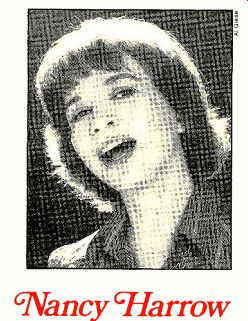
WHEN I look at the record charts these days I often sigh and think, "Oh well, there just isn't that much real talent around.
And besides, a cool, robot-like charm helps more in winning popularity contests." But then a beautiful, truly elegant album comes along-such as Nancy Harrow's "Anything Goes" on Audiophile-and I actually get angry when I think of all those people who could appreciate it but will never even get to see a copy in their local stores because the racks are too crowded with the latest instantly salable junk.
Well, if you don't see Nancy Harrow's new album where you buy records, ask for it; and if that doesn't work, write away for it. I can assure you that hearing it will improve your life immeasurably in a variety of ways. For starters, your intelligence will savor her serene, less-is-more approach to lyric reading, with just a slight ritard (such as in the middle of Cole Porter's Anything Goes) pointing up internal rhymes that probably never struck you before. Your body will probably learn a great deal about the art of sensuous relaxation from Harrow's laid-back, slightly lascivious run-through of the old Ma Rainey song See-See Rider, in which she demonstrates what pop/jazz singing can do when it's really good: namely, create a space and mood in which the listener becomes the protagonist.
Finally, your soul can't help but be refreshed and enriched as you hear Nancy Harrow glide and turn, soar and flutter through such gems as I Wished on the Moon, with its Dorothy Parker lyrics, or the stoically lovely Arlen/Mercer ballad Come Rain or Come Shine, or maybe the best damned performance ever of He's Funny That Way.
Harrow made two albums in the early Sixties that were exceptional enough to assure her being booked into the best clubs of the time. Unfortunately, they came at a time when the club scene was doing a fast fade for lack of patrons (the "revolution" and all that, don't you know), and she decided to slip out of the limelight for a while. Her second child was born in 1969, the year she became an editor at American Journal, a literary magazine. In the last few years she eased back into singing publicly, then decided to record this album. Praise be that she did.
FOR accompaniment, Harrow chose Jack Wilson on guitar, Billy Hart on drums, and the spectacular Rufus Reid on bass. Their playing creates the kind of warm, billowing musical cushion on which Harrow can float effortlessly through her repertoire. Her exceptional line and rhythm and pace mark her as a thoroughbred, and thoroughbreds have a way of standing out no matter where you put them-even in a barnyard full of tricky bionic chart-horses.
-Peter Reilly
NANCY HARROW: Anything Goes. Nancy Harrow (vocals); Jack Wilkins (guitar); Rufus Reid (bass); Billy Hart (drums). Any thing Goes; Prelude to a Kiss; See See Rider; A Woman's Intuition; I Wished on the Moon; Come Rain or Come Shine; He's Funny That Way; Them There Eyes; My Old Flame; A Fine Romance; Foolin' Myself; I've Got a Crush on You. AUDIOPHILE OP-142 $7.98 (from Audiophile Records, 3008 Wadsworth Mill Place, Atlanta, Ga. 30032).
--------------------
Mary or Mike or one of those-he says these things usually last five or six years and then fade away, which is true. You remember John Denver. Anyway, Rogers keeps turning out product to capitalize on that notoriety while it lasts, and it is respectable product but basically safe and conservative.
At the very beginning of the First Edition, Rogers brought a certain flair and freshness to record making. You could even say he was one of the first to bring a country bearing back to post-rockabilly rock. But this album, like most of his recent ones, has a predigest ed, market-researched air about it and an amorphous non-style. That is, it's an old-time MOR pop album. That would be all right because his voice is ubiquitous too, and al ways recognizable-except that the songs and instrumentation are so formula-struck. It's like Howard Johnson's commitment not to surprise you. There's even a little piece of mint you can pick up after this anonymous feeding exercise: Coward of the Country (well, it's listed as "Country" on the jacket, although Kenny says "county" when he sings it) is a little acoustic-guitar-fed story song to be played on the country stations and to re mind us all where Kenny's roots once were and maybe make us forget some of the bloat ed orchestration that went on before. Rogers still has musical talent, but he's too busy being a businessman, while this thing lasts, to use much of it. N.C.
RECORDING OF SPECIAL MERIT
STEVE ROSS. Steve Ross (vocals, piano). I Want to Be Seen with You Tonight; Steppin' Out with My Baby; Sometime When You're Lonely; Tuscaloosa's Calling Me; Sweet and Low-Down; Two for the Road; 99 Miles from L.A.; Soon; and four others. STOLEN MOMENTS SM 1938 $8.00. (Available by mail from Stolen Moments Records, 255 West 84th Street, New York, N.Y. 10024 for $9.50 postpaid.)
Performance: Stylish
Recording: Good
One of the principal reasons for the success of Ted Hook's Backstage, a theatrical restaurant on West 45th Street in Manhattan, is that Steve Ross has entertained at the piano bar there for the last three years. This album is an excellent example of the kind of work that keeps Ross' devoted following of theater goers and performers coming back for more.
He has an enormous repertoire of American theater songs which he has chosen with taste and performs with skill, reinterpreting them in cabaret style. Among his greatest assets are his talent for arranging and his ability at the keyboard, and he has the diction and the sensitivity to lyrics that are required for success in cabaret. His voice may not be the world's greatest natural instrument, but he uses it to considerable expressive effect. It has a reedy sound, reminiscent of Fred Astaire and Noel Coward, that lends an appealing period quality to his interpretations of Irving Berlin's Remember and How Deep Is the Ocean here.
The album contains a nice mixture of standards and more contemporary songs such as 99 Miles from L.A. by Albert Hammond and Hal David. My favorite is Harold Beebe and Bill Heyer's valentine to New York City, Tuscaloosa's Calling Me (But I'm Not Going). For me it sums up what Ross is all about: New York night life and the glamour of the Broadway theater.
-William Livingstone
RACHEL SWEET: Fool Around. Rachel Sweet (vocals); vocal and instrumental accompaniment. B-A-B-Y; I Go to Pieces; Who Does Lisa Like?; Wildwood Saloon; Sad Song; Cuckoo Clock; and four others. STIFF/COLUMBIA JC 36101 $7.98, JCA 36101 $7.98, JCT 36101 $7.98.
Performance: Engaging
Recording: Good
Rachel Sweet is a seventeen-year-old American singer who made it big in England and has now returned here. I wish her success. In musical and historical terms she can be com pared with Brenda Lee and Leslie Gore, but with one important difference. The times have changed in such a way that singers of Ms. Sweet's tender age can take on subjects that weren't allowable for her predecessors.
Today a rapid loss of innocence is assumed, and a teenager can handle material that is womanly rather than girlish. Instead of a child prodigy singing polite pop we have what I guess we will have to call nymphet-rock.
Sweet's voice is occasionally cloying, but she has a good sense of phrasing and a commendable bravura. The material is an interesting mixed bag. B-A-B-Y, a hit for Carla Thomas, and I Go to Pieces, a hit for Peter and Gordon before Peter Asher became Linda Ronstadt's producer and Gordon disappeared, are both given sturdy, professional treatments. There are also some odd items:
Cuckoo Clock is about a demonic machine, and Elvis Costello's Stranger in the House is a country-type tune in which Our Little Girl is cast as the wife of a fellow who can't get over another woman. The late Vladimir Nabokov, author of Lolita, would have had a field day with this album. For the rest of us, . . . well, it's rock-and-roll, baby. J.V.
RECORDING OF SPECIAL MERIT
TALKING HEADS: Fear of Music. Talking Heads (vocals and instrumentals). I Zimbra; Mind; Paper; Cities; Life During Wartime; Memories Can't Wait; and five others. SIRE SR K 6076 $7.98, M85 6076 $7.98, M5S 6076 $7.98.
Performance: Assured and dazzling
Recording: Terrific
Funny how soon the avant-garde becomes mainstream these days. Case in point: Talking Heads. Two or three years ago they sounded kind of weird even to themselves, and now their music is reasonably accessible to almost everybody without their having compromised their integrity in the slightest.
In part this is because a number of other bands (the Cars, for example) have adapted elements of the Heads' style for more conservative pop-oriented songs, but it's also because the Heads' own outlook has become increasingly focused and sophisticated, to the point where it's now quite obvious that Sixties funk of the Memphis variety, rather than SoHo minimalism, is the real root of what they're doing. Comparisons with Booker T. and the MG's have never been more to the point.
"Fear of Music" is primarily a sound album in the best sense, full of textural surprises, rhythmic quirks, and striking instrumental work, an eccentric, danceable, even subtly tuneful display coupled with some of the most cohesive ensemble playing in rock today. I couldn't care less that David Byrne's choked, paranoid singing might be considered a mannerism; it sounds utterly right in the context of what the band is doing. Overall, this is the most accomplished outing yet from what must be recognized as the world's most cerebral funk band. I think it's just bloody mahvelous.
S.S.
FRANK ZAPPA: Joe's Garage, Act L Frank Zappa (vocals, guitar); instrumental accompaniment. The Central Scrutinizer; Catholic Girls; Crew Slut; Wet T-Shirt Nite; Toad-0 Line; and four others. ZAPPA SRZ-1-1603 $7.98, ZT8-1-1603 $7.98, ZT4-1-1603 $7.98.
Performance: Prurient
Recording: The Zappa Sound
I don't know if "Act II" of "Joe's Garage" is forthcoming, but I hope so. "Act I" sure does end incomprehensibly. As usual, Zappa milks his favorite obsessions: "Joe's Garage" is a slightly surrealistic sound drama about garage bands, groupie sex, and all-American sleaze. The story is told by the Central Scrutinizer, whose job is to enforce all the laws that haven't been passed yet-mainly the Abolition of Music, the very art whose temptations and evils are so well illustrated in this album. In the end, all that happens is that our hero joins the First Church of Appliantology--punishment enough, perhaps, but not exactly the horrible fate we had been led to ex-
...
-----------------
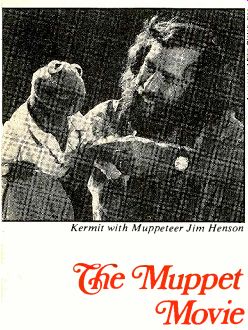
Kermit with Muppeteer Jim Henson
The Muppet Movie
SHORTLY before the all-too-early ending of The Muppet Movie, Kermit the Frog looks out at the audience and comments, "That's what it's all about, folks. You have to keep on believing and you have to keep on pretending." That little bit of survivalist philosophy just may be what has caused me to see the film twice and listen to the original-soundtrack recording on Atlantic often enough that I can lip-synch most of the songs.
In their first appearance on the Big Screen, the Muppets provide the kind of entertainment we haven't seen the likes of since the days of the great silent-film comedians. It will have grade schoolers rolling on the floor with delight even as it foils grownups' determination to keep a straight face. Kermit and his scruffy menagerie have the magic grace of make-believe, expressing feelings that are supposedly reserved for human beings but that probably only hand puppets can safely display in real life.
The Academy Awards, that worn and dusty ritual of an industry grown tired, will soon be upon us again, and if The Muppet Movie isn't given a special award for restoring some of the golden glow that's been missing from movies since, well, the Thirties, then there's just no justice. (One has heard, of course, of the underground movement to launch a massive write-in campaign to name Miss Piggy as Best Actress, and I don't suppose I have to tell you whose fine, porcine hooflet is behind that!) The plot of the movie is simplicity itself. A fast-talking Hollywood agent comes upon Kermit singing in the swamp and tells him that he ought to go to Hollywood so his songs could reach millions of people all over the world. The idea appeals to him, and he sets out for Tinseltown. Along the way he picks up a diverse crew of traveling companions: Fozzie Bear, the world's worst stand-up comic; Gonzo, the clumsiest bird ever to spread his wings; the inimitable Miss Piggy, a beauty-contest winner and the flintiest-eyed pursuer of the Big Chance since Lorelei Lee; the devil-may-care Dr. Teeth and his Electric Mayhem band; and a host of other wonderful creatures that spring from the imagination of Jim Henson and are as warm, witty, and winsome as any of the creations of Lewis Carroll, A. A. Milne, or L. Frank Baum. No doubt about it, the Muppets already have the shimmery aura of classic characters about them in their film debut. There is also a subsidiary chase plot featuring a fast-food mogul (frogs' legs!) and his cohorts who complicate the gang's journey toward their American Dream. But that needn't trouble you for a moment, for none of those sleazy characters turn up on the recording. It's a glorious Muppets carnival all the way, with Frank Oz, Dave Goelz, and Henson providing most of the voices.
The score that Paul Williams and Kenny Ascher have devised has the same charmingly goofy inventiveness and sunny disposition as the Muppet odd squad itself. Movin' Right Along, for instance, is travelin' music for Fozzie and Kermit as they burn up the highway in Fozzie's uncle's vintage Stude baker, and it is as zappy as anything Crosby and Hope ever had to work with. Then there's Dr. Teeth and the Electric Mayhem's big, BIG production number, Can You Picture That, in which the estimable Dr. and his group go bananas as usual about very little, giving us, and having themselves, a wonderfully lunatic time. Plus the poignant charm of Gonzo singing his heart out and his few remaining feathers off in I'm Going to Go Back There Someday. And, finally, Miss Piggy's hymn to herself and her romantic destiny, Never Before, Never Again. Never mind that it's damned close to perfect as a piece of special material, that it is also quite a good love song, or that Frank Oz, as Miss Piggy, is able to bring to it a believability that makes you forget the arm (and possibly the heart) of steel that lies beneath the sentimentality, for you'll simply be laughing too hard to care. In this flight of pure comedic fancy, Miss Piggy makes her bid to become the Love Goddess of the Eighties. Go home, Bissett; get lost, Deneuve; try tap-dancing lessons, Antonelli-Miss Piggy has arrived!
BUT perhaps the finest achievement here, on all levels, is the Williams and Ascher song The Rainbow Connection. It starts out by asking why there are so many songs about rainbows, and then goes on to list the reasons:
because they represent happiness, wishes and dreams, contentment and fulfillment, and most of all-because they symbolize happy endings whatever the time, no matter how difficult that time may have been. That, to me, means hope, and hope can be, according to your point of view, either a blessing or a curse for mankind. I think you know where Kermit and I stand.
-Peter Reilly
THE MUPPET MOVIE (Paul Williams Kenny Ascher). Original-soundtrack recording. Jim Henson, Frank Oz, Jerry Nelson, Richard Hunt, Dave Goelz, Steve Whitmire, and Kathryn Mullen (vocals); instrumental accompaniment. ATLANTIC SD 16001 $7.98, TP-16001 $7.98, CS-16001 $7.98.
-----------------
... pect. Maybe there is more to come in Act II.
In between, there is some music: Zappa-esque instant classics like . . . well, you can read the list above. The title song, a retroactive garage-band national anthem, is Zappa's grungy answer to Disco, New Wave, and No Wave. Joe's Garage and an almost lyric Lucille (as close as Zappa ever gets to lyric) are the only songs on the album that aren't dirty.
All the rest are leering, lascivious, lyrico musical humor of the sort Zappa has been pushing for years. His zestful, zany, adolescent Singspiel and muddled madcap music may be amusing, but it hardly has the urgency his work used to have. Pop musicians with a lot of money and a lot of ego and a lot of talent can, like presidents and kings, get cut off from the rest of us. Frank needs to break out and move on. -Eric Salzman
Disco
PATTIE BROOKS: Party Girl. Pattie Brooks (vocals); vocal and instrumental accompaniment. My Heart Belongs to You; Workin' It Out; Got Tu Go Disco; Leap Tall Buildings; and three others. CASABLANCA NBLP 7158 $7.98, NBL8 7158 $7.98, NBL5 7158 $7.98.
Performance: Solid group effort
Recording: Excellent
Pattie Brooks is one of those singers intelligent enough to gather the best talent around her so as to maximize her assets and minimize her deficiencies. Her voice is limited.
She can "soul" it, as she demonstrates in a totally hot number called My Heart Belongs to You, but her top notes are either thin or strained, depending on how hard she pushes, and her middle ones undistinguished.
But the music! "Party Girl" is full of good stuff, most of it written by members of the top disco group Instant Funk, who also pro vide back-up for our Ms. Brooks. It adds up to a high-powered dance experience. Cause I Love, Love, Love You will probably knock you out, but you'll collapse happy. Workin' It Out (written by Marvin Hamlisch and Carole Bayer Sager) is a good contrast: a basic strut-your-stuff number that I pick to make the charts. There's yet another contrast in the juxtaposition of the freaky-funky If You Are My Man and the MOR appeal of the big, energetic title song from the recent Broadway fiasco Got Tu Go Disco.
Altogether, this is a nicely mixed selection of happy arrangements. Everything is done just right-no ground-breaking novelty but a secure grasp of disco style. "Professional" in the best sense of the word. E.B.
RECORDING OF SPECIAL MERIT
CAMEO: Secret Omen. Cameo (vocals and instrumentals); other musicians. Energy; I Just Want to Be; Find My Way; New York; and three others. CHOCOLATE CITY CCLP 2008 $7.98, 8-2008 $7.98, 5-2008 $7.98.
Performance: Rambunctious
Recording: Very good
I kept telling myself that I did not like this record. After all, it's just a whole lot of singing, stomping, and clapping going on to a disco cadence augmented by assorted Latin ac cents on percussion. Yet this insistent, weirdly captivating pulse managed to trigger an utterly uncontrolled response in some part of me that just wanted to leap and clap along with all this organized cacophony.
Once I decided to be completely honest with myself, I realized what a wonderful record this is. Certainly, there is nothing convoluted or intellectual about it, but if the mu sic makes you feel good, that can be enough.
This group sounds like a bunch of people who got together, brought their instruments along, and just decided to have some fun. All I can say is that I'm glad they invited us to the party. P.G.
CHIC: Risque. Chic (vocals and instrumentals); vocal and instrumental accompaniment.
Good Times; My Feet Keep Dancing; Can't Stand to Love You; My Forbidden Lover; and three others. ATLANTIC SD 16003 $8.98, OO TP 16003 $8.98, CS 16003 $8.98.
Performance: Too chic
Recording: Lush
This is my favorite Chic recording so far, but I still find their music less than easy to dance to. It's slow, first of all, and it tends to have unexpected rhythms that get in the way on the dance floor. Worse, the typical Chic song is weak on melody, putting romantically lush arrangements and hypnotic repetition where the song should be.
Good Times is the latest in the group's string of super hits, and it's the best thing Nile Rodgers and Bernard Edwards, who write and produce all of Chic's music, have done yet. As always, the tone is laid-back and elegant, but this time there's a touch of wit added to the cool, classy music. Lyrics such as "Don't be a drag, participate/Clams on the half shell and roller skates" are not to be ( Continued on page 120)
sneezed at. My other favorite is My Feet Keep Dancing, yet another dreamy affair in the Chic mode, but brightened by an arrange ment that builds almost subliminally until it takes on a dramatic edge I've never heard from them before. It's a welcome change for music that tends to be, well, too chic. E.B.
GIORGIO MORODER: E = MC2. Giorgio Moroder (instrumentals); vocal accompaniment. Baby Blue/What a Night/If You Weren't Afraid; I Wanna Rock You; and two others. CASABLANCA a NBLP 7169 $7.98, O NBL8 7169 $7.98, NBL5 7169 $7.98.
Performance: Electronic upper
Recording: Digital disco
Musically, this is no groundbreaker. Others have accomplished more-much more-with electronics than Giorgio Moroder has here.
Kraftwerk has produced richer textures and weightier music, the Munich Machine pro vided back-ups of surprising variety and inventiveness for their early disco albums, and Meco has played more involved electronic games with winning results. Nevertheless, "E = MC2" is a very happy new entry in the same category, and it has the added advantage of spectacular sound. The record is billed as "the first electronic live-to-digital album," and however peculiar that may sound as applied to the output from a whole warehouse full of electronic equipment ("25 computerized synthesizers, 4 computerized pianos, 3 micro-computers, drums and electronic percussion," plus vocals), the digital recording has captured an astonishing range of material with amazing fidelity.
If you like to dance, you'll get a lot of enjoyment out of this disc even if you never hear it on audio equipment that can do full justice to its sound. The unbroken medley on side one, for example, is a dancer's delight.
Too few disco producers provide this kind of instant party, obvious though the idea seems.
Yes, there is a sameness of tone and tempo in the three perky songs (at least until midway through If You Weren't Afraid), and yes, they don't hold up for mere listening; but they do build beautifully for dancing. The songs on side two are independent and, as songs, better. Both I Wanna Rock You and In My Wildest Dreams are substantial rock/disco/trippy production numbers. The whole album, in fact, is infused with a rare glee.
Moroder and Co. clearly enjoyed putting it all together. Even the credits are fun: they're spoken in a computer voice on the last band, timed to an unbroken disco beat. E.B.
PINK LADY. Pink Lady (vocals); instrumental accompaniment. Kiss in the Dark; Love Me Tonight; Dancing in the Halls of Love; and seven others. ELEKTRA 6E-209 $7.98, ET8-209 $7.98, TC5-209 $7.98.
Performance: Routine
Recording: Very routine
Just what you wanted for the holidays, I'm sure: Pink Lady-actually two gorgeous Japanese girls named Mie and Kei-in a disco album that sounds so much like every other disco album you've ever heard that you'll have to keep checking the label to be sure you haven't slipped some older record onto the turntable by mistake. The performer's nationality makes about as much difference here as a pair of eyeglasses on a radio announcer.
Mie and Kei chant, hum, croon, squeal, and coo (apparently on direct cue from producer-engineer Michael Lloyd), and the headache that results from their efforts can't be distinguished in the least from any old Occidental headache you're likely to get any old day.
Talk about second-generation rock! This is fifth- or sixth-generation disco. P.R.
RECORDING OF SPECIAL MERIT
MIGHTY POPE: Sway. Mighty Pope (vocals); vocal and instrumental accompaniment. Sweet Blindness; Sway; and three others. RFC/WARNER BROS. RFC 3310
$7.98, OM8 3310 $7.98, M5 3310 $7.98.
Performance: A good new voice
Recording: Brilliant
If you've been wondering what's happened to Gino Soccio since his successful "Outline" LP a few months back, wonder no more. He's been doing the arrangements for other artists' albums, including this one from Mighty Pope. The arrangements here share the elements that rocketed "Outline" to the top: an electronic disco sound, tight orchestrations that concentrate on the beat, trippy multiple tracks, and a sense of erotic urgency that makes you want to move. In fact, the album's opening cut, an update of Iron Butterfly's In-A-Gadda-Da-Vida, is cut from the same cloth as Soccio's own album. This is hypnotically trancy music that seems to grow rather than build. It's sexy and great for both heavy dancing and just listening.
What has been added to "Sway" that wasn't in "Outline" is a sense of delight in music making, and here the credit belongs to Mighty Pope himself. Electronics-flavored dance music rarely achieves the kind of joy that infuses the title song here. Mighty Pope's dark, husky voice handles Sway with a per fect blend of restraint and enthusiasm, making it the kind of song you dance to with a smile on your face. It's a wonderful disco number, fast and infectious. Pope's voice is heard to even better advantage in New Orleans, mostly because the engineering pushes it forward. After listening to this happy hand-clapper, there's no question that Pope has a mighty voice indeed, or that he can use it with tremendous musicality. Even the monotonous production on Because the Night (which is saved by some beautifully played and recorded percussion) can't obscure its quality. E.B.
TUXEDO JUNCTION: Take the "A" Train. Tuxedo Junction (vocals); instrumental accompaniment. Toot-Toot Tootsie. Goodbye; That Old Black Magic; Take the "A" Train; You Gotta Be a Football Hero; and three others. BUTTERFLY FLY-3105 $7.98, FLYT-3105 $7.98, FLYC-3105 $7.98.
Performance: Flip, fresh, and fun
Recording: Fine
Cory Daye has shown us, in "Cory and Me" (see November's "Best of the Month"), that disco can utilize elements of old-time pop and jazz and still sound as up to date as the most elaborate electronic music. Now Tuxedo Junction shows us, with saucy good humor, that pop/jazz standards from as far back as the Twenties can sure as shootin' go disco and keep their timeless charm intact. "Take the 'A' Train" is a refreshing album, and the first three cuts, including the title track, are some thing more: they're fun and classy and good dance music all at once.
The album opens with a jitter-disco romp through Toot-Toot Tootsie Goodbye and continues with a South Seas hustle through That Old Black Magic. But the high point is the group's version of Billy Strayhorn's classic Take the "A" Train. It's not simply a disco arrangement of this evergreen standard, but rather an uncanny translation of Forties big-band jazz into late-Seventies dance mu sic. The arrangement incorporates the close harmony and massed brass of the original, but the tempo and phrasing are definitely geared to today's dancing.
Unfortunately, the rest of the album is much less successful. You Gotta Be a Foot ball Hero succeeds only intermittently in being a convincing blend of the old and new styles, and Tuxedo Junction's Begin the Be- ...
----------------
Anne ' Murray
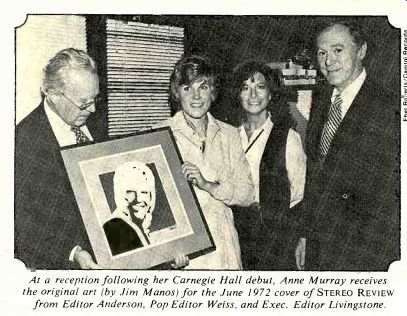
---------- At a reception following her Carnegie Hall debut, Anne Murray receives the original art (by Jim Manos) for the June 1972 cover of STEREO REVIEW from Editor Anderson, Pop Editor Weiss, and Exec. Editor Livingstone.
I FIRST heard Anne Murray in the late summer of 1970 singing her "breakout" recording of Snowbird, noting in these pages at the time that "though there are many singers around who have made successful careers without them, really good voices are extremely rare, and Anne Murray has one clear, clean, musical, beautifully focused, and unbelievably on pitch." She also had that singular advantage without which no singer can hope to move out of the crowd: a unique, immediately identifiable vocal signature.
Gratifyingly, none of that has changed.
What has changed is pop music itself, which (disco aside) now seems to be ricocheting within a triangle bounded by folk, country, and rock. And who is the canny ,young woman occupying the catbird seat right in the middle of that triangle? Why, Anne Murray, that's who. I caught her long-overdue Carnegie Hall debut this past September 19 and was struck by the seamless, low-key professionalism of the whole program, which was, appropriately enough, a kind of review of her career from Snowbird, on through the "country" period, and to date. Included, of course, was Randy Goodrum's brilliant You Needed Me, which she described as her favorite song.
On her new Capitol album "I'll Always Love You" she sings another Goodrum song, Bro ken Hearted Me, already released as a single.
Not bad, not bad, but I prefer John Stewart's Daydream Believer (those lovely low notes) or Jesse Winchester's Wintery [sic] Feeling (not wintry at all).
MY most favorite Anne Murray, however, is the one who appeared in the 1971 duet album (Capitol SW 869) with Glen Camp bell, their voices blending, as Noel Coppage put it, "like real butter and warm sorghum molasses." Highlight of that album for me was a one-on-one quodlibet of Jimmy Webb's By the Time I Get to Phoenix and Burt Bacharach's I Say a Little Prayer for You, a rare triumph of the pop-music art. Still hungry for more, I asked Miss Murray after the Carnegie concert if she wouldn't like to do another some time. "Yes," said she, "with Kenny Rogers." Your move, Rogers.
-William Anderson
ANNE MURRAY: I'll Always Love You.
Anne Murray (vocals); instrumental accompaniment. You've Got Me to Hold On To; Always Love You; Stranger at My Door; Good Old Song; Why Don't You Stick Around; Broken Hearted Me; Easy Love; Daydream Believer; Wintery Feeling; Lover's Knot. CAPITOL S00-12012 $8.98, 8X00 12012 $8.98, 4X00-1202 $8.98.
----------------------
------------------
Soundtrack: 'We 'Who's "Quadrophenia"
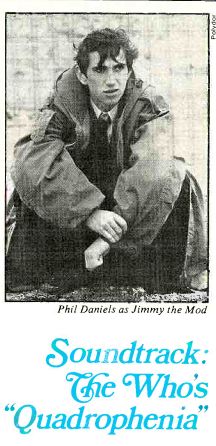
------------- Phil Daniels as Jimmy the Mod
THE original version of "Quadrophenia" was, among other things, an attempt on Pete Townshend's part to rid the Who of the crippling stigma of forever being known as "the band that did 'Tommy'," and in that it was only partly successful. Critics were, by and large, respectful, but the album sold only respectably for a Who product and audiences were slow to catch on-probably because the thing never worked, as "Tommy" did, as a stage piece. But time has seemingly caught up with its saga of alienated working-class kids, both on the visual level (post-punk fashion has turned out to be almost a carbon copy of the Mod look) and on the sociological one. We begin the Eighties in much the same muddle we began the Sixties (there's not much difference, after all, between "Ban the Bomb" and "No More Nukes"), and sudden y a meditation on an English youth cult that turned Rebellion Without a Cause into Style seems eerily contemporary.
The story, as some have pointed out, is superficially similar to Saturday Night Fever aggression, music, dancing, escape), and certain critics (I have yet to see the film as of this writing) have already suggested that it may have a similar cultural impact, a latter day rocker's call to arms, as it were. It wouldn't surprise me: any kid who has stubbornly resisted peer pressure to turn himself into a Travolta clone might well find Quadrophenia something of a rallying cry, and musically, of course, there's no contest. In Fever the Bee Gees parlayed their pop sound on a seductive macho strut and won, but what the Who gives us here is that plus magnificent dynamics, sex, humor, and a real feeling of sympathy for the characters. This is rock and-roll, after all, and the significant difference between rock and disco is that rock has heart and doesn't lie: Jimmy the Mod doesn't escape to Manhattan at the end of this one-rock knows that life's just not that simple. Travolta and his girl friend may have wound up in an idealized Disney fantasy land, but Quadrophenia's hero is left shattered and alone.
THE performances here have been remixed from the 1973 versions by John Entwistle.
Mostly he's fiddled with equalizations on his bass tracks and pruned the formerly opulent arrangements for a somewhat sparser sound, presumably to add a little period flavor. Still, the differences are minimal and preference a matter of taste; both versions are splendid.
There are three new songs, all very good (one of them, Joker James, if memory serves, has been in the can from some scrapped project since the Sixties-a testament to the consistency of Townshend's vision). I'd rate the original album, divorced from the film, as more impressive because it's more cohesive, but this soundtrack works as an album and as a vindication of Townshend's faith in the universality of his story and the music he concocted for it. If the film is anywhere near as good as the record suggests, Quadrophenia just may turn out to be the first great dramatic rock statement on celluloid. We wait and hope.-Steve Simels
QUADROPHENIA (The Who). Original-soundtrack recording. The Who, the High Numbers, Cross Section, James Brown, the Kingsmen, Booker T. and the MG's, the Cascades, the Chiffons, the Ronettes, and the Crystals (vocals and instrumentals). I Am the Sea; The Real Me; I'm One; 5:15; Love Reign o'er Me; Bell Boy; I've Had Enough; Help less Dancer; Doctor Jimmy; Zoot Suit; Hi Heel Sneakers; Get Out and Stay Out; Four Faces; Joker James; The Punk and the God father; Night Train; Louie Louie; Green Onions; Rhythm of the Rain; He's So Fine; Be My Baby; Da Doo Ron Ron. PoLYD0R PD-2-6235 two discs $13.98, 8T-2-6235 $13.98, CT-2-6235 $13.98.
-----------------
... guine fails utterly to bring anything fresh to the original. Finally, their overly straight reading of Stardust deteriorates into cloying sweetness. But they deserve a lot of credit for the stuff that does work. More! E.B.
ULLANDA: Love Zone. Ullanda McCullough (vocals); vocal and instrumental accompaniment. Stars; Gotta Dance Now; Time for You and Me; and three others. OCEAN/ARIOLA OR 49900 $7.98, OB 8XW 49900 $7.98, 4XW 49900 $7.98.
Performance: Real dancin' stuff
Recording: Wonderful
There is not one device in the more than ten minutes of Stars, the opener here, that you ...
----------------------
The Other "Pennies from Heaven”
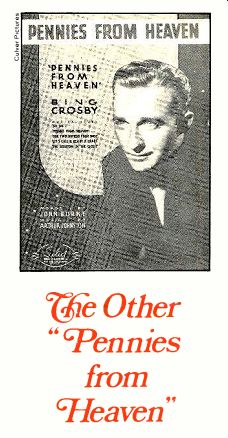
“. . music for an endless art-deco tea dance . . . . . . aboard a luxury liner bound for nowhere."
SOME months back I managed to get myself hooked by a series on public television. It was called Pennies from Heaven, and when I tried to tell friends about it they wouldn't listen because they thought I was talking about the old Bing Crosby movie they had seen as children. But this Pennies from Heaven, a huge success in England on the BBC in the spring of 1978, is a six-part play by Dennis Potter set during the Great Depression and filled with authentic music of the period. The hero is a seedy-looking chap named Arthur who goes around England peddling song sheets. Arthur is a dreamer who just can't understand why reality is so much at variance with the lyrics of the songs he has so much trouble selling. He has a miserable marriage with a prudish wife, and when he falls in love with a rural schoolteacher he meets on his travels it ends up with her having to go to work as a whore in London.
The things that happen to Arthur, his frig id wife Joan, and his schoolteacher sweet heart grow increasingly dismal, but every so often the action stops in its tracks so the protagonists can launch into a song-and-dance routine mimed to one of more than sixty old dance-band tunes. Among those songs-some standards still popular today, others flipside flops I thought that I alone remembered were many that I loved and bought records of in my own adolescence, and after the series ended I longed, as maybe you did too, to hear them again. That longing can now be fulfilled, for two British record companies have between them reissued just about every song played in the course of the six episodes of Pennies from Heaven.
A two-disc Decca set offers twenty-nine of the recordings used in the television series.
Arthur Tracy (the "Street Singer" of my childhood radio memories) sings the title song; Greta Keller, one of the greatest of this century's cabaret singers, can bring tears to the driest eyes with Blue Moon; Al Bowlly, a crooner who once threatened Bing Crosby's supremacy on the latter's own turf when he toured America with Ray Noble and His Orchestra, sings, among other things, that gloomiest of gloomy ballads, Riptide. Connie Boswell sighs In the Middle of a Kiss, and Phyllis Robbins murmurs Smoke Gets in Your Eyes just as she did when it was a new hit back in 1934. Ambrose and His Orchestra accompany several of the songs, and it's a group whose blandness makes Guy Lombar do's band sound like late Schoenberg. In those days, blandness-smoothness, the day dream of a Lotus Land with pink clouds and white violins-was the pop-music ideal, and British orchestras and singers were especially adept at making everything sound like the music for an endless art-deco tea dance aboard a luxury liner bound for nowhere.
If the Decca set is not enough to satiate your appetite for these musical finger sandwiches, two more albums of them are avail able on EMI's World Records label. "Pennies from Heaven" and "More Pennies from Heaven." These also offer recordings used in the BBC series; only four titles are the same as on the Decca set, and the thirty-four numbers are performed by Al Bowlly, Ray Noble and His Orchestra, the BBC Dance Orchestra, Lew Stone and His Band, and all the rest in precisely the same style. Where else could one find Pop! Goes Your Heart or Down Sunnyside Lane these days-complete with descriptions of just what is happening in the TV play at the moment each song is played? Finally, for those who simply cannot get enough of this repertoire, there's a third World Records album, "Roll Along Prairie Moon," with twenty more recordings from the same period not used in the TV series but utterly compatible with its spirit (there is considerable title duplication between this album and the Decca set, but the performances are different in personnel if not in style). The beautifully cleaned-up mono sound on all these discs makes the exercise in nostalgia they encourage all but painless.
-Paul Kresh
PENNIES FROM HEAVEN. Recordings used in the BBC television series. Various vocalists and orchestras. Pennies from Heaven; Blue Moon; Smoke Gets in Your Eyes; You've Got Me Crying Again; Without That Certain Thing; Isn't It Heavenly; You Couldn't Be Cuter; That's a Plenty; Just Let Me Look at You; Love Is the Sweetest Thing; Garden of Weed; Roll Along Prairie Moon; / Love You Truly; Easy Come, Easy Go; So Do I; Riptide; Fancy Our Meeting; The Echo of a Song; Serenade in the Night; My Woman; On the Other Side of the Hill; Painting the Clouds with Sunshine; In the Middle of a Kiss (two versions); Pick Yourself Up; Says My Heart; In the Dark; The Glory of Love;
Medley-Roll Along Prairie Moon/Pennies from Heaven.
BRITISH DECCA OO DDV 5007/8 two discs $14.96, KDVC2 8106 $14.96 (from DRG Records, Inc., 200 West 57th Street, New York, N.Y. 10019).
PENNIES FROM HEAVEN. Recordings used in the BBC television series. Various vo calists and orchestras. Roll Along Prairie Moon; Seein' Is Believin'; Dreaming a Dream; You and the Night and the Music; Nasty Man; Radio Times; I Only Have Eyes for You; It's Got to Be Love; Painting the Clouds with Sunshine; I Found the Right Girl; Hands Across the Table; The Moon Got in My Eyes; March Winds and April Showers; Haunting Me; Roll Along Covered Wag on; Pennies from Heaven. EMI WORLD RECORDS 0 SH 266 $7.98 (from DRG Records, Inc., 200 West 57th Street, New York, N.Y. 10019).
MORE PENNIES FROM HEAVEN. Recordings used in the BBC television series.
Various vocalists and orchestras. Down Sunnyside Lane; The Clouds Will Soon Roll By; Zing! Went the Strings of My Heart; You Rascal, You; Cheek to Cheek; Yes, Yes (My Baby Said 'Yes'); Love Is Good for Anything That Ails You; Life Begins at Oxford Circus; We'll Make Hay While the Sun Shines; Better Think Twice; Indian Love Call; Pop! Goes Your Heart; How's Chances; Okay, Toots; Anything Goes; Whistling in the Dark; I Like to Go Back in the Evening; Says My Heart.
EMI WORLD RECORDS SH 276 $7.98 (from DRG Records, Inc., 200 West 57th Street, New York, N.Y. 10019).
ROLL ALONG PRAIRIE MOON. Various British dance bands and vocalists. The Echo of a Song; Love Is the Sweetest Thing; You've Got Me Crying Again; Isn't It Heavenly?; Without That Certain Thing; Garden of Weed; Bit; I Love You Truly; Easy Come, Easy Go; Smoke Gets in Your Eyes; Blue Moon; On the Other Side of the Hill; Roll Along Prairie Moon; The Glory of Love; Serenade in the Night; Pick Yourself Up; So Do I; Pennies from Heaven; You Couldn't Be Cuter; Just Let Me Look at You. EMI WORLD RECORDS _.4) SH 304 $7.98 (from DRG Records, Inc., 200 West 57th Street, New York, N.Y. 10019).
-----------------------
... haven't heard before. But if you're looking for a dance experience, it still works.
The whole album is like that-good dancin' stuff. Gotta Dance Now is disappointingly brief, but it's fast and wonderful. The strings alone in Want Ads will lift you right onto your feet. And Time for You and Me is catchy and contagiously happy. To top it all, Ullanda can sing. The title song is an Ashford and Simpson creation (not one of their best) that showcases her two-tiered voice: a strong chest voice that seamlessly leaps way, way up there into a totally controlled soprano register that carries right through even a heavy arrangement. Ullanda's is an electric voice, and "Love Zone" is a simply electrifying debut E.B. album.
RECOMMENDED DISCO HITS
DON ARMANDO'S SECOND AVE.
BAND: Deputy of Love. ARISTA ZEA-I 2-0003 disco disc $3.98.
IAN DURY & THE BLOCKHEADS: Reasons to Be Cheerful, Pt. IIL STIFF /EPIC XSS 166692 disco disc $3.98.
DONNA SUMMER/BARBRA STREISAND: No More Tears (Enough Is Enough).
CASABLANCA NBD 20199 disco disc $3.98.
SUGARHILL GANG: Rappers' Delight.
SUGARHILL/PLATINUM SH 542 disco disc $3.98.
(List compiled by John Harrison.)
Ry Cooder
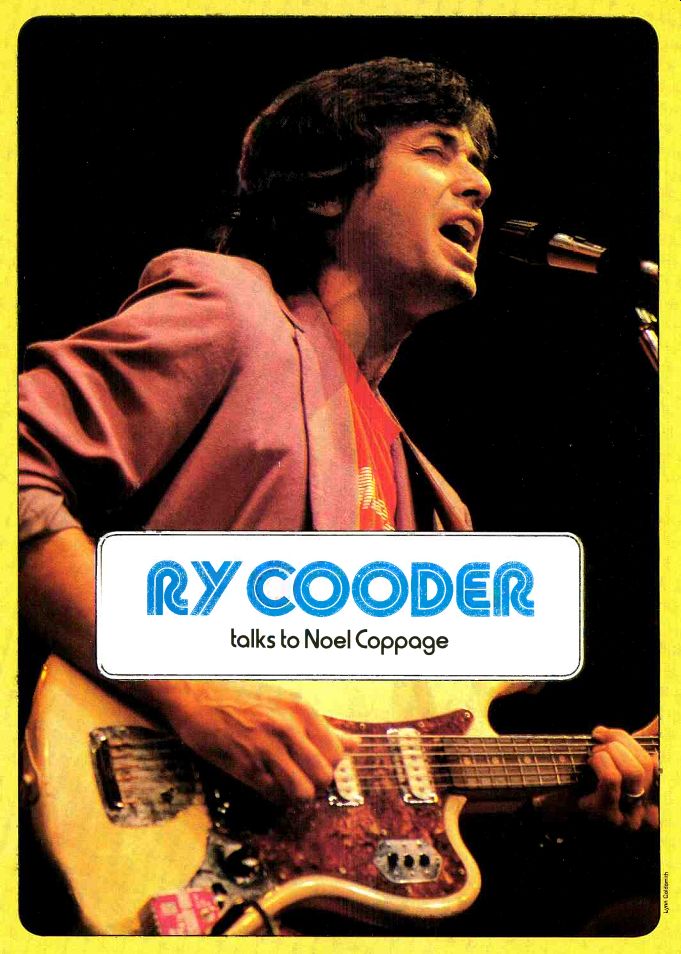
PEOPLE seem to have accepted the idea that Ry Cooder is to pop music as American Heritage is to magazines, not only for style but content as well: he's classy, accurate, and sentenced to a small circulation.
"Bop Till You Drop," his new rhythm-
and-blues-based, digitally mastered al bum, is changing notions about the last part by getting airplay and a good sales jump during a record-industry slump. And in a face-to-face chat over breakfast, an unnatural meal for both of us, he told me he feels very cramped inside the label "archivist." "It's just the sound on a record, is all we're talking about," he says.
"Most musicians learn music from other musicians, but as a kid I wasn't around live music at all, just records.
So my whole perception was geared to records, little short performances and finite things. I'd memorize all this structure: 'The guy did this and it went up and then he did that.' " Similarly, people find a different strain of Americana in each of such albums as "Into the Purple Valley," "Boomer's Story," "Chicken Skin Mu sic," and "Jazz," and so they ask him, as I did, which direction he may jump next.
"I'm not jumping. People ask me that, but it isn't a jump. It's just trying to find a good band sound, basically, a good format for me. It wasn't so much trying for a theme as it was trying to concoct a setting. The Tex-Mex thing was a good setting for what I do, but it was intractable, hard to work with for any length of time. This band [the one that played on "Bop"] is good, and I continue to go along looking for people to play with, because an important thing about records to me is to get the ensemble right. This one is the closest.
I like who I have this time, and I'm going to use them again." The general impression that Cooder came to record-making from a folk orientation is accurate, he says, but, again, records are to blame. His father played classical recordings all the time, and he was first caught by the melodies of Handel. But he was first hooked by exotic American sounds.
"I got hold of a Woody Guthrie record that struck me," he recalls, "be cause of the WPA pictures that were included in the booklet, the weird sound of his voice, the words-very exotic, different-sounding vocabulary so you have a whole impression that's very strong. You get a picture of this guy, and the little photographs of those Okies, and you hear this nasal twang and strange-sounding guitar.... And I was interested in the blues, caught by the tonalities." His father gave him a guitar when he was about ten. He always used open tunings-tuning all the strings to make a chord when struck unfretted and by the time he was sixteen he was working, virtually alone in the middle Sixties, on the bottleneck slide technique he'd heard on Lightning Hopkins records and others. His almost unique ability to handle that, before the late-Sixties explosion in bottleneck players, helped him land a number of recording dates as a Los Angeles studio musician, a phase he liked-within limits.
"I can't say I was high on anybody's session-man versatility list," he says, although he was used by people as different as Gordon Lightfoot and the Rolling Stones-and mostly by quality musicians who could hear the economy and soul in his style, however diverse their sessions were. But it was not an environment in which he could pursue his own ideas. "I'd look at great musicians like James Burton and think,
`This is crazy, now, these guys don't make their own records.' Some of their best stuff didn't make any record-it would be rubbed off in the mix." Meanwhile, Cooder had been educating himself not in the archives but at the turntable. A friend who was a record distributor would alert him to releases that might suit his growing folk interest, and there was a large record store in the Los Angeles area (where Cooder grew up and still lives) "If people only know what they hear on the radio ... how the hell can they know you've got a record out ... ?" where he could go into a booth and lis ten to rare 78s. At one point during his teens, Cooder decided Sleepy John Estes was his favorite. By a happy coincidence, the Sixties interest in bringing back traditional musicians came into fashion at about the same time. Cooder was able to go to a local club and see Sleepy John in the flesh.
"The thing about seeing these people was I got to understand how different the real thing is from records," Cooder says. "The best part of it was the guys who didn't have a polished act. Some of these guys really were primitive art. Like Jesse Fuller and all his contraptions. Very rich, very colorful situation. Gary Davis, a tremendous figure, a wild man. He used to want to drive cars all the time. One time some friend of mine left him in the parking lot of a store, went in to get some liquor, came out, and there was Davis, driving around backwards in the parking lot. A blind man!" In the L.A. of his high-school years, Cooder remembers, music was no big deal-or even much of a small deal until the Beatles. "Nobody I knew except two guys who were into jazz, who were weird, gave a shit about music. If they were aware of it at all, it was Beach Boys records at a party. Part of a certain ambiance. You put on a Beach Boys record and you did a little dance and then you had a Coke and this and that and the other thing.
When the Beatles came along, all of a sudden they got interested in music the Beatles, the Beatles, as if they'd never heard of the idea before." COODER could see right there, presumably, that his interests weren't exactly mainstream. Since then he has never gone out of his way to make them so. His recordings, including the new one, sound as if they're oblivious to the market. When I ask him how he has done it, survived all these years, he says, "I don't know. Maybe I was lucky.'' But he is interested in selling enough records to keep surviving, and he is aware of how the business works.
"If people only know what they hear on the radio and you don't get played on the radio, how the hell can they know you've got a record out or whether they like it? Public access is the key to the whole thing. It's not enough to say I know what I like and to hell with everybody else.
"I think the regional differences are dwindling," he says. "People are more like everybody else everywhere I go.
But if you look at a tip sheet you can see that the middle of the country is basically into, oh, Bachman-Turner Overdrive, or make that Van Halen, and that moves a lot of your youth out there. If you take urban centers-say Detroit versus Dallas-if you make a broad sweep like that, I would be more popular in Dallas. It has something to do with environment and climate.
Take a town like L.A., where every thing is totally geared to trend and what's new, and the latest disco record is the thing, so that's what people are going to be struck by. Very momentary, very fleeting. There are twenty six rock stations in L.A. Unbelievable.
And the demographics are so tight you don't have much chance of getting on the air there-except on this punk station. There's a really neat punk station, plays anti-disco records. They play Devo and the Clash and all that shit, and they play me once in a while." Making records, he says, has be come so electronic and technical that "it's become a producer's and engineer's trip." But, he says, "Things change fast. I had a feeling when Dire Straits was so successful. It occurred to me there may be a rekindled interest in small-band records that are not necessarily the reflection of a producer or an engineering situation. New Wave has that quality, and I kind of like that. It's simple.
"Not to say that disco stuff is complicated-it's moronic. It's overdressed nothing, hot air. The dressing is what's complicated. You have somebody get up and sing 'I like to make love/I like a slow dance,' and it's awful monotony, horrible, crushing stupidity, but that doesn't mean it's simple. It just means it's dumb. Somebody said about my records that the 'production values' were bad: 'You're not participating in what has come to be accepted as good production,' in terms of colors, strings and horns, all that stuff. In other words, the L.A. sound, for instance. I try to adhere to what I like to hear on a record, regardless of the song, be cause songs to me are vehicles for arrangement ideas, basically, and for instrumental textures. That's what I'm interested in." THE production is exceptionally clear in "Bop," but Cooder credits that largely to the digital process. The making of the album pushed musical values and not production values in this new "studio magic" sense. Accu rate recording of sound is another mat ter. In fact, he says, the digital ma chine may have kept him from quit ting-"strictly as an aesthetic gesture"-in protest over the opaque sound he had been getting from a conventional twenty-four-track analog recorder.
"Digital revived my interest," he says. "I was getting very depressed about the sound of records. With digital, it's all there, and you get a sense of accomplishment-you can hear each instrument so well, and the musicians love it. It makes the whole recording process seem a lot more spontaneous and direct. You don't feel your sound has been processed in all these wires and channels and filters and comes out squeezed and amorphous. Digital is ideal for modern recording. Fleetwood Mac was trying to get it away from me the whole time. What will happen is people like Fleetwood Mac will use it, and that will lead the rest of the industry. The hardware leads the biggies, and the biggies lead the rest." In addition to resisting the main stream notion that production is the dog and music is the tail, Cooder also resists the temptation to show off on the guitar or mandolin (or the accordion, which, legend has it, he learned to play so he would have better rapport with Flaco Jimenez, when he was contemplating meeting and trying to hire that Tex-Mex stalwart for "Chicken Skin Music").
"Good musicians don't throw notes away," he says, as if resisting such temptation were easy. "That's a sign, to me, of too little awareness. Charlie Parker never played an extra note in his life. Taste is the whole thing. Everybody has his own opinion-good music is what you like, bad music is NWT-
"Speed guitar ... grabs people. That doesn't necessarily have anything to do with music or taste." what someone else thinks is good-so you can't say there's good and bad.
But there are things that make a difference. If one note is right, play that note.
"Technique is something people are aware of now and weren't before," he says. "Now, fast notes, a lot of notes, is something people can relate to. They can see and hear a guy who can play fast. They can perceive what looks like the theatrics of a lot of technique.
Speed guitar has got to be the one hook that has lasted and paid off. It grabs people. That doesn't necessarily have anything to do with music or taste. It's an idea, a kind of show. Visual more than musical. So you have guys who formulate whole careers and styles based on speed. A lot of what you hear played today as electric lead guitar is nothing but speeded-up Chuck Berry.
"But having technique doesn't mean you can play something good. And these guys who are content to go diddlety-diddlety, and this horrible, screaming feedback so many people do-I don't know for whose benefit is kind of an aggression thing, a power thing, some kind of mind warp. Certainly it's tiring, and it's bad for you.

Bad music will make you weak. I can't be around that stuff too much. But then, to the kids who go to concerts and buy those records, I think it's like some kind of drug. Some kind of fix.
Turn the stuff up real loud-ear phones-it's like injecting yourself with some kind of adrenalin. A lot of those bands have hearing damage." Cooder says he knew he wanted to make recordings the first time he heard one by Big Joe Williams, and he expects to keep wanting to make them for the same reasons: "Basically so I could hear certain things; I could do what he was doing and add certain things of my own." It seems to me that he is taken for a folklorist, or archivist, because he keeps returning to such primary sources and performing so as to keep their spirit intact. One knows he must go to some length to find off-beat songs and musicians, but he's not a folklorist.
He doesn't read music and he's not a scholar. He's a folk musician. His passion is not to show you something quaint he's dug up, but to build upon the thing, stretch it, turn it over, add his own ideas to it. He is an agent in what we sometimes call the folk process, which is dynamic and continuing.
He is also, like most such agents worth listening to, an entertainer. His goals aren't any fancier than his guitar style. Yet, even though he won't romanticize it, I think he senses the importance of having a tradition there to build upon, and I get 'the feeling, listening to him talk and play, that he taps sources and resources that will help him keep his world organic, that he would like music to be the communal thing it was not in the L.A. of his youth.
I THOUGHT a glimmer of this showed when we talked, at one point, about how some of the most interesting mu sic was an off-center attempt to copy something else. "Even someone as isolated as Lonnie Johnson tried to copy real polished cats," he said, with obvious approval. "It seems to me that's one of the main reasons records got made, some guy trying to do what some other people had done. People think these guys were operating in a vacuum, but that's not true.
"At the same time, the music served the community. Country suppers, picnics, church socials. The musician wasn't a god then like he is now. He was just a guy. Instead of doing the barbecue, he played the music. Part of the community. That's a nice way to look at it."
CLASSICAL DISCS (LPs) and TAPES
Source: Stereo Review (USA magazine)