-------------
BULLETIN
Edited by William Livingstone
STANDARDS AND SPECIFICATIONS HAVE BEEN endorsed by twenty-two manufacturers of car-stereo equipment who account for 90 percent of the industry's sales. The standards, which cover amplifiers, FM tuners, and tape systems, are similar to those of the Institute of High Fidelity.
They establish methods of measurement and a format for stating specifications.
Since car-stereo equipment does not fall under the Federal Trade Commission rule on power and distortion that applies to home entertainment equipment, this move on the part of the industry is voluntary.
It follows a year's work by the Ad Hoc Committee of Car Stereo Manufacturers.
LONDON RECORDS HAS INCREASED PRICES of discs and cassettes on the Telefunken Das Alte Werk, L'Oiseau Lyre, Headline, and Cima labels and in the music series on Argo to $9.98 each, the same as for London's digital recordings. Prices for London FFRR, Telefunken Aspekte, Phase Four, the Treasury Series, and Argo spoken-word recordings are unchanged.
THE SUIT AGAINST TOYOTA BY CASA (the Custom Automotive Sound Association) has been settled by Toyota's agreement that dealers can delete the standard radios in all models of the Celica and Corona Luxury Edition. CASA, which represents manufacturers, distributors, installers, repairers, and suppliers of custom sound equipment for cars, estimates that this victory opens about 400,000 more cars to custom installation. Agreements of this kind have already been made by CASA with General Motors and Chrysler, and a suit has been filed against Volkswagen alleging that the practice of making radios standard items in cars is anticompetitive.
HOME VIDEOTAPING OF TV SHOWS IS LEGAL, according to Judge Warren J. Ferguson, who decided in favor of Sony in a suit brought by Universal City Studios Inc. and Walt Disney Productions. Universal and Disney claimed that Sony's sale of home videotape recorders led to theft of copyrighted movies and TV programs and could cause the production companies to lose millions of dollars in sales.
Judge Ferguson ruled that noncommercial use of VTRs does not violate existing copyright laws and that manufacturers may continue to market such units. An appeal is expected from Universal and Disney. Sony claims that Universal, a subsidiary of MCA, entered the suit because MCA plans to market a videodisc system.
SENNHEISER'S INFRARED LISTENING SYSTEM transmits sound directly from the stage of a theater to lightweight earphones worn by members of the audience who are hard of hearing. Transmitting sound by invisible infrared light was introduced by Sennheiser in 1975. Audio signals from a theater's ordinary amplification console are processed by the system's infrared transmitter and broadcast to all parts of the house. The earphones receive the signal through "magic eye" silicone diodes. There are no wires to plug in, and no cable connections are needed at each seat. The system made its Broadway debut this season at the Lunt-Fontanne Theater in New York, where Sandy Duncan is currently starring in the musical Peter Pan.
PROFESSIONAL ELVIS PRESLEY IMITATORS now exceed 20,000 men around the world, according to Jem Records. This is an increase of 5,000 percent over 1975, and if the current growth rate continues, imitating the King of Rock-'n'-Roll will be the occupation of one out of eleven employable males by 1986. The album "Impersonators Convention" (Rhino RNEP 505) includes Elvis' greatest hits done by Yankel Prestein, Hound Dog Fujimoto, Gunga Maharesley, and Elvis von Borman.
VIDEOTAPABLE MUSIC SHOWS ON TELEVISION this month include a Christmas special with John Denver and the Muppets on ABC December 5. (See review of their album "Christmas Together" elsewhere in this issue.) On PBS on that date, Exxon's Great Performances will present Bizet's Carmen taped live at the Vienna State Opera with Elena Obraztsova, Placido Domingo, and Yuri Mazurok (conductor is Carlos Kleiber):. On December 8, PBS salutes Louis Armstrong with "Satchmo," made up of live footage of Armstrong in action. Bruckner's Ninth Symphony will be played by the Vienna Philharmonic conducted by Herbert von Karajan in the Great Performances series on December 26. Check local listings.
++++++
Simels Live
NIGHT OF THE IVING POODLES
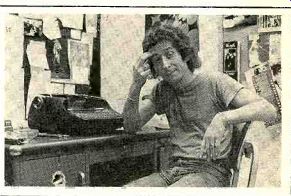
ONE of the interesting things about pub crawling, especially in a major metropolitan area, is that sometimes you chance upon the birthing of a whole new sociological phenomenon. Usually, of course, you don't realize it until a few months, even years, later, after you've read about it in some trend-sensitive, circulation-under-forty-thousand tabloid, but that's the risk you take. For exam ple, seasoned observer that I am, I had no idea, on a long-ago summer night in 1973 when I stumbled into a stygian Bowery dive and noticed the bass player of the band rending his T-shirt on the tiny stage between so los, that this was the soon-to-be-legendary Richard Hell in the process of inventing punk fashion. In the immortal words of the 2000 Year Old Man, who knew? Be that as it may, I have noticed that an entire new subgenre of rock-and-roll-utterly without redeeming social value, shamelessly anachronistic, and bereft of any media attention whatsoever-has been festering of late, like some hideous herpes, right under our collective nose. Cognoscenti (there are a few of us) refer to it as Poodle Rock, though not be cause it has anything to do with the antics of he group affectionately known as the Fab Poos. Briefly stated, Poodle Rock is the music purveyed by any group of musicians sporting long shag haircuts, flashy eye make-up, platform shoes, and immense stacks of Marshall amplifiers. It is invariably loud and heavy on he macho posturing (even when performed by women), and it generally sounds like a variant of what Bad Company plays on an off night, although there are some exceptions.
Its antecedents are obvious: the 1969 Rolling Stones (many of these bands have all but memorized the dialogue in Gimme Shelter), he 1971 Rod Stewart and Faces, the snake-period Alice Cooper, and the latter-day Kiss especially in New York, where Ace and Gene and the rest are viewed as local boys who made good). Among its distinguishing characteristics is that all the bands put ads in he Village Voice giving height requirements.
It used to be called Glitter Rock, Heavy Met al, and Big Rock, and most critics have long since written it off as fatally passe and even irrelevant, which of course explains why so many groups, signed and unsigned, are attracting large crowds by playing it.
In New York City, Poodle Central is a place called the Great Gildersleeves, located on the Bowery just down the street from the shrine known as CBGB (and easily sighted because of the expensively garish neon sign out front). Gildersleeves started out as a sort of less-uptight alternative to CB's; they booked blues bands, mainstream rockers, and three-chord weirdos without a thought about what was hip and what wasn't. Unfortunately, the major labels began using it as a show case room for aging heavy-metal veterans, attendance picked up, and the owners realized they had a potentially good thing going. The result? An endless succession of the most boring, obnoxious (and proud of it) bands in Christendom, complete with tired old theatrics (smoke bombs in this day and age?), vacuous groupies, and an audience dressed exactly like the performers.
ON an average night at Gildersleeves you might see ... the Richie Scarlett Band. Scarlett is a guy capitalizing on a physical resemblance to Keith Richards in such an obsessive manner that it verges on the pathological. He gets this year's "Jeff Beck Erect Left Nipple" award for performing in a leather jacket without a shirt. His music sounds like what a Sherman tank looks like, and it has been known to reduce more than one listener to whimpering "I'll talk, I'll talk...." Then there are the Brats, who've been playing drivel in white-satin gangster outfits since the days of the Mercer Arts Center, apparently without wising up. At a recent performance they attracted nonmusical media attention when one of their flash pots exploded prematurely, sending several patrons to the hospital.
Any press is good press .... Or you might take the Bonnie Parker Band-please! Ms. Parker is a bass-playing young woman with a voice like Gabby Hayes and a stage demeanor that suggests Rod Stewart on angel dust and testosterone. And there's Falcon Eddy, a power trio with a lead singer really bugged that he's not as good looking as Roger Daltrey . . . Moonbeam, with a lead guitarist who will answer much in heaven to Jimi Hendrix . . . and Face Dancer, of whom I will say nothing except that their name is not the worst thing about them. There're more, but I'm, uh, pooched out.
+++++++
Speaking of music ...
BEL CANTO DEITIES THE Grand Promenade in the State Theater i at New York's Lincoln Center is at once the most impressive and the most inviting public space in the whole city, in part because of the presence there of two white-marble statues (by Elie Nadelman) that preside over their court with a majesty distant but in no way haughty. They have often seemed to me like a pair of auxiliary muses awaiting assignment, and so they must be, for on the evening of October 15 these stately goddesses apparently stepped down from their pedestals, crossed the plaza to Avery Fisher Hall, and presented a joint recital in the guises of soprano Dame Joan Sutherland and mezzo Marilyn Horne. It was an evening the capacity audience in the hall and the millions who watched the simultaneous Live from Lincoln Center TV broadcast will not soon forget.
One of the most prized albums in my vocal collection has long been the famous bel canto recital by Sutherland and Horne (with tenor Richard Conrad) on London OSA 1257, so it was particularly gratifying to be able to hear them sing a similar program in person and even to be able to compare two of the selections with the earlier recorded versions Horne's "Iris Hence Away" (from Handel's Semele) and the "Serbami ognor" duet (from Rossini's Semiramide). Both lived up to expectations, the Handel even exceeding them: it was taken, incredibly, at a tempo even faster than that of the recording-"a speedy flight" indeed.
These and other items on the program must have come as something of a surprise to TV viewers whose notions of opera are derived from later, less daunting works. All those intricate vocal fioriture may at first sound a little off-putting, but they are completely accessible to modern understanding when done properly. We are all familiar with such expressions as "trembling with rage" (or fear), "shaking with passion," and the like. It was the naïve notion of bel canto singers that such emotions could be communicated musically through a system of stylized vocal ornaments and figures-and they were right. Unfortunately, these athletic vocal demands were too enormous to be long sustained-particularly when the supply of leather-lunged castrati began to peter out-and the style disappeared from the opera houses. Only through the gifts of such startlingly talented singers as Sutherland and Horne can we even glimpse how it all must have sounded to seventeenth-and eighteenth-century audiences: absolutely astonishing.
I cannot easily remember another occasion when audience response was so enthusiastic, so frenzied--as if the Golden Age had just miraculously inserted itself into the present.
That may be why I noticed something I had not really paid any attention to before: three of New York's newspaper critics were lined up on the aisle ahead of me--and all of them sat on their hands throughout the program.
This little ritual of the fraternity is meant to signal (for those in the know) the pure, objective integrity of the unobserved observer, but I'm afraid what it actually looks like is disdainful ego (Here Sits a Big Critic) and rude ness. Surely all of us, critics included, owe an immediate feedback to performing artists to give them the energy they need to surpass themselves; we can always cavil, uncompromised, in print later (Horne was an amazingly consistent semi-microtone flat throughout Foster's I Dream of Jeanie).
The program was not recorded officially, but there is a "safe" copy that will doubtless see videodisc once the cutting edge of a checkbook severs the Gordian knot of contractual complications. And there are many videotaped copies out there already (a friend of mine flew in for the concert, but he set the timer on his TV in San Francisco so he'd have it all on tape when he got home). Ah, Brave New World!
+++++++++++++
LETTERS TO THE EDITOR
Charles Mingus
Chris Albertson's "Mingus Legacy" in the October issue was excellent. He treated the late Charles Mingus with the respect due an enormous, if erratic, talent who had some very human failings. Readers may be interested in one of my own memories of Mingus as I saw and heard him at the Five Spot Cafe in New York City almost fifteen years ago.
One evening during a break Mingus stayed on the stand and amused himself by doodling on Jaki Byard's piano. He hypnotized the audience, and I recall that he tuned the piano slightly with his fingers! Later, in response to some prolonged heckling, he picked up a small hammer he had, raised it over his head, looked angry, and stomped directly toward the heckler. As he reached the now petrified heckler, he gave a short, nasty laugh and then stomped right past him and into the dressing room. Thank goodness!
K. A. BORISKIN Framingham, Mass.
Pretentious Renaissance?
Songs about love, sex, not having love, not having sex-is that all there is to popular mu sic? No, but when someone tries something else, it's labeled "pretentious," as Paul Kresh dismissed the album "Azure d'Or" by the group Renaissance in his October review. I find Renaissance's music interesting because of its basis in classical compositions and the unique subject matter. True, the tunes aren't always original, but when was the last time Prokofiev or Rachmaninoff made the charts?
GREGG COCKROFT Annapolis, Md.
Well, Prokofiev's Lieutenant Kije Suite (DG 2530 967) has been on for about five months now....
Subwoofers
Peter Mitchell was in error when he stated, in his otherwise excellent article on sub-woofers (October), that a subwoofer can be properly balanced only by the use of fairly sophisticated measuring equipment. John Marovskis of Janis Audio Associates has developed a novel method of tuning a subwoofer to the rest of a system by ear. All that is required is a tape player and a special tape, available from Janis for $15, containing filtered pink-noise test tones. The test is simple to perform, unambiguous, repeatable, unaffected by room acoustics, and accurate to within 1 dB at the crossover frequency. I've used this test to balance my own Janis W-1 subwoofer and verified the results with sound-measuring equipment. It works, and it can be used with subwoofers made by other manufacturers as well. So, subwoofers can be balanced by ear if the right technique is used.
But do not put on an organ record and tune for maximum woof!
CHARLES P. REPKA Oakland, N.J.
Summer CES
I'd like to call readers' attention to an incorrect entry in Ralph Hodges' report on new products at the 1979 Summer Consumer Electronics Show (October issue). Advent did not introduce a three-way speaker system at $250, nor are there any plans to do so in the near future. (However, Mr. Hodges neglected to mention that we did introduce a new receiver, the Model 350-one of the few entries in this area by an American firm.) We're receiving four or five calls daily from interested customers and confused dealers concerning this "new product," and STEREO REVIEW's credibility is such that some are still skeptical even after our Customer Ser vice people have explained and apologized for the confusion. The interest created by this short entry could be telling us something.
FRED PINKERTON
Advent Corporation Cambridge, Mass.
The $210 T-05 cassette player introduced by B.I.C. at the Summer CES is for home use, not, as Ralph Hodges had it in his article on the show, for automobiles.
FRANK HOFFMANN B.I.C. / Advent Westbury, N.Y.
Nana Mouskouri
I'm furious! I bought the new Nana Mouskouri album, "Roses & Sunshine," on the basis of Peter Reilly's September review.
After I got it home and played it, I got back in my car and, gas shortage or no, made the half-hour drive back to the record store to buy the three other Mouskouri albums they had in stock. The lady is a phenomenon! The reason I'm mad is that STEREO REVIEW hasn't devoted a convincing full-page review to one of her records before. I could have been collecting her albums for the past ten years instead of having to start from scratch at this late date! You can re-ingratiate yourselves with me by settling a longstanding dispute I've had with a friend over whether it was Marty Robbins or Guy Mitchell who had the circa-1959 hit White Sport Coat. We've exhausted the various trivia books and are reduced to sniping at each other's memories, characters, etc. Help!
PAUL Ross, Riverside, Calif.
Popular Music Editor Paulette Weiss re plies: Marty Robbins wrote and performed White Sport Coat, which was the country's No. 1 hit in 1957, not 1959. Years later its first line, "A white sport coat and a pink car-, nation," inspired the fond parody of Jimmy Buffett's album title "A White Sport Coat and a Pink Crustacean." Statler Brothers
One small correction for Noel Coppage's "Whatever Happened to Four-part Harmony?" in September: the group's lead vocalist is Don Reid (not Harold), and brother Harold (not Don) is the daddy who sings bass.
MICHAEL REDIFER Greenville, Va.
Price Corrections
The October "New Products" report on the VCX-600 cassette deck from Vector Re search erroneously quoted a price of $575, which applies rather to the VCX-500 deck.
The suggested retail price of the VCX-600 is $750.
BILL CAWLFIELD Vector Research, Inc.
Chatsworth, Calif.
The September "New Products" report on the KEF Model 101 minispeaker erroneously states that the speakers cost "$250 per matched pair." In fact, the Model 101s are priced at $250 each.
BRYAN STANTON
J. B. Stanton, Inc.
New York, N.Y.
Unidentified Audio Object
The inadvertently unidentified hand-held instrument on our October 1979 cover is the
$750 Ivie Electronics Model 1E-10A spectrum analyzer; it is shown responding to the low-bass output of the subwoofer. For information on the Ivie line of test instruments, write to Bill Raventos, Ivie Electronics, 500 West 1200 South, Orem, Utah 84057.
++++++++++
Going on Record
TIME AND TEMPO
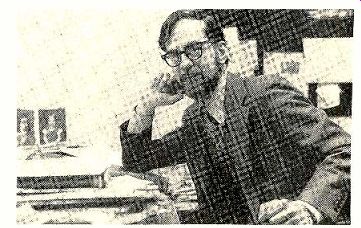
THERE is probably no subject better calculated to prove that music is more an art than a science than the matter of tempo. A recent letter to this magazine from Mr. Robert Collins offers an opportunity to expound upon this.
Mr. Collins, who is not a composer, feels that if he were he would certainly indicate, by means of metronome marks or some other generally comprehensible system, precisely the tempo at which he wanted his music to be played. He points out, quite logically, that if such a system had been followed in the past, we might all be spared the enormous variations in tempo from one performance of a piece to another and, furthermore, be spared the disheartening spectacle of critics bewailing tempos taken by performers as either too slow or too fast-and disagreeing among themselves into the bargain. His letter deals with basics, and though it is somewhat difficult to answer, it is important to try.
The very concept of a metronome, an instrument to measure tempo, goes back at least to Galileo, but the practical construction and commercial availability of such an instrument had to wait for Johann Maelzel, who patented one in 1816. Maelzel was a friend of Beethoven, and some of the earliest metronome markings occur in Beethoven scores.
Of course this leaves the many hundreds of years of music that preceded 1816 metronome free, and the correct tempos have to be determined from pulse, from such inexact terms as allegro, presto, and lento, and from musical intuition and a sense of rightness.
Quite frankly, though, it leaves Beethoven's music (and the music that came after him) in only a slightly less equivocal position, for musical tempo, while it can be set by a metronome, cannot be controlled by one. Mechanical regularity tends to be either hypnotic or soporific, and such states are usually not what is wanted in the performance of music meant to be listened to.
What Mr. Collins' beef brings us to, then, is many problems rather than one, all of them somewhat distinct from one another but all related in musicians' abhorrence of a specified, precisely regular beat. With "pre-metronome" music there will naturally be differences among performers about just what constitutes an "andante." But I must point out that these differences of opinion are hardly ever mere whim. One performer feels the music at a tempo faster than another, and, more important, he can make it work at that tempo. It is eminently possible for two conductors to take the same tempo and, all other things being equal, for one performance to sound satisfying while the other seems too fast, too slow, or just somehow not right.
Composers have a tendency to play their own music rather more quickly than other interpreters. The composer, according to theory at least, knows the tempo he wants. But there may be generations of listeners and performers who will openly protest that the music sounds better when played differently-that is, slower-than what the composer wants. This is one way performance traditions develop that seem to run counter to the score.
A second part of the problem lies in the fact that many pieces of music are written in sections with different tempos for each. The choice of tempo for the first movement of a symphony influences the choice of tempo for the second, and so on. So there is a problem of artistically balancing the parts of a composition through judicious contrasts of tempo.
Different artists do it differently.
FNALLY, there is the matter of phrasing and rubato. Even at a set tempo, all quarter notes do not take the same temporal value-not when played by human beings, at any rate.
And interpreters differ from one to another because they are different people. If we could find, for example, two recordings of a Strauss waltz, one led by Clemens Krauss, the other by George Szell, both at the identical metronome setting (and I don't say that we could), the stopwatch would reveal that the Krauss performance was still longer than the Szell. Why? Because. Krauss believed in the Viennese tradition of Luftpausen, tiny expressive lengthening of a beat, and Szell thought that such practices were pure Schlamperei.
You may prefer which you will, but there is nothing in the score, not even a metronome mark, to prove that one is right and the other wrong. The most "correct" performance of any piece of music is the one that, within the restrictions of the score and what we know of the style, sounds best to us, and metronomes, if they disagree, can go hang.
+++++++++++++++++++++
The Pop Beat
THE GREAT PRATFALL
HERE we are (already) at the end of the Seventies. Contemplating the next decade, keeping in mind the events of 1979, the future of pop music looks surprisingly bright.
Although there was plenty of pop news that made headlines in 1979, one event shook the music business to its foundation. Those in the record industry half jokingly called it the Great Crash of '79. It wasn't a crash, actually. It was more like a well-choreographed pratfall, but its effects will probably be felt well into the Eighties.
Here's what happened. Fifteen years ago the Beatles and the other British groups that followed them gave a powerful stimulus to the American record industry, which immediately began to expand. Sales figures grew year after year. Recording stars crisscrossed the world on concert tours. By 1978 the music business had grown by 500 percent and in that year it generated a staggering $4.2 billion in sales in the U.S. alone.
The Recording Industry Association's gold record awards (for 500,000 unit sales) and platinum awards (for 1,000,000 sales) be came more common as the music business grew bigger than all spectator sports combined. Recording became the glamour industry, surpassing even movie making. For successful recording stars there were limousines and private jets, mansions and parties-any thing a fertile imagination could dream up and money could buy.
The industry firmly believed it was recession-proof. For fifteen years, despite fluctuations in the general economy, profits had in creased every year. But the fiscal realities of 1979 brought an end to all that. Hard-core record buyers finally began diverting their cash to pay inflated prices for such basics as food and gasoline. Records became more expensive as a result of rising costs for every thing from raw materials to studio time, and such labels as CBS instituted a list price of $8.98 for star acts. With concert tickets averaging $10 to $15, attendance fell off, and the summer gas shortage made everything worse.
Not only had the market gone soft, but the industry had overextended itself. Expecting to surpass 1978's phenomenal profits, record companies pressed more discs than they could sell in 1979. Some labels over-shipped solely to qualify for the RIAA platinum award, but lax return policies permitted retailers to send back vast numbers of unsold discs.
Major labels lost money footing the bills for unsuccessful concert tours-and some "successful" ones as well. Added to this was a considerable cash drain for such promotional items as T-shirts and press freebies (tickets and albums). Faced with declining sales, record companies panicked. More than six hundred employees within the industry were fired abruptly. Freebies were cut back, and many summer concert tours were canceled.
As fall approached and the gasoline short age abated, industry sales figures showed an encouraging upswing. Early autumn releases by name acts such as Led Zeppelin sold well and quickly. Record-company executives breathed easier-and then took a long, hard look at their business. Judging from the steps they've taken toward economic stability, it looks as though the pop-music consumer may benefit from the Great Crash of '79.
FIRST, to stimulate sales, CBS, Phonogram/ Mercury, Capitol, and MCA have all introduced budget lines with a $5.98 list price.
Second, many of those overstocked discs pressed for the boom that never came are being sold as cutouts, with some excellent records going for as little as $1.50.
There will be two notable trends in recording pop acts. For one, emphasis will be placed on established superstars who can be expect ed to sell even at the $8.98 list price. The other is that unknown acts of real musical quality, many with New Wave credentials, will get record-company support because they generally require less expensive promotion and have low overhead. For example, the Knack's surprisingly successful debut album cost Capitol only $18,000 to produce instead of the $100,000 once considered average.
Other policies to insure the health of the industry are going into effect. Record piracy is under continuing attack, and a tax on blank tape to discourage illegal copying is being considered. The RIAA has changed its certification requirements to eliminate over-shipping, and labels are limiting the number of returns they will accept. Fortunately, the Great Pratfall was not fatal, and a chastened recording industry is up and proceeding somewhat gingerly-into the Eighties.
+++++++++++++
The Opera File
By William Livingstone
TEXACO PRESENTS
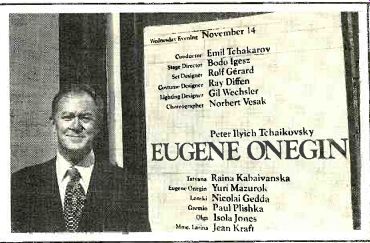
A COUPLE of seasons ago a listener to the Saturday afternoon broadcasts of the Metropolitan Opera submitted the following question to the popular intermission feature, Texaco's Opera Quiz: "Which star has appeared on more of the Met broadcasts than any other?" One of the panelists guessed the answer, which was, of course, the Texaco star. On December 8, 1979, with the Met's performance of Tchaikovsky's Eugene Onegin, Texaco will begin its fortieth year of underwriting the broadcasts, the longest continuous sponsorship in the history of radio, and when the season ends on April 19, 1980, Texaco will have sponsored the broadcasts of eight hundred Met matinee performances.
In recent years other companies have pro vided grants for various cultural television programs on the Public Broadcasting Service, but Texaco pioneered this kind of corporate support of the arts when it began its association with the Met with the broadcast of Mozart's The Marriage of Figaro on December 7, 1940. Under present government regulations, Texaco could take up to twenty minutes to advertise its products on a three- or four hour broadcast. Instead, less than two minutes are used for sponsor identification, and the rest of the time between acts is given over to discussions that complement the music.
Like millions of other American opera fans, I came to love opera through these radio performances, and like many other critics, I feel indebted to Texaco because the broad casts gave me my operatic education. I probably learned as much from the intermission features produced by Geraldine Souvaine as from exposure to the music. The first of these features is always a musical and dramatic analysis of the opera of the day by an expert musician, such as Boris Goldovsky, Robert Lawrence, or Alberta Masiello.
The broadcasts were carried by commercial networks until 1960, when Texaco en gaged G. H. Johnston, Inc., a broadcast-packaging firm, to put together the Texaco-Metropolitan Opera Radio Network, a chain of about three hundred selected commercial and noncommercial stations. Perhaps because I grew up far from any important opera house, it gives me particular pleasure to know that this network makes twenty Metropolitan performances a year available free to 95 percent of the potential radio audience in the United States, Canada, and Puerto Rico.
The total effect of this long-term collaboration of art, business, and technology is impossible to calculate, but there are many obvious benefits. Because of the broadcasts, the Met, which has had no artistic interference from Texaco, does not merely serve a local audience, but has become a national institution.
The record industry has benefited enormously because the broadcasts stimulate sales of recordings of whatever operas the Met per forms on the air. Production and release of operatic recordings are often keyed to the Met's repertoire. For example, Angel re leased Beverly Sills' recording of Rossini's The Siege of Corinth when she made her de but at the Met in that opera, and London is sued Joan Sutherland's recording of Massenet's Esciarmonde when she sang it at the Met.
THE greatest influence of the broadcasts has probably been the building of a large audience for live performances of opera across the country. Every opera administrator I've talked with outside New York has cited the Met broadcasts as the principal cause of the phenomenal growth of the regional opera movement. According to the best available statistics from the Central Opera Service at the Met, in the season of 1940-1941, when Texaco began its sponsorship, there were only 77 opera-producing organizations in the United States and 12 colleges with opera workshops. The most recent COS statistics show that in the 1978-1979 season there were 8,554 performances of 498 operas given by 966 organizations. Of these, 415 were college workshops.
Texaco now supplements the radio broad casts by contributing funds for four telecasts in the Live from the Met series on PBS.
What Texaco gets for its money is probably intangible "image" or "prestige." The intangible public benefits of forty years of broad casts include the gradual democratization of opera. It's expensive, but the broadcasts have made it possible for anyone to enjoy the Queen of the Arts without living in a big city or having a lot of money. I like to think that one of the kids staying home on Saturday afternoons this winter listening to the Met will become my eventual successor in this job.
+++++
New Product, latest audio equipment and accessories
Lightweight Headphones from Sennheiser
Excluding the cable, Sennheiser's new HD-420 headphones weigh only 4 ounces due to the use of samarium-cobalt magnets. Rated frequency response is 18 to 20,000 Hz, and output level is 94 dB with a 1-milliwatt input.
Rated harmonic distortion is less than 1 percent. Driver impedance is 600 ohms. An adjustable headband strap exerts about 3 new tons of force on the head. The headphones come with a 10-foot stranded-steel cable and a standard stereo phone plug. Price: $84.80.
Heavy-duty Shure Cartridges for Professional Use
The three cartridges of the Shure SC39 series have characteristics tailored to heavy duty professional applications. The SC39 cartridges are said to have high-fidelity performance along with providing resistance to stylus damage and record wear in demanding studio cueing operations. To protect against a sideways push or bending of the stylus, a lateral-deflection protective assembly responds to side thrusts by withdrawing the entire stylus tip and shank into the stylus housing be fore it can bend. A locking guard protects the stylus tip against drops, bumps, and other mishandling. Special proprietary treatment of the stylus tip guards against build-up of record noise during repeated playings of low-quality 45-rpm discs or master lacquers.
The SC39EJ and SC39B units have a smooth frequency rolloff between 15,000 and 20,000 Hz, while the SC39ED is claimed to have a frequency response comparable to that of a top-quality consumer cartridge. The SC39ED requires a tracking force between 0.75 and 1.5 grams; the SC39EJ and SC39B need between 1.5 and 3 grams. The SC39ED and SC39EJ both have elliptical styli; the SC39B comes with a spherical stylus. Prices: SC39ED, $100; SC39EJ, $80; SC39B, $60.
Onkyo Direct-drive Turntable Has Carbon-fiber Arm
Onkyo's CP-1030F fully automatic, single-play turntable has a straight, low-mass statically balanced tone arm made of carbon fiber. The arm's detachable carbon-fiber head shell has an ADC-type connector and accepts any cartridge weighing from 5 to 8.5 grams.
Antiskating adjustments and an oil-damped cueing control are also included.
The directly driven nonferrous platter weighs 3 pounds and has a weighted-rms wow-and-flutter specification of less than 0.03 percent. The turntable motor is a brushless, coreless, and slotless d.c. unit controlled by a quartz crystal. A separate motor drives the tone-arm functions. These functions include a repeat mode in which a record side is played again and' again as long as de sired. All automatic-control functions, in addition to the power, disc diameter, and speed switches, are accessible with the dust cover closed. The suspension is designed to eliminate the effects of acoustic feedback and external vibrations. Dimensions are 17 7/8 x 5 3/4 x 14 1/2 inches. Price: $315.
The 1 3/4-inch-high, rack-mounting P50 power amplifier from SAE is meant for professional applications. It is rated at 70 watts per channel into 8 ohms or 110 watts into 4 ohms with no more than 0.05 percent total harmonic distortion (THD) and 120 watts into 2 ohms with no more than 0.1 percent THD. The amplifier employs heavy-duty out put transistors and a cooling fan and can meet FTC test requirements into 2-ohm loads without thermal cycling.
The P50, as supplied from the factory, has a low-frequency response rolled off at 6 dB per octave starting at 20 Hz. By minor modifications, the user can extend the low-frequency response to 5 Hz as well as limit the ultrasonic frequency response to 25 kHz.
Other features include d.c.-protection circuitry, overload indicators, and a third input jack that bridges the amplifier for 350-watt mono operation. Price: $500.
DB Systems' Tool For Tone Arm and Cartridge Alignment
DB Systems' DBP-10 "Phono Alignment Protractor" is designed for measuring the lateral tracking error of a mounted phono cartridge and is said to be accurate to one quarter of a degree. The unit is intended for use with any tone-arm-and-cartridge combination and will enable the user to adjust his cartridge for optimal tracking to achieve mini mal distortion. Made of heavy plastic, the DBP-10 comes with a carrying case. Price: $19.95. For information, write DB Systems, P.O. Box 187, Jaffrey Center, N.H. 03454.
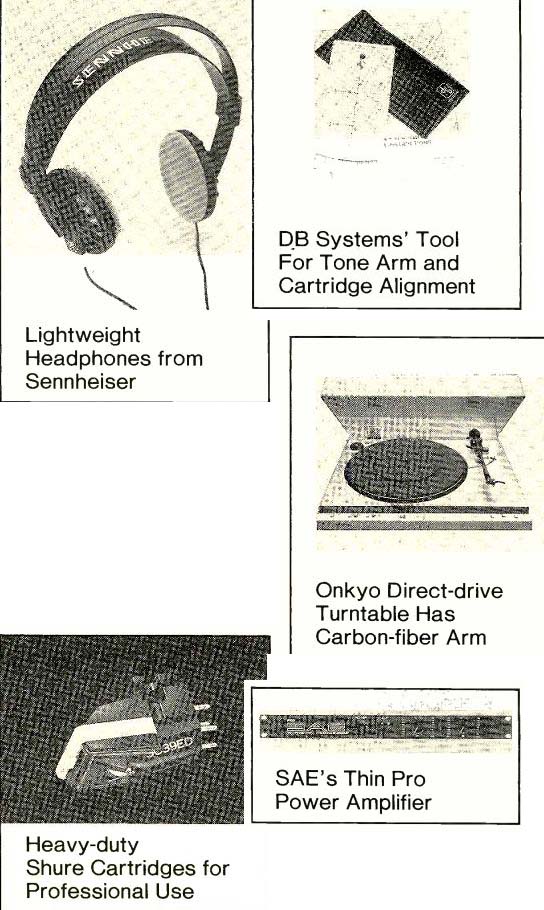
Radio Shack's 1980 Catalog D Radio Shack's 176-page 1980 catalog de scribes products suitable for audiophiles, electronics hobbyists, and experimenters. Among the new products listed are an AM/FM stereo receiver with microprocessor controls and digital frequency readouts, an open-reel tape deck with full logic control, and a cord less extension telephone. The catalog is avail able from Radio Shack dealers.
KEF's Model 104aB and Cantata speakers are available in kit form with only the enclosure needing construction. The Model l04aB kit (shown) contains a baffle assembly on which are mounted a mid-frequency/bass driver and a tweeter. The acoustic bass radiator enhances the lower-bass response from an enclosure of modest size without a loss of efficiency. The baffle assembly has a lacquer finish and is supplied already wired and test ed. A detailed instruction leaflet describes how to construct the remainder of the enclosure. The finished Model 104aB has a nominal impedance of 8 ohms and a frequency response of 50 to 20,000 Hz ±2 dB. The speaker has a minimum amplifier-power requirement of 15 watts and a maximum power rating of 100 watts. Dimensions are approximately 15 1/4 x 12 1/4 x 8 1/4 inches. The Model 104aB should be installed about 8 inches off the floor. Price: $250.
The floor-standing Cantata system has three drive units preassembled on a baffle.
Like the Model 104aB an 8-ohm system, the Cantata has a rated frequency response of 35 to 20,000 Hz ±2 dB. The maximum power rating of this closed-box speaker is 150 watts.
Dimensions are approximately 24 1/2 x 12 1/4 x 13 3/4 inches. Price: $395. Both kits include speaker-protection fuses and driver-contour controls. For more information write to Intra tee, P.O. Box 17414, Washington, D.C. 20041.
DiscFoot Turntable Isolation System Reduces Feedback
Discwasher's DiscFoot turntable-isolation system acts together with existing turntable feet to achieve optimal isolation from air borne acoustic feedback and surface-borne vibration. The system consists of four DiscFoot isolation feet together with furniture-protective sheets, platform caps, and foam damping pads to adapt DiscFoot units to certain turn tables. The manufacturer states that the isolation feet of the DiscFoot system, which is said to operate differently from other isolation systems, are able to reduce turntable response to airborne signals between 30 and 200 Hz by as much as 25 dB. They can also provide a 20-dB isolation improvement over other systems for surface-borne vibrations in the 2- to 20-Hz band. Price: $22.
Mesa Electronics Sales' miniature-speaker stands come in what looks like an oversize film canister. When set up, they accommodate Mini-Mesa 30 loudspeaker systems as well as other miniature speakers with tapped mounting sockets. The stands are 6 inches high, and the tripod-type legs telescope into the canister stems for storage. To double the height, two stands can be screwed together.
Price: $24.95 per pair. For more information, write to Mesa Electronics Sales, Ltd., 2940 Malmo Drive, Arlington Heights, Il. 60005,
Superex Satellite/1 Add-on Tweeter III Intended to augment the high-frequency response of existing speaker systems, the Satellite/1 tweeter module is housed in a smoked Plexiglas enclosure in a truncated-pyramid shape said to minimize diffraction effects. The 1-inch soft-dome diaphragms used by each of the two tweeters are treated to eliminate breakup as well as unwanted resonances.
The Satellite/1 requires no special power supply and is connected to the terminals of the main speakers. A built-in attenuator permits matching to the main-speaker efficiency.
Frequency response of the unit is stated to be 4,000 to 20,000 Hz ±2 dB, with a passive crossover providing rolloff below that range. Power-handling capacity is 100 watts rms; nominal impedance is 4 ohms, but the module may be used with 16-ohm systems. Maximum dimensions are 10 1/4 x 8 1/2 x 6 inches; weight is 5 pounds. Price: $89.95.
Teac's Portable Four-track Cassette Studio
Combining a four-in, two-out mixer with a multitrack cassette recorder, the Teac M-144 Portastudio weighs 20 pounds. The mixer has four unbalanced line or microphone inputs, four pan pots, individual bass and treble controls on each track, and switching for track-to-track copying and four-to-two-channel mix-downs. Other facilities include tape-cue monitoring, stereo-return in puts for hooking up external reverb units, and four VU meters. The mixer portion has a 68-dB signal-to-noise ratio and a frequency response of 20 to 20,000 Hz ± 1 dB.
The cassette section runs at 3 1/4 ips and contains Dolby circuitry for each channel.
The unit can record four parallel tracks, two at a time. A pitch control varies the deck's speed by ± 15 percent. Frequency response is 20 to 18,000 Hz (Dolby circuits on), and the signal-to-noise ratio is 63 dB (weighted, Dolby circuits on). Other features include a two-motor, solenoid-operated transport, punch-in recording, and a servo-controlled d.c. capstan motor. The Portastudio measures 18 1/2 x 4 5/8 x 14 5/8 inches. Price: $1,100.
Optonica Deck Has Many Automatic and Timed Functions
Optonica's RT-6905 consists of a cassette tape deck and a combination clock/timer/ time-counter unit. An "Automatic Program Music Selector" permits the selection and programming of up to fifteen sections on one cassette for automatic playing in any order.
With the auto-repeat control, a program can be repeated up to five times. The auto-repeat function can also memorize the positions of selections on the tape by either manual or automatic entry of the tape-counter numbers.
An auto-cue button instructs find and cue a selection within a memorized pro gram. A four-second blank segment can be inserted anywhere on a recording by an auto-space key to facilitate subsequent program lo cation. And finally, the deck's "Automatic Program Search System" lets the unit skip ahead to the next selection or back to the be ginning of the previous selection. All trans port functions, including recording and the search system, can be controlled by the deck's infrared remote control.
The lower portion of the unit contains the timer section, which can execute forty-two start/stop programming instructions per week. The timer also controls two groups of a.c. outlets on the back panel. The timer section offers a 12/24-hour liquid-crystal-display clock, an elapsed/remaining-time clock, an alarm, and battery-powered memory protection in case of power failure.
The RT-6905 transport employs a dual-capstan closed-loop drive system with a quartz-locked servo-capstan motor and a servomotor for reel driving. It has four heads, including a record/play Sendust-alloy head designed to eliminate bass-contour effects and a sensing head for the automatic functions.
The front-panel sensitivity and bias controls accept normal, chromium-dioxide, ferri-chrome, and pure-metal tapes. A fine-adjustment control automatically optimizes the bias currents and sensitivity for individual tapes.
Additional features include record and play back Dolby circuits, a limiter switch, mic/ line mixing, and an output-level control. With metal tape the stated frequency response is 20 to 22,000 Hz. Rated signal-to-noise ratio is 70 dB with the Dolby circuits on. Wow and flutter are rated at 0.038 percent rms. Dimensions of the RT-6095 are 16 3/8 x 8 3/8 x 14 3/8 inches, and it weighs 34 pounds. Price: $1,800.
First Speaker from Boston Acoustics
The Boston A-200 loudspeaker from Boston Acoustics is a three-way acoustic-suspension design incorporating a 1-inch dome tweeter with ferro-fluid damping, a 4-inch midrange driver, and a 10-inch woofer. Rated impedance of the system is 8 ohms (6 ohms minimum).
The Boston A-200's cabinet is designed to minimize frequency-response irregularities caused by room reflections. It measures 21 x 39 x 6 3/8 inches, dimensions that should re duce destructive room-interference effects in the mid- and upper-frequency ranges. The system is constructed so that in use the woofer is close to both a wall and the floor (the built-in stand provides a 2 1/2-inch elevation); room-caused response dips therefore occur out of the woofer's operating range. The unit has a system resonance at 41 Hz with a-3 dB point of 36 Hz. With a 1-watt input, the speaker produces a 90-dB sound-pressure level measured at 1 meter. The minimum recommended amplifier power is 15 watts. Price: $350. For more information, write to Boston Acoustics, 130 Condor Street, East Boston, Mass. 02128.
NOTICE: All product descriptions and specifications quoted in these columns are based on materials sup plied by the manufacturers.
Domestic inflation and fluctuations in the value of the dollar overseas affect the price of merchandise imported into this country. Therefore, please be aware that the prices quoted in this issue are subject to change.
++++++++++++++++++++++
Audio Q. and A.
By Larry Klein
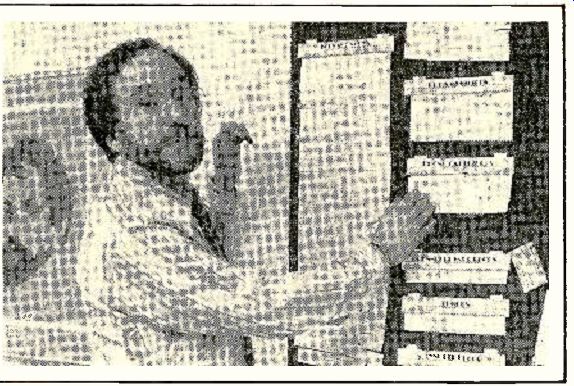
Technical Director Klein scheduling future equipment test reports. The gentleman peering over his shoulder is Claude Debussy.
Tropicalizing Equipment
Q. I'm about to move to the tropics and . I've been told that electronic equipment has to be specially treated to avoid fungus problems. How would you suggest I go about it?
ARNOLD SILVER
Portsmouth, Me.
A. I’m indebted to reader Max Noll for the following suggestions based on three years of experience in Micronesia.
"Obviously, air conditioning is the best general solution to any tropics-related electronic problem. Not only does the gear run cooler (a problem in the tropics), but the lower humidity virtually eliminates the prime problem: corrosion. And it also slows down the growth of algae. If you can keep the relative humidity at 65 percent or below, very few difficulties should be encountered.
"If air conditioning is not practicable, then more specialized protection is called for. The equipment should be disassembled to allow access to all circuit boards and controls, and the boards should be sprayed with two light coats of clear lacquer (preferably one with a fungicidal ingredient). Be sure to mask off controls, pulleys, dial cords, trim adjustments, and test points carefully. After the lacquer dries, remove the masking tape and apply liberal amounts of contact cleaner (the type that leaves a silicone residue) to all potentiometers and switches. Although this sounds like a complex job, a competent ser vice technician should be able to perform the task in an hour or so. You may have to recalibrate or realign some critical circuits after the treatment.
"Power in some areas of the tropics is subject to varying frequency and voltages, so turntables and tape decks having synchronous motors driven directly from the power line should be avoided unless some method of regulating line frequency is provided. The servo-feedback type of motor or direct-drive machines should be okay.
"After a few days of high humidity you may notice that your speakers sound mellow.
Some paper cones tend to hold moisture, and, while this in itself shouldn't damage the speaker, it might be advisable to fuse them with somewhat smaller fuses than you would normally use to prevent dangerous overdrive of the softened cone.
"As a final note, you should change all of your audio connecting cables to the gold-plat ed, corrosion-resistant type and clean all connections frequently with isopropyl alcohol including all contacts inside the phono-cartridge shell." I can only add that it would also be a good idea to seek out a local electronic technician or TV repairman, people who have probably been dealing with such problems for years.
They may have additional comments and recommendations for specific sprays, lotions, and other preventative poultices.
Damp Speakers Q.
Do you know of any research on the effect of humidity on loudspeakers? I've noticed that on days of high humidity my speakers sound muddy, and .on low-humidity days they sound crisp and clear. Is what I'm hearing a result of some humidity-dependent change in the cones of the speakers or what?
ARTHUR G. INIEHAus, Jersey City, N.J.
A. As is my custom when asked a technical question for which I have no ready answer, I turned to some friendly experts. Engineers from Acoustic Research, ADS, and Allison Acoustics all agreed that-at least theoretically-moisture could have an effect on the sound quality of some loudspeakers be cause their diaphragms (cones) might absorb and release moisture as the ambient relative humidity changes. This could change the mass, breakup modes, or hardness of the cone, and all of these can affect the high frequencies. Specifically, humidity would affect the upper end of the woofer response in a two way system and the upper end of a mid range's response in a three-way system. How ever, most loudspeaker cones are treated to resist moisture, and in any case, the effects are not likely to produce the gross response disturbances reported by Mr. Niehaus.
Two of my experts suggested that perhaps the temperature rise usually associated with high humidity might produce the perceived response change. Some cones manufactured with synthetic materials vary their properties with temperature, and the elastomeric materials used for stylus suspension in phono cartridges are notoriously temperature sensitive.
So perhaps it's the heat, not the humidity ....
I also checked one other possibility with my consultant on the human hearing mechanism.
I asked whether the ear itself is responsive to changes in humidity. He replied that al though the conductive properties of the air and possibly the absorptive properties of the room furnishings change with humidity, the human ear's performance does not. He stated that in none of the hundreds of studies of human hearing, which involved close control of all relevant variables, was ambient humidity specified as a factor. There's no question, my expert opined, that if humidity had a measurable effect on hearing, its level would be specified as part of the standard procedure. In addition, none of my consultants seem to think that the conductive/absorptive proper ties of the air itself (which does change with humidity) were responsible for my reader's perceived effect.
So where does that leave us? I'm not sure.
It was suggested that a crisp bright day was psychologically more conducive to pleasant listening than a damp dreary day, but I'm inclined to think that explanation is, so to speak, all wet. And there's the matter of atmospheric pressure....
I would welcome some additional thoughts on the matter, but I'm issuing fair warning that letters containing comments about sand-filled baffles producing muddy sound when wet, or that our novice listener is wet behind the ears, will be automatically disregarded.
Not that I want to water down any reader's contribution, or throw a wet blanket over the proceedings, but....
Dolby De-noiser
Q. I have several old tapes that have been recorded from FM and records. Much of this music contains hiss and other strange noises. Would a Dolby unit installed in my stereo system (or a new deck with Dolby circuits built in) get rid of enough of this noise to make it worth the cost?
GEORGE CULPEPPER; Pittsburgh, Pa.
A. Old-timers among my readers will forgive me if I give this perennial question another go 'round; I still get two or three letters a month asking it. No, Mr. C., the Dolby system can do nothing about noise that is already in the program material. The only thing Dr. Dolby has ever claimed his system can do is to cut back the noise added to the program material by the tape-recording process. The Dolby circuits cannot-repeat-can not remove noise from program material if that noise was present in the signal before the tape was Dolby "encoded."
++++++++++++++++
Audio News
Views and Comment
THE FM SQUEEZE THERE is growing concern in audiophile circles about the potentially adverse effects of a recent proposal that the Federal Communications Commission reduce the mini mum FM-channel separations from the present 200 kHz to 150 kHz or even 100 kHz.
The possibility of such a change has become a matter for public discussion because the FCC has been asked to consider a number of proposals for increasing the number of available station allocations. The proposals are based on laudable and reasonable estimations of society's needs and goals. In practice, however, they could pose a dilemma: while benefitting a large number of the listening population, some changes would also work to the detriment of another large, overlapping segment of listeners.
The development of minority businesses in general, and minority ownership of broadcast facilities in particular, is regarded as an important goal by the Carter administration.
Minorities comprise over 18 percent of the U.S. population but own less than 1 percent of the nation's 9,000 broadcast stations. Under the existing FCC station-allocation rules, there is little room for new stations. Of the few unallocated station assignments, most are for low-power stations in rural areas. On the other hand, except in the rural south, minority populations are concentrated in or near large cities. In the cities, the only way to get control of a radio station is to buy an existing facility. But few stations are for sale, and those only at high prices. An obvious solution to this dilemma is the creation of "air" space for new stations by changing the allocation rules.
In the case of AM, one proposal before the FCC is to reduce the station spacing from 10 to 9 kHz, as most of the rest of the world did in 1978. This change would not affect the prospects for-nor the desirability of-AM stereo broadcasting which the FCC has been studying for the past three years.
With FM, the FCC received a formal re quest for allocation-rule changes last spring from the National Telecommunications and Information Administration (NTIA), an office of the Department of Commerce. Technical support for the NTIA request has two aspects: the ability to calculate interstation interference and the improved performance of today's tuners.
WHEN the present station-allocation rules were established in 1963, a relatively simple set of formulas was used to guarantee mini mal interference among stations on the same or adjacent frequencies. Since that time, complete topographic maps of the country in digital-computer format have become avail able, as have computer programs for predicting signal strengths as a function of local terrain and transmitter characteristics. Also since that time, FM-receiver performance has improved tremendously, especially in the area of interference rejection. So the NTIA has asked the FCC to take advantage of the state of the art in computer and tuner design and to make three changes in the allocation rules:
Authorize a greater variety of transmitter classes. In much of the nation, existing rules provide for Class C (high-power) stations and Class A (relatively low-power) stations but don't permit medium-power stations.
Modify transmitter separation requirements in accordance with local terrain. Under the present system, in order to prevent interference, two Class C stations must be at least 180 miles apart if they are on the same frequency and 65 miles apart if they are separated by 0.4 MHz in frequency. Terrain variables could permit a relaxation of these rules.
Permit the use of directional transmitter antennas to control signal coverage and potential interference between stations.
By instituting these changes, and by using computers to predict probable interference patterns, the NTIA claims that many new FM stations could be allocated within the existing FM band without degrading broadcast quality, precluding the introduction of quadraphonic FM, or causing serious interference problems. Asking the FCC to act upon these proposals "expeditiously," the NTIA also suggested that the FCC should "undertake a longer-range inquiry into several other techniques" for increasing the potential number of stations. These long-range proposals include: modification of the revised mileage-separation rules (relying on the excellent selectivity of modern tuners to resist the potential interference); further liberalization of the mileage-separation requirements in those areas where the populations served by a new station would substantially outnumber the population affected by the resulting adjacent-channel interference; and, finally, reduction of the spacing between FM channels from 200 kHz down to 150 or even 100 kHz. It's this last proposal that holds the most potential for damaging FM sound quality.
The Institute of High Fidelity, in an official letter of protest to the FCC, cited several objections to a reduction in FM-channel spacing. Their reservations are based on the possible deterioration of sound quality and on problems of receiving-equipment obsolescence and compatibility.
( Continued on page 32)
The selectivity characteristics of existing tuners are designed to cope with present channel spacings. With a more crowded FM dial, interference between adjacent stations would be a more common problem, particularly in urban and suburban areas.
Many of the most advanced FM tuners are designed with circuitry to tune only frequencies which are even multiples of 100 kHz. This is true not only of most digital frequency-synthesizing tuners but also of many tuners with quartz-locked automatic fine-tuning circuits. But with the proposed channel spacing of 150 kHz, stations could be located not only at frequencies like 90.9 and 91.3 (the present pattern) but also at 90.75 and 91.05 MHz-in the cracks between tuning increments. New tuners could easily be designed to fit the new channel spacing. In fact, the integrated circuits already exist for such tuners sold in Europe. If the proposals pass, how ever, many existing tuners would be at least partially-obsolete.
In order to minimize adjacent-channel interference, transmitters and receivers would both have to be designed for reduced band width. This would preclude adoption of discrete quadraphonic FM and might prevent the use of SCA subcarriers with stereo transmitters. (SCA transmissions ride "piggyback" on the normal FM signal and are used for commercial-free background music for business-restaurants, for example-and, in some areas, for "talking-book" services for the blind). Furthermore, and most important to high-fidelity enthusiasts, use of a narrower channel bandwidth causes increased distortion, increased noise in stereo reception, and reduced stereo separation. These effects are presently evident in test reports on tuners with selectable i.f. bandwidths. Although a reduction in the transmitted bandwidth would reduce the audible damage, such a procedure involves either a reduction in modulation level (with a consequent increase in noise) or a reduction in audio frequency-response range below the present 15 kHz.
BECAUSE the FCC's goals for FM broad casting include providing for diverse programming and broadcasting services of local origin to as many communities as possible, it is likely that the FCC will eventually adopt one or more of the NTIA's recommendations.
Since a reduction in FM channel spacing is clearly the alternative with the most adverse consequences, it is likely to be implemented only as a last resort-if the other proposals prove to be impracticable or do not sufficiently meet what is perceived to be the need for more FM stations.
It is the custom of the FCC to act slowly in making rule changes (stereo AM being one example) and to act very slowly when controversy is involved. At present, a fact-finding study has been commissioned to measure a representative sample of modern FM receivers and to determine the effects of reduced channel spacing on audio performance. Any decision to alter FM frequency allocations is likely to be at least five years away. The change would have to be preceded by a long period of studies and public-hearings, and in view of the opposition that would be gene rated-it might never happen at all. So if you are thinking about buying a digital or quartz-locked tuner, you needn't worry about its rap id obsolescence.
-Peter Mitchell
+++++++++++++++++++
Tape Talk
Mixing Bias / Equalization
Q. If I were to record a "high-bias, 70-microsecond" tape with its proper bias level but with 120-microsecond equalization, wouldn't I be able to increase the high-frequency headroom and frequency response of the tape at the cost of a 4- to 5-dB loss in signal-to-noise ratio?
NEIL LAFFOON; Paragould, Ariz.
A While there's a fairly common misunderstanding embodied in this question, it nonetheless homes in on an important point about equalization and signal-to-noise ratios.
Let's clear up the misunderstanding first. The "70-microsecond" and "120-microsecond" descriptions of equalization do not apply to the record process at all. Rather, they are descriptions, in a kind of engineering shorthand, of two standardized playback equalization curves. In conjunction with the output from the playback head, these two standardized playback curves impose a frequency-response correction ("equalization") on everything signals and noise-that comes off the tape. In the figure below, curve A shows the overall effective treble boost defined by the standard 120-icrosecond ("ferric") playback equalization, and curve B does the same for a 70-microsecond ("CrO2") equalization.
Throughout most of the treble range, curve A is 4 to 5 dB higher than curve "B." Since both curves boost tape hiss as well as signal, if a tape can be recorded using only the 70-microsecond curve B in order to achieve flat frequency response, it will be that much quieter than a tape requiring curve A.
Now, however, consider curve C in the figure. This is not a standardized curve, but rather one typical of the record equalization that might be applied to either a 120- or a 70-microsecond tape, assuming that each tape was recorded with its proper bias. The bass boost shown simply complements the bass rolloff common to curves A and B and thus restores flat bass response. It is important to recognize, however, that the record treble boost shown in curve C must be applied to the audio signal before it hits the tape so that even with the additional effective play back treble boost shown in curves A or B the overall frequency response will be "flat." Curve C shows an enormous treble recording pre-emphasis that must be added to the post-emphasis of the playback section in order to make up for the inherent high-frequency losses incurred at normal cassette speeds.
As reader Laffoon rightly surmises, it is curve C that drives cassette tapes into magnetic saturation at high frequencies. By using curve-A playback equalization on a tape de signed for curve-B playback equalization, it would be possible to lower the amount of treble pre-emphasis shown in curve C. This would give 4 to 5 dB more high-frequency "headroom" at the cost of that much more tape hiss-assuming that you can get at the innards of your deck and modify curve C accordingly. It would not, however, necessarily yield a wider frequency response, for, as the illustration shows, the manufacturer has plainly given up all hope of extending frequency response beyond approximately 18,500 Hz because the pre-emphasis curve starts to roll off there.
Frankly, I'd be inclined to doubt that the trade-off between a little bit more headroom at the very highest frequencies and a lot more hiss throughout the more audible mid-high frequencies would be worth it. Time was when just that kind of tinkering around with established standards was part and parcel of being a genuine audiophile. But today it's be come as obsolete and hopeless a task as trying to build your own loudspeakers from scratch in order to "improve" on the professionally designed products. On the other hand, if you look at the trade-offs involved in the current 15-inch-per-second playback curve, combined with the record pre-emphasis needed with modern open-reel tapes, it would seem that you could ...
New "Metal" Machines
Q. Since erasure of metal tapes is what-.-pre-metal" cassette recorders cannot do, can you (1) record such tapes using the FeCr bias position and (2) erase the tape with a bulk eraser?
R. D. KELLER; Sacramento, Calif.
A. Sorry, no go! In the first place, to record metal-alloy tape requires substantially more bias current (and a record head that will accept such current levels without saturating) than is produced in any bias position of "non-metal" decks. Second, I've tried several of the "bulk erasers" commonly used by audiophiles and have found that they don't have an adequate erasure capability for metal tapes. A professional bulk eraser designed for 1/2-inch (or wider) videotape would undoubtedly do the job, but just as a new generation of tape decks is necessary for metal tape, so is a new generation of audiophile bulk erasers.
The one I'm using is a prototype model, from R. B. Annis Co., which draws 15 amperes at 230 volts! Dolby Confusion
Q. Will playing back a Dolby–processed cassette without Dolby decoding (a) harm the tape or (b) damage the deck?
SHAWN E. PORTER; Cato, N.Y.
A. Happily, the answer to both of your questions is a resounding "No." Of course, if you play a Dolby-encoded tape without the proper decoder you will not gain the advantage of the 8- to 10-dB noise reduction the system can provide, and you may find that the sound seems a little too bright. But you can usually "tone down" the treble sufficiently with the treble control on your receiver or amplifier to compensate for this bright ness. On the other hand, most cassette decks today that do not have built-in Dolby decoders (most of those sold for automobile installation, for example), have rather poor high-frequency response to begin with. On such a cassette deck you may actually prefer listening to the Dolby-encoded signal without a proper decoder! Because the number of questions we receive each month is greater than we can reply to individually, only those letters selected for use in this column can be answered. Sorry!
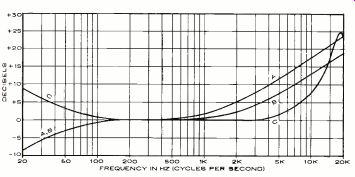
------------ Curve A shows the standard playback equalization for ferric tape, curve B that for CrO2 tape. Curve C shows a typical recording equalization.
+++++++++++++++
Tech Talk
Measurements in the Twilight Zone
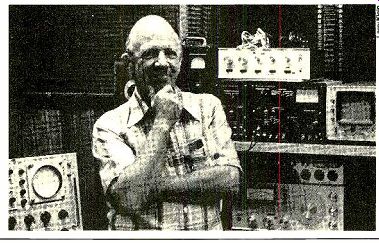
RECENTLY, while testing an FM tuner, I was reminded once again (as if I needed such reminding!) that the readings of any lab oratory instrument must be taken with a grain of salt, so to speak. Such measurements must never be accepted as absolutely accurate, no matter how carefully made.
In the present case, several of the measured characteristics of the tuner differed markedly from those made on the same unit by its manufacturer. In particular, the stereo channel separation, given as better than 45 dB, measured only 30 to 35 dB. Although 30 dB or so is ample for excellent stereo, the discrepancy between my measurements and those of the manufacturer was disturbing.
One possible explanation could be an incorrect phasing of the 19-kHz pilot carrier in the test signal (an error of only 2 degrees would degrade the separation significantly). A check of the pilot-carrier phase in our signal genera tor showed it to be accurate.
The manufacturer then took the tuner back to his service laboratory and checked its separation with two other signal generators (both of the same type as ours, Sound Technology 1000A). Although there were the expected slight differences in separation measured with the two units, both gave readings close to 50 dB. Still, when the tuner came back to us, it could do no better than 35 dB.
At this point, the manufacturer's technician adjusted the tuner's internal separation control for best results with our signal generator. To no one's great surprise, the readings now matched those obtained with his own equipment. This left us as much in a quandary as before, since the manufacturer's test equipment is also carefully checked and maintained in proper condition. When the tuner is finally returned to him, it will be re checked with his equipment. If the separation is then only 35 dB, we will know that one of us does not have the correct pilot-carrier phase adjustment in his signal generator. If it is 50 dB, we will still have an unexplained mystery on our hands! This sort of problem is not that uncommon, considering the "outer-limits" complexity of today's high-fidelity components and the instruments used to measure their performance.
There are other apparent discrepancies that are not easily explained, some of them suggesting that our measurements are taking place in the "twilight zone" instead of here in the real world.
CONSIDER the case of phono-cartridge distortion. There are no standards for specifying or measuring cartridge distortion, and there are no universally accepted test records for that purpose. This does not deter many manufacturers from claiming impressively low distortion levels for their cartridges, usually with no explicit description of the test method or identification of the record used.
I therefore feel free to use any means at my disposal for measuring, or trying to measure, phono-cartridge distortion. There is little chance of correlating my findings with any manufacturer's ratings, so all I can do is obtain comparative data on the cartridges I test.
Having done so for many years, I am beginning to believe that this is as fruitless an endeavor (as far as making precise correlations between the figures obtained and the quality heard is concerned) as measuring ultra-low levels of amplifier distortion.
A distortion measurement requires a signal source whose inherent distortion is a small fraction (no more than one-tenth to one-fifth) of the distortion expected from the equipment under test. It matters not what distortion is claimed or expected from a phono cartridge, since there is no way of knowing what the distortion in the test record is. In fact (and unlike an electrical test signal), record distortion does not even exist, any more than the test signal itself exists, until the groove has been traced by a stylus and a cartridge output has been generated.
Consider the intermodulation-distortion measurements that I make on cartridges using signals of 400 and 4,000 Hz mixed in a 4:1 amplitude, ratio and recorded at a number of different peak velocities. This is closely analogous to a conventional amplifier 1M measurement and in fact is made with the same type of IM analyzer.
Anyone watching this measurement being made would (quite rightly) question the whole process. At the highest velocity levels, there may be actual mistracking, producing a clipped waveform not unlike that produced by an overdriven amplifier. In this case, there is no doubt that the distortion is large (20 to 30 percent are typical readings) and that the cartridge's tracking ability has been exceeded.
At some lower velocity, the waveform usually looks perfectly good (IM distortion can not be judged merely by viewing the wave form, as harmonic distortion of a sine-wave signal can). The IM analyzer, however, may read 6 to 10 percent. Even worse, the meter pointer is swinging wildly under the influence of record warps and eccentricities that constantly vary the effective stylus tracking force and thus the distortion. The readings may be different from the left and right channels or when the two are paralleled (mono). Any one of these connections may give the lowest distortion reading-but not necessarily at all the test-signal levels on the record! (Overleaf)
It is easy to understand why the results of this measurement are rarely publicized by cartridge manufacturers. There is, of course, an art to making the measurement, and it takes a considerable amount of arbitrary judgment, based on one's experience, to interpret it. (A similar situation exists with regard to flutter and rumble measurements on turn tables, in which stationary meter pointers and unambiguous readings are almost unheard of.) I choose the cartridge-output connection that gives the lowest distortion reading on the highest-velocity test band that does not cause mistracking, and I maintain the same connection throughout the test. The tone-arm anti-skating is set for minimum distortion. The lowest reading of the swinging meter pointer is taken as the distortion in each case. If all of this looks like I am bending over backward to favor the cartridge, it is because I am.
Even so, the numbers obtained are horrifying to anyone used to the minuscule distortions generated by amplifiers and tuners. If the distortion gets down to about 2 percent at the lowest velocities, the cartridge is doing a pretty good job. Readings as low as 1 percent occur only rarely. It is not uncommon for the distortion level to remain at several percent over most of the test record. The situation is very similar with tape recorders. (Did you ever wonder why no one talks about tape-recorder 1M distortion measurements? If you tried to make one, you would understand!) You might wonder why anyone even bothers with cartridge IM measurements. Partly because they are easy (they take a few minutes at most) and partly because we are intrigued by the apparent total lack of correlation between the numbers we get and the quality (and price) of the cartridge. There must be some reasonable explanation of this situation, but so far it has eluded us. An inexpensive cartridge may have an IM reading of 1 to 2 percent, whereas another costing several times as much may also have several times as much distortion. To top it off none of this has the slightest connection, so far as we can determine, with anything actually heard from any of these cartridges! The real problem is not so much the measurement of distortion as the correlation of the measurement with some audible effect. It is always possible to devise a test that will re veal differences between products that appear to be identical when tested by more conventional means. This, in my opinion, is the sort of "cart before the horse" approach that has resulted in the vigorous promotion of the various transient intermodulation distortion (TIM) and related types of measurements.
If some amplifiers really sounded inferior in ways not explainable by previously known tests, it certainly would make sense to deter mine the reasons for the difference, and find ways to measure it. Obviously, one must be able to measure performance in order to modify it intelligently. Without (I hope) stirring up the muddy TIM waters again, I cannot but wonder if the reverse was done here. The extensive analysis of TIM and its causes led to various methods of measurement, no one of which has any wide acceptance. Now, under the influence of the promotion of presumably TIM-free amplifiers coming from several manufacturers, we are expected to hear a wondrous improvement. And, human nature being what it is, if someone expects to hear something, particularly after paying good money for it, it is likely that it will be heard.
The most fascinating aspect of this whole business is that the recorded program material to which most of us listen is, for good technical reasons, quite incapable of causing TIM distortion in any reasonably well-designed amplifier. One has to design an inferior amplifier deliberately, and operate it under unreasonable conditions, or contrive a special input signal, in order to produce TIM.
I started out to describe some of the strange and mysterious things that one en counters in trying to measure the performance of audio components. At this point, I can see that to do justice to this subject would require a sizable book, and one probably of interest only to my fellow hi-fi test lab workers at that.
THE message to the reader, however, is simple: do not place your ultimate faith in the numerical ratings of a product-whether they are provided by a manufacturer or by an in dependent reviewer-particularly when those ratings describe phenomena taking place in a range that can be neither heard nor reliably measured. This "twilight zone" of audio performance, where anyone can hear anything at any time for unexplained reasons, is the natural habitat of purely subjective critics. Rational creatures enter such domains at their own risk. However, when the measured figures reflect technical performance that relates to qualities and quantities that the ear can hear, such measurements are useful as general guides to audible performance.
Also see:
EQUALIZERS -- They are much more than just a fancier set of tone controls, DONALD SHEFFIELD
A REBIRTH OF THE BLUES? All that underground activity must mean something, JOHN NORTHLAND
Source: Stereo Review (USA magazine)